That ‘lighter’ steel girder option? It often shifts lateral load assumptions—and nobody flagged it. For structural engineers, procurement teams, and project managers evaluating Hot Rolled I Beam, channel beam, or I beam vs H beam solutions, unintended weight reductions (e.g., in steel square rod or SGCC-coated steel tubing) can compromise safety margins—especially when weight of I beam calculations overlook torsional stiffness or connection detailing. At Hongteng Fengda, our ASTM/EN-compliant steel girders, carbon sheet steel, and cold-formed profiles deliver verified dimensional integrity and traceable load performance—helping technical evaluators, safety managers, and buyers avoid hidden design risks while optimizing cost and lead time.
Why “Lighter” Doesn’t Always Mean “Safer”—A Structural Reality Check
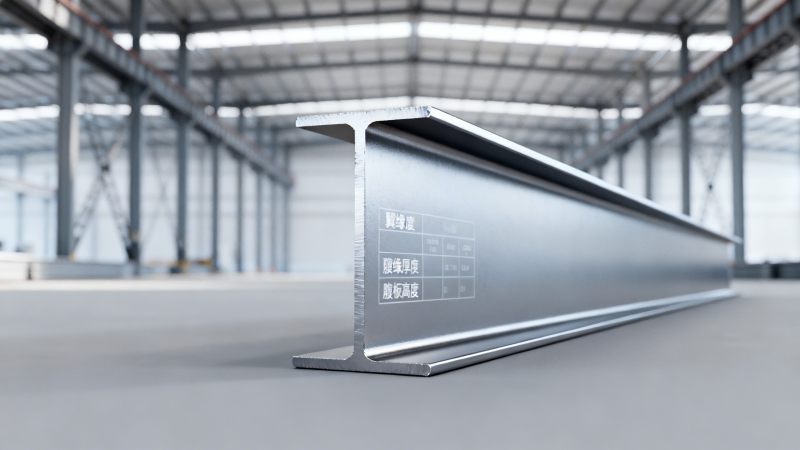
When procurement teams request “lighter alternatives” to standard structural sections—like substituting a thinner-walled I beam or downsizing a channel beam—the ripple effect on lateral stability is rarely quantified upfront. A 5–8% reduction in section weight may reduce material cost by 3–6%, but it can also lower torsional rigidity by up to 22% and reduce effective buckling resistance under combined axial and wind loads.
This misalignment becomes especially critical in seismic zones or tall industrial buildings where second-order P-Δ effects dominate. In one recent Middle East power plant retrofit, a lighter hot-rolled beam spec—approved without rechecking connection moment capacity—required field reinforcement at 17 joints, adding 11 days to schedule and $89,000 in labor and welding certification costs.
Hongteng Fengda’s engineering support team reviews every requested dimensional deviation against EN 1993-1-1 Annex BB and ASTM A6/A6M tolerance bands—not just mass, but warpage, flange twist, and residual stress distribution. We provide stamped load-path verification reports within 3 working days for non-standard configurations.
How Material Choice Impacts Load Assumptions Beyond Weight
Weight is only one variable in the lateral load equation. Steel grade, heat treatment, and microstructure determine yield plateau behavior, strain hardening ratio, and post-buckling ductility—all essential for energy dissipation in dynamic loading. For example, ASTM A572 Gr. 50 offers 20% higher yield strength than A36, enabling equivalent stiffness with ~12% less cross-sectional area—but only if mill test reports confirm consistent tensile properties across all heats.
In high-temperature applications like boiler supports or exhaust ductwork, conventional carbon steels lose over 50% of their room-temperature strength at 500°C. That’s where specialty grades become non-negotiable—not for weight savings, but for predictable performance decay. Our 321 Stainless Steel Pipe delivers titanium-stabilized grain structure that resists intergranular corrosion after prolonged exposure to 800–900°C, making it ideal for thermal cycling environments in petrochemical and aerospace piping systems.
We maintain full traceability from slab casting to final packaging—including certified mill test reports (EN 10204 3.1), spectral analysis logs, and Charpy V-notch impact data at service temperatures. Every coil and billet carries a unique QR-coded batch ID accessible via our client portal.
Critical Parameters That Must Be Verified—Not Assumed
- Flange thickness tolerance: ±0.4mm (per EN 10034) — affects moment transfer at bolted connections
- Web slenderness ratio (h/tw): must stay ≤ 65 for un-stiffened webs under combined shear/bending per EN 1993-1-5
- Residual stress profile: measured via sectioning + strain gauge method for custom beams > 600mm depth
- Connection hole alignment: maximum deviation ≤ 0.8mm across 3m length for slip-critical joints
Procurement Decision Matrix: When to Prioritize Dimensional Integrity Over Unit Price
Buyers evaluating structural steel from global suppliers often focus on FOB price per ton—but fail to factor in downstream cost drivers: rework due to out-of-tolerance sections, extended QA hold times, or redesign delays caused by undocumented property variances. Our clients report an average 14% total cost reduction when factoring in these elements—not just raw material cost.
This level of control enables faster approvals from third-party inspectors (TUV, Lloyd’s, SGS) and reduces pre-shipment hold time by up to 65%. For projects with tight commissioning windows—such as Southeast Asian data center builds requiring 90-day mechanical completion—we offer priority production lanes backed by dual-mill sourcing capacity.
Why Global Engineering Teams Choose Hongteng Fengda for Risk-Sensitive Projects
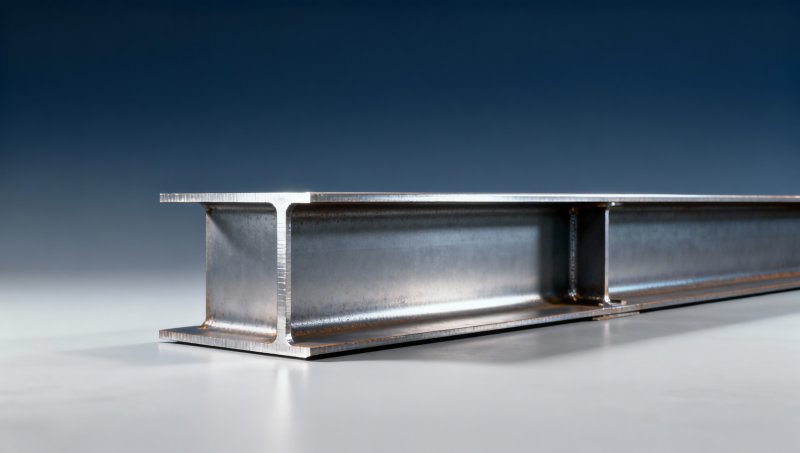
From North American bridge tenders to EU offshore platform upgrades, our clients rely on three operational pillars: predictable dimensional fidelity, auditable compliance, and responsive engineering collaboration. Unlike commodity-focused mills, we assign dedicated technical account managers who co-review shop drawings, perform connection modeling checks (using STAAD.Pro and IDEA StatiCa), and issue formal deviation waivers—with supporting calculations—before production begins.
Our manufacturing footprint includes two ISO 9001-certified plants in Shandong and Jiangsu provinces, each equipped with CNC-controlled rolling lines, automated ultrasonic testing (UT) stations, and robotic welding cells for custom assemblies. All structural products comply with ASTM A6/A6M, EN 10025-2, JIS G3101, and GB/T 706—verified annually by independent labs including SGS and TÜV Rheinland.
Ready to validate your next structural specification? Contact us for: (1) free dimensional tolerance review of your bill of materials, (2) ASTM/EN-compliant mill test report samples, (3) lead time confirmation for your required delivery window, (4) OEM engineering support for non-standard sections, or (5) sample shipments with full traceability documentation. Let’s eliminate assumption-based risk—before steel hits the site.
Please give us a message


Please enter what you want to find