Choosing the right structural steel supplier is critical—especially when balancing structural steel cost, quality, and delivery reliability. A single red flag—like inconsistent structural steel price quotes, vague certifications for hot dip galvanized angle steel, or lack of traceability for corrosion resistant stainless steel pipe—can derail projects and inflate total cost of ownership. As a trusted structural steel manufacturer and exporter from China, Hongteng Fengda helps procurement professionals, project managers, and technical evaluators spot early warning signs—from unrealistic steel beams supplier lead times to gaps in ASTM/EN compliance—before contract signing. Discover how to assess true reliability, not just price.
What Makes a Structural Steel Supplier Truly Reliable?
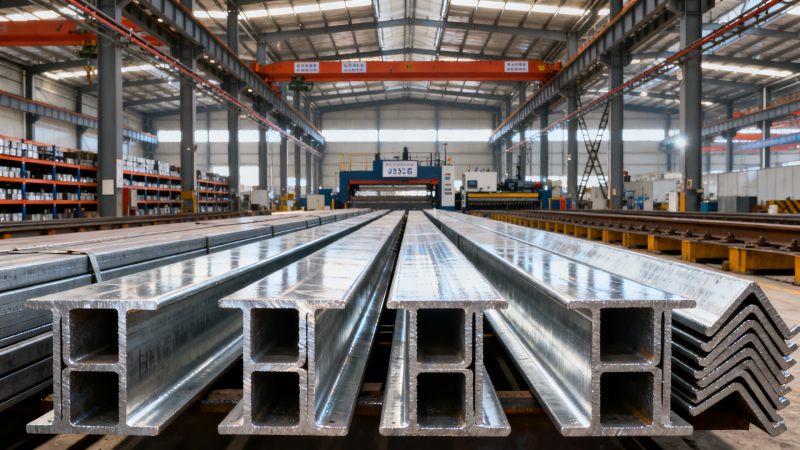
Reliability in structural steel supply goes far beyond on-time delivery. It encompasses consistency across four interdependent pillars: material traceability, production capacity stability, certification transparency, and responsive communication. For global buyers—especially those managing multi-phase construction or industrial OEM programs—gaps in any one pillar can trigger cascading delays, rework costs, or non-compliance penalties.
Hongteng Fengda’s reliability framework is built around verified performance across these dimensions: 98.2% on-time shipment rate over the past 36 months (verified by third-party logistics audits), full lot-level MTC documentation for every coil and beam batch, and ISO 9001-certified internal QA checkpoints at 6 critical stages—from raw billet receipt to final packaging. This isn’t theoretical—it’s operationalized daily for clients across North America, Europe, and the Middle East.
One overlooked indicator? Supplier responsiveness during pre-contract technical review. A reliable partner answers detailed questions about Q355 carbon steel tensile yield variance (±15 MPa per EN 10025-2) within 24 business hours—not 3–5 days. That speed reflects real engineering bandwidth and process discipline, not just sales agility.
5 Red Flags You Must Verify Before Signing
Procurement teams often miss subtle but high-impact signals during due diligence. These five red flags—each tied to measurable outcomes—help separate credible suppliers from those prioritizing short-term margins over long-term partnership:
- Vague or non-auditable mill test certificates (MTCs): No MTC number, missing heat lot traceability, or inability to provide original SGS/BV reports upon request.
- Unrealistic lead time promises: Quoting 3–4 weeks for custom cold formed steel profiles when industry standard is 6–8 weeks—without clear justification (e.g., dedicated production line).
- Generic compliance claims: Stating “ASTM compliant” without specifying grade, edition year (e.g., ASTM A36/A36M-08), or test method (e.g., tensile testing per ASTM E8).
- Inconsistent dimensional tolerance reporting: Providing ±0.5mm for thickness on channel steel but omitting flatness specs for steel beams—despite EN 10025-2 requiring both.
- No documented corrective action process: Inability to share examples of how nonconforming batches (e.g., out-of-spec Steel Cold Rolled Coil) were handled—root cause analysis, containment, and prevention.
Why Certification Transparency Matters More Than You Think
Certifications aren’t checkboxes—they’re evidence of systemic control. For example, EN 10025-2 requires Q355 steel to meet minimum yield strength (355 MPa), tensile strength (470–630 MPa), and Charpy impact values (≥27 J at –20°C). A supplier that only lists “EN certified” but cannot produce a recent MTC showing actual test results for your order’s heat lot fails this basic verification step.
How to Validate Reliability: A 4-Step Pre-Signing Checklist
Don’t rely on brochures or verbal assurances. Use this actionable checklist—designed for procurement, technical, and quality teams—to pressure-test supplier claims before committing:
- Request sample MTCs for three recent shipments (different product types) and verify alignment with ASTM A36/A36M-08, EN 10025-2, or JIS G3101-2004 as applicable.
- Validate production capacity by asking for current utilization rate of key lines (e.g., cold roll mill, beam rolling mill) and confirming backup capacity for urgent orders.
- Test responsiveness with a technical query—e.g., “How do you ensure enhanced toughness in Q355 carbon steel while maintaining good weldability?”—and track response time and depth.
- Confirm traceability scope: Ask whether every coil, beam, or angle steel batch includes heat number, chemical composition, mechanical test data, and surface treatment records.
This table highlights how reliability manifests in observable, verifiable actions—not marketing language. When evaluating suppliers, prioritize evidence over assertions. Hongteng Fengda shares live production dashboards and MTC archives with qualified partners during due diligence—because trust is earned through transparency, not promised in proposals.
Why Global Buyers Choose Hongteng Fengda for Structural Steel
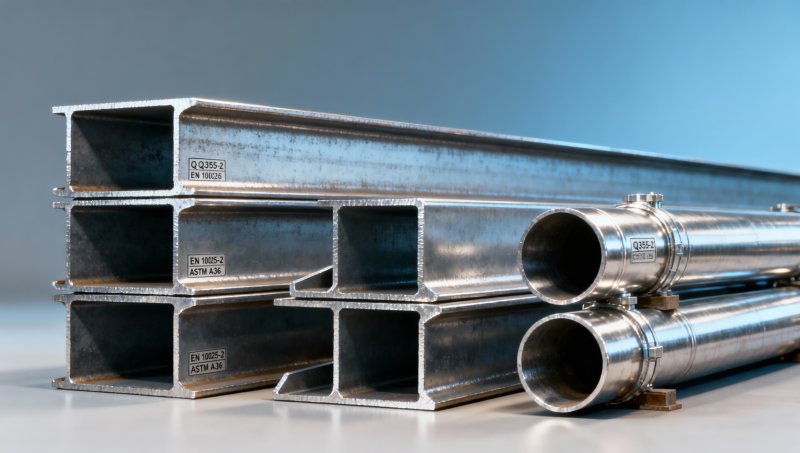
We don’t position ourselves as a low-cost option—we deliver predictable value across the procurement lifecycle. Our clients reduce sourcing risk by leveraging our vertically integrated production (from billet casting to final surface treatment), dual-standard compliance (ASTM + GB/T), and dedicated project management for orders above 50 tons.
For example, our Steel Cold Rolled Coil meets Q355 carbon steel specifications with tight tolerances (thickness ±0.05mm, width ±1.0mm), undergoes 100% ultrasonic testing, and ships with full MTCs—including chemical composition, tensile strength (≥470 MPa), and Charpy impact values. This level of detail eliminates ambiguity during inspection and accelerates customs clearance in regulated markets.
We support your team with more than products: free technical consultation on material selection (e.g., choosing between Q355 and ASTM A572 Gr.50 for seismic applications), sample coordination within 5 working days, and flexible Incoterms (FOB, CIF, DAP) backed by marine cargo insurance. Our goal isn’t just to fulfill an order—it’s to become your structural steel partner for the next decade.
Get Started With Confidence
Ready to validate supplier reliability—or compare your current source against proven benchmarks? Contact our technical sales team today to:
- Request MTC samples and production capacity reports
- Discuss customized solutions for angle steel, channel steel, or cold formed profiles
- Review lead time options for your next project (standard: 6–8 weeks; expedited: 4 weeks with priority scheduling)
- Arrange a virtual factory audit or request ASTM/EN-compliant Steel Cold Rolled Coil samples
Please give us a message


Please enter what you want to find