When specifying structural steel grades for international projects, engineers and procurement teams often face a critical question: Can EN 10025 and ASTM A992 steels be interchanged without recalculating connections? This matters especially when sourcing flexible steel wire, lightweight steel tube, or high strength steel tubing from trusted manufacturers like Hongteng Fengda — a China-based structural steel manufacturer exporting compliant H-beam weight chart, steel rod diameter, steel wire gauge, galvanized sheet for roofing, and custom steel sheet size solutions. Understanding material equivalency ensures safety, cost control, and seamless project execution.
Can EN 10025 and ASTM A992 Be Directly Substituted?
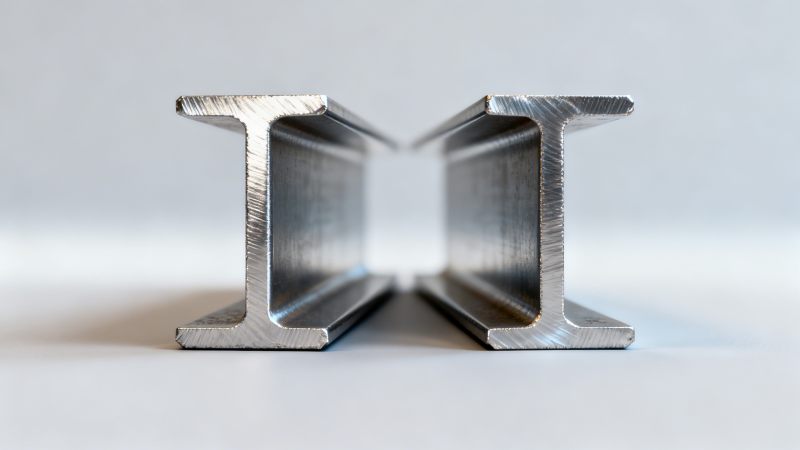
The short answer is: No — not without engineering verification. While both EN 10025 (European standard) and ASTM A992 (U.S. specification) cover hot-rolled structural steel sections—primarily I-beams and H-beams—their chemical composition limits, yield/tensile strength ranges, and fracture toughness requirements differ significantly.
ASTM A992 specifies a minimum yield strength of 345 MPa (50 ksi) and tensile strength between 450–600 MPa. EN 10025-2 S355JR, the most common counterpart, has a similar nominal yield (355 MPa), but its actual tested yield can vary from 355–470 MPa depending on thickness. More critically, ASTM A992 mandates Charpy V-notch impact testing at –20°C for all sections ≥ 100 mm thick, whereas EN 10025-2 only requires it for higher-grade variants like S355J2 or S355K2.
These differences affect connection design assumptions—including bolt slip resistance, weld metal matching, and local buckling behavior. Skipping recalculation risks noncompliance with local building codes (e.g., Eurocode 3 vs. AISC 360), potentially triggering rework, delays, or third-party audit failures in North America or EU markets.
Key Mechanical Property Comparison
This table highlights why “grade matching” alone is insufficient. Even when nominal strengths align, variations in ductility, strain-hardening capacity, and low-temperature performance demand full structural reassessment — especially for seismic zones or fatigue-critical applications like crane runways or bridge girders.
Where Does Stainless Steel Welded Mesh Fit In?
While carbon structural steels like ASTM A992 and EN 10025 dominate load-bearing frameworks, corrosion-prone environments—chemical processing plants, coastal infrastructure, or food-grade facilities—require complementary high-integrity components. That’s where Stainless Steel Welded Mesh becomes essential.
Manufactured from SS 201, 304, 304L, 316, 316L, or 430 stainless steel wire, this mesh delivers consistent micron retention (32–360 μm), open area coverage (25–84.6%), and dimensional stability across roll widths up to 240″ and lengths up to 2000′. Its resistance to rust, acid, alkali, heat, and chemicals makes it ideal for filtration, sieving, architectural cladding, and mine screening — often integrated into structural assemblies fabricated by partners like Hongteng Fengda.
For example, a Middle Eastern refinery sourcing ASTM A992 beams from China may pair them with 316L welded mesh panels for acid-handling hoppers — ensuring full system compliance without compromising mechanical integrity or corrosion resistance. Customization options include plain or twill weave configurations, tailored mesh/inch counts (2–635), and precise cloth thicknesses (0.06–0.67 mm).
Procurement Decision Framework: What Buyers Should Verify
Global procurement teams evaluating structural steel alternatives must go beyond catalog numbers. Here are five non-negotiable checks before accepting cross-standard substitution:
- Design code alignment: Confirm whether the project follows AISC, Eurocode, or hybrid specifications — each prescribes different partial safety factors and serviceability limits.
- Mill test reports (MTRs): Require certified MTRs showing actual tensile/yield values, chemical analysis (especially C, Mn, P, S), and impact test results — not just grade declarations.
- Welding procedure qualification (WPQR): Verify that existing welding procedures are validated for the proposed grade’s carbon equivalent (CEV), which affects preheat requirements and HAZ cracking risk.
- Connection geometry tolerance: EN and ASTM tolerances differ for flange thickness, web taper, and surface finish — impacting bolt fit and shear transfer efficiency.
- Lead time & traceability: Hongteng Fengda maintains stable production cycles (7–15 days for standard sections) and full batch traceability per EN 10204 3.1 or ASTM A6/A6M — critical for audits and warranty claims.
Why Partner With Hongteng Fengda for Global Structural Steel Sourcing?
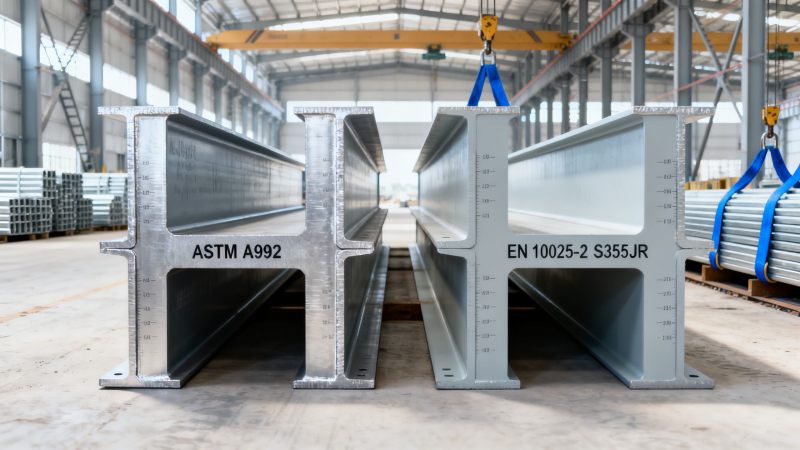
As a certified structural steel manufacturer exporting to North America, Europe, the Middle East, and Southeast Asia, Hongteng Fengda bridges regulatory and technical gaps through three core capabilities:
- Multi-standard compliance: Our beams, angles, channels, and cold-formed profiles meet ASTM, EN, JIS, and GB standards — with in-house QA labs performing tensile, bend, impact, and ultrasonic testing per ISO/IEC 17025 protocols.
- OEM-grade customization: From custom H-beam weight charts to galvanized sheet for roofing or precision-cut stainless welded mesh, we support engineering-driven specs — including non-standard dimensions, special coatings, and packaging for sea freight.
- End-to-end project support: We provide free technical consultation on grade equivalency, assist with documentation (including English-language MTRs and CE marking support), and offer sample shipments within 5 working days.
Whether you’re validating EN 10025–ASTM A992 interchangeability for a Dubai airport expansion, specifying stainless welded mesh for a pharmaceutical plant in Germany, or optimizing steel rod diameter for prefabricated housing in Canada — our team delivers actionable data, not just product catalogs.
Get Started Today
Contact Hongteng Fengda now to request:
- A comparative MTR sample pack for ASTM A992 vs. EN 10025 S355JR
- Customized Stainless Steel Welded Mesh quotation based on mesh/inch, alloy grade, and roll dimensions
- Technical review of your connection design package for cross-standard feasibility
- Lead time confirmation for your target delivery window (standard: 10–25 days; expedited: 7–12 days)
Please give us a message


Please enter what you want to find