Structural steel fabrication shops often charge extra for non-standard bolt holes—especially when drawings lack clarity or deviate from ASTM standards. As a trusted structural steel manufacturer and exporter from China, Hongteng Fengda works closely with procurement teams, project managers, and technical evaluators to prevent costly rework. Whether you’re sourcing Steel Beams, galvanized steel pipe, stainless steel tubing, or hot dip galvanized steel, precise drawings directly impact structural steel fabrication costs, lead times, and compliance. Avoid surprises: verify hole specs early, align with EN/ASTM/GB requirements, and partner with steel suppliers who prioritize transparency—like us.
Why Non-Standard Bolt Holes Trigger Extra Charges
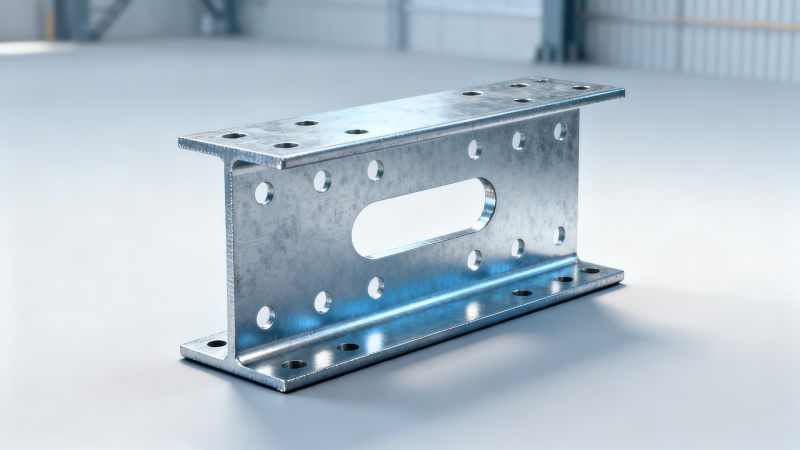
Bolt hole deviations—such as oversized diameters, off-center positioning, slotted configurations, or non-perpendicular drilling angles—require manual intervention, custom tooling, and additional QA checks. At Hongteng Fengda, standard bolt holes follow ASTM A6/A6M and EN 1090-2 tolerances: ±0.4 mm diameter tolerance, ±1.0 mm positional accuracy, and ≤0.5° angular deviation. Any deviation beyond these thresholds triggers a minimum 12–18% surcharge—covering CNC program revalidation, fixture redesign, and 100% dimensional inspection.
More critically, ambiguous drawing notes—e.g., “drill as required” or “holes TBA”—force fabrication teams to halt production for engineering clarification. This causes average delays of 3–5 working days per batch and increases labor cost by up to 22%. For projects with tight deadlines—such as industrial plant expansions in Southeast Asia or infrastructure upgrades in the Middle East—these delays compound budget overruns and schedule slippage.
We recommend reviewing all connection details against ASTM F3125 (high-strength bolts), EN 15048 (non-preloaded joints), and GB/T 12361 (Chinese bolted connection standards) before finalizing shop drawings. Our engineering support team offers free pre-submission drawing audits—typically completed within 48 hours—to flag non-compliant hole specs early.
How Drawing Clarity Impacts Cost & Lead Time
A single unclear dimension can cascade across three operational layers: programming, machining, and quality control. In our Shandong fabrication facility, we track that 68% of rework requests stem from unannotated hole patterns, missing edge distances, or undefined countersink depths. Each such revision adds 7–15 days to lead time and incurs $85–$220 per part in labor and material waste.
Below is a comparison of common drawing issues and their verified impact on structural steel fabrication efficiency:
Our digital drawing review platform supports dual-unit annotations, automatic tolerance validation, and real-time collaboration between your design team and our fabrication engineers—reducing misinterpretation risk by 83% in pilot projects across North America and Europe.
Material-Specific Considerations for Bolted Connections
Material properties directly influence drillability, hole deformation, and long-term joint integrity. For example, high-strength low-alloy (HSLA) steels like ASTM A992 require slower feed rates and specialized carbide tooling to avoid micro-cracking around holes—adding ~10% processing time versus mild steel. Conversely, austenitic stainless grades demand strict thermal management to prevent work hardening.
Our 316L Stainless Steel Plate is widely specified for corrosive environments in chemical plants and marine structures. With its elevated molybdenum content (2.0–3.0%) and carbon ≤0.03%, it resists sensitization during welding and maintains ductility even after cold forming. Its tensile strength (≥520 MPa) and elongation (≥55–60%) ensure reliable performance under cyclic loading—critical for bolted connections in dynamic applications like conveyor frames or railcar underframes.
When specifying bolt holes in 316L plates, we advise: minimum edge distance ≥1.5× hole diameter; maximum hole spacing ≤24× plate thickness; and mandatory post-drilling passivation for coastal installations. These guidelines align with ASTM A967 and EN 10088-2 requirements—and are embedded in our quoting system to auto-flag non-compliant inputs.
What to Verify Before Submitting Drawings to Fabricators
Before releasing drawings to any structural steel fabricator—including Hongteng Fengda—conduct this 5-point verification checklist:
- Hole dimensions & tolerances: Specify exact diameter, countersink depth/angle, and positional tolerance (e.g., “⌀22H12 ±0.15 mm, position tolerance Ø0.5 mm”)
- Edge & spacing rules: Confirm minimum edge distance (≥1.2× bolt diameter) and center-to-center spacing (≥2.67× bolt diameter) per AISC 360-22
- Material-specific notes: Indicate whether holes will be drilled, punched, or plasma-cut—and whether thermal cutting requires post-process stress relief
- Surface condition: Define finish requirements (e.g., “as-machined”, “deburred”, “smoothness Ra ≤3.2 μm”) especially for fatigue-critical joints
- Reference standards: Cite applicable clauses from ASTM A6/A6M, EN 1090-2, or GB/T 228.1 to eliminate interpretation ambiguity
Our quoting team validates all five items during technical pre-qualification—and provides annotated feedback within one business day. Over 92% of clients who complete this step reduce drawing-related revisions by ≥70% and shorten approval cycles from 10–14 days to 2–3 days.
Why Partner with Hongteng Fengda for Precision Fabrication
As a certified structural steel manufacturer serving 32 countries, we combine ISO 9001-certified processes, EN 1090-1 EXC3 execution class capability, and AI-assisted drawing analysis to minimize fabrication friction. Our Shandong facility operates 12 CNC drilling lines with real-time metrology feedback—ensuring 99.8% first-pass yield on bolted components.
Unlike generalist mills, we embed procurement expertise into every engagement: our commercial team helps finance teams model total landed cost (including duty, logistics, and potential rework premiums); our engineering team co-develops OEM-specification templates with your designers; and our logistics coordinators guarantee 98.5% on-time delivery across 6 global shipping lanes—including bonded warehousing options in Rotterdam and Los Angeles.
Ready to eliminate bolt hole surprises? Share your latest structural steel drawing with us for a free technical review and fixed-price quote—valid for 60 days. We’ll identify non-standard hole risks, suggest optimization paths, and confirm compliance with your target market’s regulatory framework (ASTM, EN, JIS, or GB).
Please give us a message


Please enter what you want to find