Understanding structural steel for construction costs is essential for balancing budget, performance, and project timelines. From I beam weight per foot and prefab structural steel to angle iron for shelving and stainless pipe applications, material choices directly affect total cost. This guide helps buyers, engineers, and project managers evaluate key factors, compare options, and source from a reliable stainless steel sheet supplier with confidence.
What Really Drives Structural Steel Cost in Construction Projects?
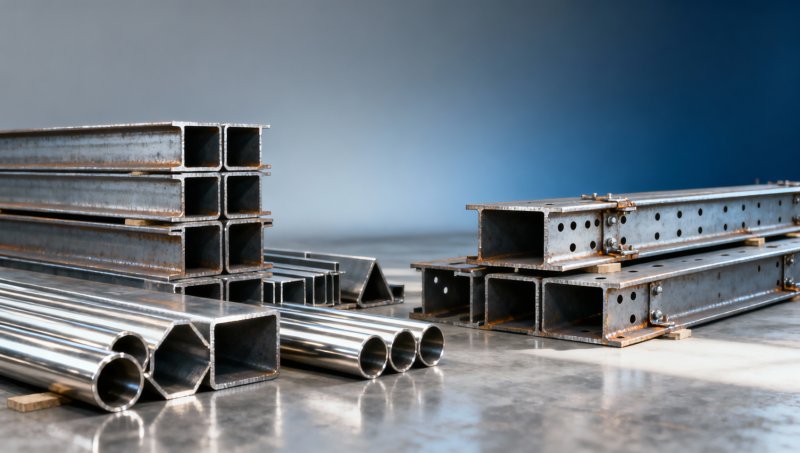
Structural steel for construction costs are rarely determined by base material price alone. In most real projects, the final budget is influenced by 4 major layers: steel grade, section type, fabrication complexity, and logistics. A simple stock angle or channel can be priced very differently from a welded beam, cold formed profile, or OEM structural component with holes, slots, and surface treatment.
For procurement teams and project managers, the first mistake is to compare quotes by ton only. Cost per ton is useful, but it does not explain the full installed cost. A lighter section with better strength efficiency may reduce crane time, connection work, and waste. In contrast, a lower unit price can become expensive if it increases cutting loss, rework, or delivery delay by 7–15 days.
Global buyers also need to consider compliance and sourcing stability. Structural steel exported to North America, Europe, the Middle East, and Southeast Asia often needs alignment with ASTM, EN, JIS, or GB standards. If the supplier cannot control dimensional tolerance, traceability, or batch consistency, hidden cost appears later in inspection, installation, and claim handling.
Hongteng Fengda focuses on this decision logic. As a structural steel manufacturer and exporter from China, the company supports standard specifications and customized solutions for angle steel, channel steel, steel beams, cold formed steel profiles, and fabricated components. For many buyers, this matters because stable production capacity and dependable lead times can protect both budget planning and project sequencing.
The 5 cost layers buyers should check before approving a quote
- Raw material basis: grade, section weight, and market fluctuation directly change the steel value per ton.
- Processing scope: cutting, drilling, punching, welding, bending, and galvanizing can add major cost.
- Tolerance requirement: tighter dimensional control usually requires more process control and inspection time.
- Packaging and shipment: export packing, bundle method, container loading efficiency, and route affect landed cost.
- Risk factor: unstable lead time or inconsistent quality often creates the highest indirect cost during installation.
The table below summarizes the most common cost drivers that affect structural steel for construction costs from quotation stage to site delivery. It is especially useful for technical evaluators, financial approvers, and commercial teams comparing several suppliers.
This comparison shows why a lower headline price can be misleading. In many B2B construction projects, the better decision is the supplier that gives clearer scope, stable output, and fewer downstream surprises. That is especially true when several disciplines depend on the same steel delivery window.
How to Compare Common Steel Options Without Overpaying
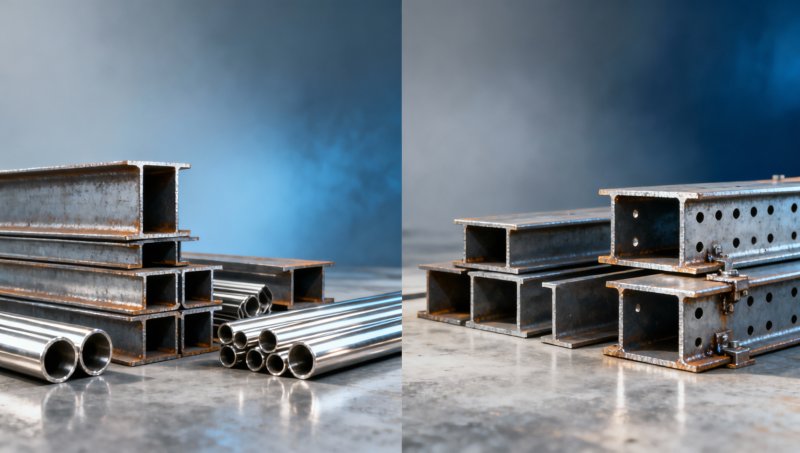
Different structural applications call for different steel products, and poor matching can inflate cost fast. For example, an engineer comparing I beams, channels, angles, and cold formed sections should not look only at weight per foot. Load path, span length, connection method, fabrication ease, corrosion exposure, and maintenance access all influence the best value option.
In commercial shelving, support framing, platforms, and barriers, angle iron for shelving may be the most economical route for light to medium loads. For primary frames and long spans, steel beams often provide a more efficient strength-to-weight ratio. For modular buildings or light industrial structures, prefab structural steel can reduce on-site labor and shorten installation into 3 clear stages: foundation readiness, frame erection, and final connection.
Some buyers also compare carbon steel and stainless products in mixed systems. Stainless pipe or sheet can make sense in corrosive environments, but using stainless where coated carbon steel is sufficient may push the budget beyond what the operating environment requires. The smart approach is to match material to service condition, not to buy premium material by default.
Hongteng Fengda helps buyers make that distinction by supplying both standard structural profiles and customized components under recognized international standards. This is valuable when technical teams need one supplier that can align section design, production feasibility, and export delivery rather than leaving procurement to coordinate multiple factories.
Quick comparison for planning and budget control
The next table compares several frequently considered options for structural and related construction use. It helps clarify when a lower initial material price supports the project and when it creates extra fabrication or maintenance burden later.
The key takeaway is simple: selection should follow load, environment, fabrication route, and installation plan. When these 4 variables are aligned early, structural steel for construction costs become more predictable and easier to defend during internal approval.
A practical inserted option for auxiliary construction and industrial use
Not every project cost is driven by beams and columns. Many construction, packaging, barrier, and fabrication tasks also need flexible wire materials for tying, mesh production, fencing, and general industrial use. In those cases, Mild Steel Wire Rod can be a practical supporting product for contractors, distributors, and workshops handling secondary processing.
This product is available in Q195 and Q235 low carbon steel, with wire diameter from 0.25 mm to 5.0 mm, zinc coating thickness from 8 g/m2 to 25 g/m2, and tensile strength from 350 Mpa to 550 Mpa. Typical coil packing ranges from 50 kg to 1,000 kg, using plastic film inside and woven bag outside, with wire bobbin packaging also available for easier handling.
For buyers concerned with budget and handling efficiency, its main advantages include low cost, bright and smooth appearance, good corrosion resistance, relatively pure and strong coating, and excellent ductility. It is widely used in construction, wire mesh, handicrafts, packaging, breeding, barrier isolation, fences, hangers, filter baskets, barbed wire, and tie ropes, making it a useful companion item in broader steel procurement planning.
What Should Procurement and Engineering Teams Check Before Ordering?
A sound buying process for structural steel should connect technical approval with commercial review. Many cost overruns happen because drawings, standards, and delivery scope are not locked before the purchase order. The safest approach is to review 5 checkpoints: specification, tolerances, processing details, inspection method, and shipment plan. This reduces argument later between engineering, purchasing, finance, and site teams.
Technical evaluators should confirm whether the supplier can produce to ASTM, EN, JIS, or GB related requirements as requested by the project. They should also verify section dimensions, thickness range, straightness, surface condition, and any fabrication features such as holes, bevels, or welding preparation. Even a tolerance deviation of a few millimeters can disrupt fit-up during steel erection.
Procurement and business reviewers should evaluate lead time in realistic stages. A typical export order may include 3 phases: production scheduling, inspection and packing, then sea or land shipment. Depending on order complexity, normal manufacturing can take around 2–6 weeks, while custom fabricated components may need additional coordination for drawings and final confirmation.
Quality and safety managers should not limit review to certificates alone. They should ask how batches are identified, how dimensions are checked, and how packaging protects edges, finish, and count integrity. Good suppliers are not simply low-price sellers; they are process partners that can prevent installation delay, field modification, and avoidable safety risk.
A 6-point procurement checklist for structural steel
- Confirm the exact steel grade, standard, and section dimensions on the approved drawing.
- List all fabrication work separately, including cutting, drilling, welding, bending, and coating.
- Request tolerance and inspection requirements before quotation comparison begins.
- Review packaging method, loading plan, and protection for long-distance export shipment.
- Check whether the supplier can support OEM or custom parts in the same order.
- Align delivery sequence with site schedule so steel arrives in the required installation order.
Why integrated manufacturing support can lower total project risk
When one manufacturer handles structural sections and customized components together, coordination becomes simpler. Hongteng Fengda supports angle steel, channel steel, steel beams, cold formed profiles, and OEM structural steel components from China for global buyers. That helps reduce communication gaps between drawing review, manufacturing, and export arrangement.
For project owners and distributors, this integrated approach is often more valuable than chasing the lowest unit rate from several suppliers. Fewer handover points mean fewer chances of mismatch in dimensions, finish, packing, and delivery timing. Over a project cycle of several weeks or several months, this can support better budget control and smoother site execution.
How Standards, Quality Control, and Delivery Planning Affect Total Cost
Construction buyers often focus on material value first, but standards and delivery discipline have a direct cost impact. If a project requires compliance with ASTM, EN, JIS, or GB references, the supplier must be able to align material sourcing, process control, and documentation. Without that alignment, the result may be delayed approval, repeated inspection, or replacement procurement at a much higher cost.
Quality control should be viewed as a cost-control tool, not just a formal procedure. Common inspection topics include visual surface review, dimensional verification, quantity check, marking, and packing condition. On fabricated items, buyers may also review weld appearance, hole location, and assembly accuracy. These 5 areas help prevent downstream problems that are much more expensive to fix on site.
Delivery planning matters just as much. A structurally simple order can still disrupt a project if packing lists, bundle identification, or shipment sequence are unclear. For export business, buyers should ask whether the supplier can support consolidated loading, shipment marking, and milestone communication from production to dispatch. Clear updates every key stage are often more useful than vague promises of fast delivery.
Hongteng Fengda serves customers across multiple regions and emphasizes stable production capacity, consistent quality, and dependable lead times. For overseas buyers, this combination supports lower sourcing risk. It is especially relevant when the order includes both standard steel products and customized elements that must arrive together for installation efficiency.
Standard and control points worth confirming
The following table helps teams connect compliance requirements with practical inspection and supply decisions. It is useful for project engineers, quality managers, and financial approvers who need a structured basis for comparing offers.
A structured review like this turns structural steel buying into a measurable process. It helps both procurement and technical teams identify whether a quote is truly complete, whether risk is controlled, and whether the supplier can support the project beyond the sales stage.
FAQ: Common Questions About Structural Steel for Construction Costs
Many buyers search for structural steel prices expecting a simple answer, but real project cost depends on specification, fabrication, compliance, and delivery conditions. The questions below address common concerns from engineers, purchasers, distributors, and end users who need practical guidance before requesting a quotation.
How can I estimate structural steel cost more accurately at the early stage?
Start with 3 core inputs: required section type, approximate tonnage or length, and processing scope. Then add coating, packing, and delivery destination. If you only ask for a price per ton without fabrication details, the quotation may look competitive but fail to reflect actual installed cost. Early estimates become more reliable when drawings and standards are at least partially defined.
Is prefab structural steel always cheaper than site fabrication?
Not always, but it is often more predictable. Prefab structural steel can reduce on-site labor, shorten erection time, and improve quality consistency, especially for repetitive structures or remote sites. However, if the design changes frequently or transport is difficult, prefab may require closer coordination. The right comparison should include factory processing cost, transport, crane time, and field labor together.
What are common mistakes that increase steel procurement cost?
The most common mistakes are unclear standards, incomplete fabrication scope, ignoring tolerance needs, and poor delivery sequencing. Another frequent issue is buying premium material for applications that do not need it. For example, using stainless components where coated carbon steel is enough can push costs unnecessarily. A proper technical-commercial review usually prevents these errors.
How long does a typical structural steel export order take?
Lead time varies by product type and order complexity, but common manufacturing windows are around 2–6 weeks after technical confirmation. Custom fabrication, mixed product orders, or special packing requests may extend that schedule. Buyers should separate the timeline into confirmation, production, inspection, and shipment so each stage is visible and manageable.
Why Work With a China Structural Steel Manufacturer That Supports Standard and Custom Supply?
For international buyers, the best supplier is not simply the one with available steel. It is the one that can align product range, technical understanding, quality control, and shipment execution. Hongteng Fengda supplies angle steel, channel steel, steel beams, cold formed steel profiles, and customized structural steel components for global construction, industrial, and manufacturing projects. That breadth can simplify sourcing for buyers handling multi-item orders.
This matters when your team must balance 4 practical goals at once: cost control, standard compliance, lead time reliability, and low sourcing risk. With modern manufacturing facilities and strict quality control, the company supports projects that need standard specifications as well as OEM solutions. For many distributors, contractors, and project owners, that creates a more manageable supply chain and fewer vendor coordination issues.
If you are evaluating structural steel for construction costs, the most productive next step is to prepare a focused inquiry. Share your required product type, grade or standard, size range, processing details, quantity, destination, and expected delivery window. If the project includes mixed items, include that in one request so the quotation reflects the real supply scope rather than an incomplete single-product estimate.
You can contact Hongteng Fengda for parameter confirmation, product selection, customized structural steel solutions, standard matching, sample support, packing requirements, delivery schedule discussion, and quotation communication. This is especially useful when you need to compare standard sections with fabricated alternatives, reduce sourcing uncertainty, or build a long-term steel supply plan for future projects.
Please give us a message


Please enter what you want to find