Choosing the right structural steel channel sizes for equipment platforms is critical to load capacity, safety, and long-term performance. For technical evaluation, structural steel channel selection should connect span, support layout, loading pattern, and fabrication details. A practical review helps reduce risk, avoid overdesign, and improve cost control in industrial steel projects.
What is a structural steel channel, and why is it widely used for equipment platforms?
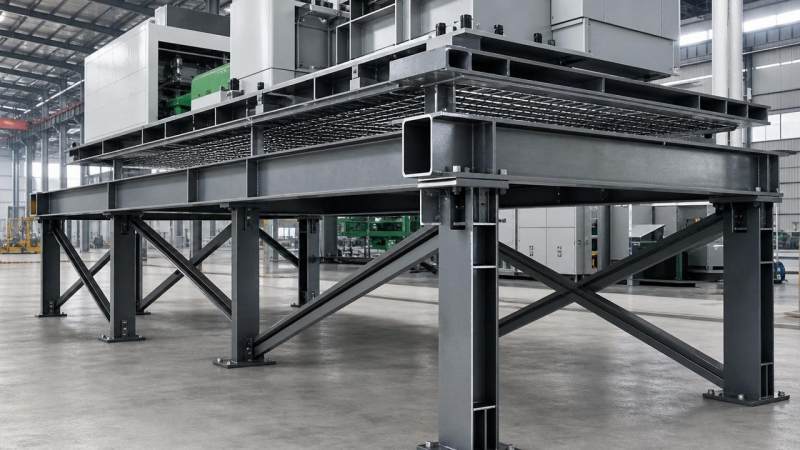
A structural steel channel is a C-shaped section with a web and two flanges. It offers useful bending strength, efficient fabrication, and easy connection points for platform framing.
For equipment platforms, a structural steel channel often supports grating, checker plate, access walkways, skids, and secondary framing. It is common in factories, utility plants, warehouses, and processing facilities.
Compared with some larger beam sections, channel profiles can simplify layouts where loads are moderate and space is limited. They are also practical for edge framing and stair landing support.
However, not every structural steel channel performs the same way. Section depth, flange width, thickness, steel grade, and orientation directly affect strength, stiffness, and connection behavior.
How do structural steel channel sizes affect platform load capacity?
Structural steel channel sizes influence three main performance factors: bending strength, shear capacity, and deflection. A deeper section usually improves bending resistance more effectively than simply increasing thickness.
Equipment platforms rarely carry only static weight. Loads may include machinery, maintenance traffic, vibration, stored items, piping, and impact from moving components.
When evaluating a structural steel channel, review both dead load and live load. Also check concentrated loads from equipment feet, base plates, motor frames, or maintenance access points.
Deflection control matters as much as strength. A channel may pass stress checks but still feel unstable if the platform vibrates or sags too much during operation.
For this reason, many platform designs use allowable deflection limits tied to span. Tight vibration-sensitive applications may need more conservative limits than general access platforms.
- Short spans can often use lighter structural steel channel sections.
- Longer spans usually require greater depth or closer supports.
- Point loads demand special checking near supports and load contact areas.
- Dynamic equipment may require stiffness review beyond basic strength formulas.
Which selection factors matter most when choosing structural steel channel sizes?
The best structural steel channel size is not determined by dimensions alone. It depends on how the section works inside the full platform system.
1. Span and support condition
A simply supported channel behaves differently from a continuous member. End fixity, intermediate bracing, and support spacing can significantly change section demand.
2. Load distribution
Uniformly distributed floor loads are easier to handle than concentrated machine loads. A structural steel channel under skid-mounted equipment may need local reinforcement or paired sections.
3. Orientation and connection method
Channels can be used singly, back-to-back, toe-to-toe, or as built-up members. Bolt locations, weld access, and connection eccentricity affect real performance.
4. Corrosion environment
Indoor dry platforms and outdoor chemical environments need different protection strategies. Surface treatment can influence service life and maintenance cost.
5. Fabrication efficiency
Readily available structural steel channel sizes often reduce lead time and waste. Customized processing is useful when openings, clips, or integrated supports are required.
In some projects, mixed-material details are also needed around guards, accessories, or corrosion-prone fittings. For example, 304 Stainless Square steel rod may be used in related fabrication where appearance, corrosion resistance, or small component forming is needed.
How does structural steel channel compare with angles, beams, and other steel profiles?
A structural steel channel is versatile, but it is not always the best section. Selection should balance structural need, connection simplicity, and project budget.
If the platform carries eccentric machinery or cantilevered attachments, a single structural steel channel may need extra bracing. In those cases, beams or built-up sections may perform better.
What mistakes should be avoided when specifying a structural steel channel?
A frequent mistake is selecting by nominal size only. Two channels with similar depth may differ greatly in weight, web thickness, and actual section properties.
Another issue is ignoring torsion. A structural steel channel loaded away from its shear center can rotate, especially when grating clips, pipe supports, or side-mounted equipment create eccentricity.
Corrosion is also underestimated. Outdoor platforms exposed to moisture, salts, or chemicals need proper coating systems, drainage details, and inspection access.
Fabrication assumptions can cause hidden cost. Excessive coping, nonstandard punching, and complex welding may offset any material savings from choosing a lighter channel.
- Do not rely only on depth without checking section modulus and inertia.
- Do not ignore local bearing under base plates or support seats.
- Do not skip vibration review for rotating or reciprocating equipment.
- Do not separate material choice from coating and environment.
How can buyers balance cost, standards, and supply reliability?
The most economical structural steel channel is not always the lightest one. True cost includes material yield, fabrication labor, coating, freight, and replacement risk.
Check whether the required profile follows ASTM, EN, JIS, or GB standards. Matching the project standard early avoids rework in drawings, testing, and inspection documents.
Reliable supply also matters. Stable production capacity, dimensional consistency, and traceable quality records help keep platform fabrication on schedule.
Hongteng Fengda supplies angle steel, channel steel, steel beams, cold formed profiles, and customized structural components for international projects. Products are manufactured under strict quality control and aligned with major standards.
When project details require complementary materials, related stainless items may support finishing or special assemblies. One example is 304 Stainless Square steel rod, available with multiple surface options and standard compliance references.
Quick FAQ: how should structural steel channel sizes be reviewed before ordering?
Structural steel channel sizing for equipment platforms should be based on actual load paths, support conditions, service environment, and fabrication requirements. Good selection improves safety, stiffness, and project value.
Before finalizing an order, compare section properties, check applicable standards, and confirm whether standard or customized processing is needed. A clear technical review leads to better platform performance and more dependable steel sourcing.
Please give us a message


Please enter what you want to find