When selecting structural steel beams for construction, the choice between welded and rolled sections affects strength, cost, fabrication efficiency, and project performance. For buyers comparing a steel beam for bridge, reviewing an I beam weight chart, or using a steel beam weight calculator, understanding these differences is essential. This guide explains key factors to help engineers, contractors, and procurement teams make informed decisions.
In practical sourcing, the welded-versus-rolled decision is rarely just a design preference. It influences section availability, lead time, transport efficiency, coating strategy, and total installed cost across commercial buildings, bridges, plants, warehouses, and infrastructure works. For technical evaluators and project managers, the wrong beam choice can add fabrication steps, increase welding work on site, or create unnecessary dead load.
For global buyers, especially those sourcing from China, beam selection also connects with standards compliance, dimensional tolerances, export packing, and supply reliability. A capable structural steel manufacturer can support both standard rolled sections and custom welded members, helping procurement teams balance engineering requirements with budget targets and delivery schedules.
Understanding Welded and Rolled Structural Steel Beams
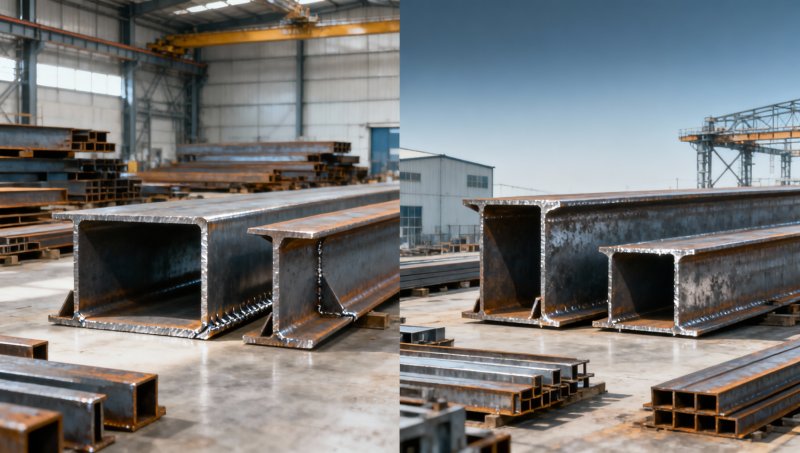
Rolled steel beams are produced in mills through hot rolling, where steel is shaped into standard profiles such as I-beams, H-beams, channels, and wide flange sections. These products are widely used because they are cost-effective for common spans and loads, and they are available in standard lengths such as 6 m, 9 m, 12 m, or customized cut lengths depending on the supplier.
Welded steel beams are fabricated by joining steel plates or sections into a required profile. This method is often selected when projects need non-standard dimensions, heavier load capacity, longer spans, variable web thickness, or optimized section geometry. In bridge structures, industrial plants, and heavy transfer beams, welded members can be engineered to match exact design loads instead of relying on a standard mill section.
The manufacturing route leads to important performance differences. Rolled beams generally offer faster availability and lower processing cost for routine building frames. Welded beams provide greater dimensional flexibility, but they require additional fabrication, quality control, and weld inspection. Depending on project complexity, that can add 7–21 days to production compared with stock or standard rolling schedules.
How each type is typically used
Rolled sections are common in warehouses, workshop frames, mezzanines, residential steel framing, and repetitive commercial construction. When design loads fall within standard section ranges, they reduce engineering and procurement complexity. This is especially helpful for distributors, contractors, and projects that need quick replacement or phased delivery.
Welded sections are more common in bridge girders, crane beams, transfer structures, offshore support frames, and large industrial buildings. If a project requires a beam depth beyond typical rolled sizes, or if a lighter tailored section can reduce total tonnage by 5%–15%, fabricated welded beams may become more economical at system level despite higher unit fabrication cost.
Key decision triggers
- Choose rolled beams when standard sizes meet load and span requirements, lead time is tight, and budget control is the top priority.
- Choose welded beams when the design needs custom dimensions, lower self-weight for a target capacity, or special web and flange combinations.
- Review total project cost, not just per-ton price, because welding, inspection, freight, and installation can shift the final decision.
The comparison below shows the practical differences that most engineers and buyers evaluate before finalizing a beam supply plan.
Please give us a message


Please enter what you want to find