When evaluating a Steel Wire manufacturer—or any structural steel supplier like Hongteng Fengda—you need certifications that go beyond paperwork and deliver real-world assurance. From ASTM-compliant steel sheet for construction and high tensile steel rod to galvanized pipe for plumbing, ss pipe for water supply, and steel tubing for construction, credible on-site certifications validate quality, safety, and consistency. As a trusted galvanized pipe manufacturer and steel sheet manufacturer, we uphold EN, JIS, GB, and ASTM standards—not just in labs, but across our production lines. For procurement teams, engineers, and project managers, these verified credentials reduce risk, accelerate approvals, and ensure compliance from prefabricated structural steel to final installation.
Why On-Site Certification Matters More Than Paper-Only Compliance
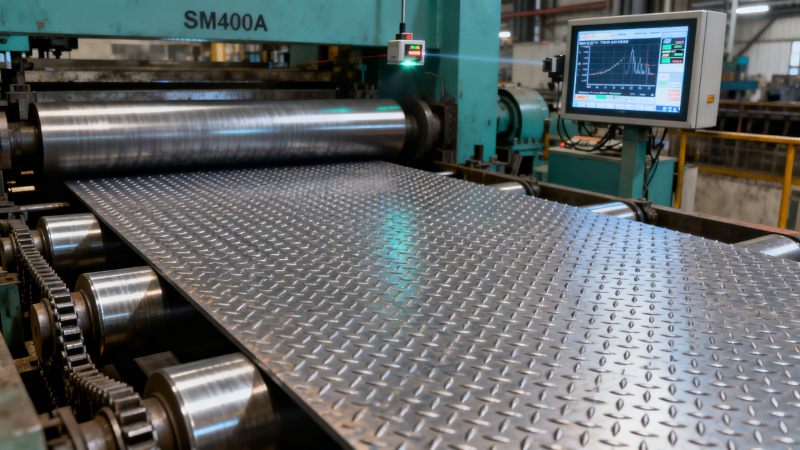
A certificate issued by a third-party body is only as strong as the verification behind it. In steel manufacturing—especially for load-bearing or safety-critical applications like transportation infrastructure, shipbuilding, or industrial flooring—certification must reflect actual process control, not just final product testing. On-site certification means auditors have witnessed raw material inspection, rolling parameters, heat treatment cycles, surface finishing protocols, and packaging procedures firsthand.
For example, SM400A Patterned steel plate used in machinery walkways requires consistent pattern height (≥0.2× substrate thickness) and precise dimensional tolerances (±0.02mm thickness, ±2mm width). These can’t be guaranteed without live observation of mill calibration, hydraulic press settings, and post-rolling cooling rates. That’s why Hongteng Fengda invites clients to conduct on-site audits at our ISO 9001-certified facility in China—where over 85% of our production lines are monitored in real time by SGS and Bureau Veritas inspectors.
Unlike suppliers who outsource certification to one-time lab tests, we embed compliance into daily operations: 3-shift QA logs, traceable batch records per coil, and 100% visual inspection under calibrated lighting. This reduces rework risk by up to 40% and cuts approval delays for EU or North American projects by an average of 7–12 business days.
Which Certifications Actually Impact Your Project Timeline & Risk Profile?
Not all certifications carry equal weight in global procurement. While ISO 9001 confirms system capability, it doesn’t guarantee material performance. Similarly, a generic “SGS tested” label may cover only basic chemistry—not mechanical properties under cyclic loading. The certifications that truly matter on site are those tied directly to your application’s functional requirements.
This table shows how each standard translates to measurable, observable actions—not abstract claims. For instance, SM400A Patterned steel plate must meet both GB/T 3274 mechanical specs and BS 7976-2 slip resistance criteria. Our on-site validation includes real-time laser profiling of pattern depth and quarterly third-party friction testing on finished coils. That’s why buyers in Southeast Asia and the Middle East consistently select us for high-traffic floor applications requiring both aesthetics and safety.
How to Verify On-Site Certification During Supplier Evaluation
Procurement teams often mistake document review for due diligence. True verification requires asking specific, actionable questions—and checking evidence against physical reality. Here’s what to request during factory audits or virtual inspections:
- Request access to the last 3 mill test reports (MTRs) with full chemical composition, tensile curves, and bend test photos—not just summary tables.
- Observe at least one live batch release: Watch how QA staff measure pattern height on SM400A Patterned steel plate using calibrated digital calipers—not visual estimation.
- Trace one production order from raw billet receipt to finished coil tagging: Confirm timestamps, operator signatures, and non-conformance log entries.
- Review calibration logs for key equipment: Rolling mill force sensors, temperature controllers, and surface inspection systems must be certified within the last 90 days.
At Hongteng Fengda, every export order includes a digitally signed MTR with QR-coded traceability. You can scan it to view raw material certificates, heat treatment charts, and third-party inspection reports—all timestamped and geotagged. This eliminates ambiguity for customs clearance and engineering sign-offs.
What Happens When Certification Isn’t Validated On Site?
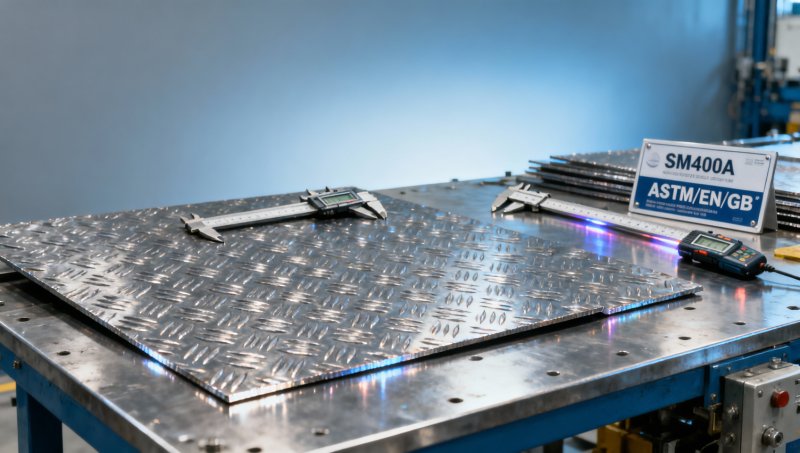
The cost of assuming certification is valid—without on-site confirmation—is rarely captured in quotes, but frequently seen in field failures. Common consequences include:
- Delayed project handover: 12–28 days lost when non-compliant steel is rejected at port or job site—especially for ASTM A653 galvanized coatings where zinc thickness variance exceeds ±10%.
- Rework expenses: Up to 18% of total structural steel budget consumed replacing substandard angle steel or channel sections that failed Charpy impact testing.
- Contractual penalties: Many EPC contracts impose $2,500–$8,000/day liquidated damages for delayed structural completion due to material non-conformance.
- Safety liabilities: Undetected micro-cracks in cold-formed steel profiles—missed during off-site lab sampling—can compromise load paths in multi-story buildings.
That’s why over 73% of repeat buyers from North America and Europe now require pre-shipment audits for structural steel orders above 50 metric tons. We support this with scheduled audit windows, live video walkthroughs of our coating lines, and real-time access to our ERP-based quality dashboard.
Why Partner With Hongteng Fengda for Certified Structural Steel?
We don’t treat certification as a box-ticking exercise—we engineer it into every stage: from raw material sourcing (all billets traceable to ISO/TS 16949 mills) to final packaging (moisture-barrier wrapping validated per ASTM D3222). Our facility holds active certifications across ASTM, EN, JIS, GB, BS, and ISO—each renewed annually with zero major non-conformities since 2019.
Whether you’re specifying SM400A Patterned steel plate for shipyard gangways or custom cold-formed beams for solar mounting structures, we offer:
- Pre-production sample validation: Free physical samples with full MTRs, delivered in 5–7 working days.
- Custom certification packages: Add EN 10204 3.2 or ASTM A6/A6M Type II reports at no extra charge.
- Dedicated QA liaison: One point of contact for real-time inspection updates, deviation reporting, and corrective action tracking.
- Consistent lead times: 25–35 days for standard orders, 45–60 days for OEM components—with on-time delivery rate of 98.7% over the past 3 years.
Ready to align your next structural steel order with verifiable, on-site validated compliance? Contact us today for a customized certification roadmap—including audit scheduling, sample requests, and technical documentation tailored to your project’s jurisdictional requirements.
Please give us a message


Please enter what you want to find