For structural steel stakeholders—from procurement teams and project managers to quality controllers and OEM buyers—mill lot traceability isn’t just compliance; it’s risk mitigation, accountability, and supply chain resilience. As a trusted Steel Wire manufacturer and structural steel supplier, Hongteng Fengda embeds batch traceability into every product—from galvanized pipe for plumbing and ss pipe for water supply to steel sheet for construction and high tensile steel rod. When issues arise, mill lot numbers enable rapid root-cause analysis, ensuring safety, regulatory alignment (ASTM/EN/GB), and zero compromise on prefabricated structural steel integrity. Discover why this granular visibility matters more than you think.
Why Mill Lot Numbers Are Non-Negotiable in Structural Steel Procurement
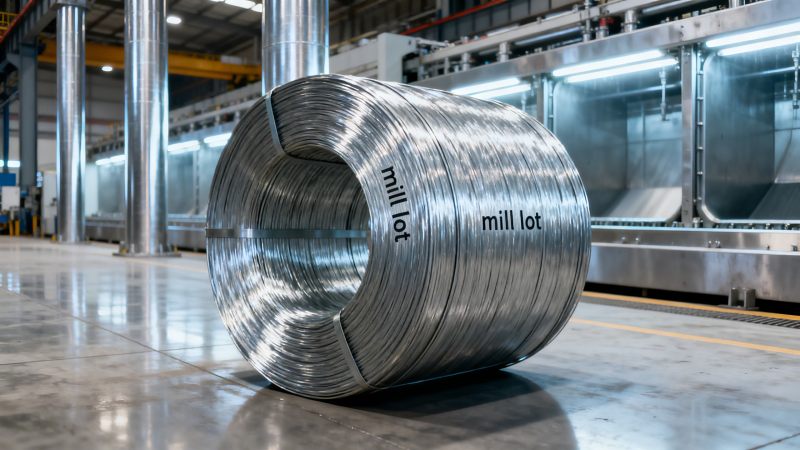
In global construction and industrial projects, a single batch anomaly—whether microstructural inconsistency, coating thickness deviation, or tensile strength drift—can trigger cascading delays. Unlike commodity-grade steel, structural components demand full material pedigree: heat number, rolling date, galvanizing bath temperature, and post-treatment cooling rate must all be verifiable within 72 hours of issue escalation. Hongteng Fengda assigns unique mill lot numbers at the coil level—not per shipment—to ensure traceability down to the exact production shift and operator.
This is especially critical for load-bearing applications where ASTM A653 or EN 10346 compliance isn’t theoretical—it’s legally binding. A missing or mismatched mill lot number invalidates third-party inspection reports and may void insurance coverage for structural failure. For procurement teams evaluating suppliers across North America, Europe, and the Middle East, mill lot discipline signals operational maturity—not just paperwork compliance.
Real-world impact? In Q3 2023, a Southeast Asian infrastructure project identified inconsistent zinc coating adhesion on Galvanized Pipe used in bridge support frames. With full mill lot records—including bath chemistry logs and pull-test results from the same coil—Hongteng Fengda isolated the variance to one furnace run, replaced affected sections within 5 working days, and provided corrective action documentation accepted by the client’s engineering review board.
How Traceability Translates Across Key Applications
Mill lot traceability isn’t uniform across use cases. Its value intensifies with exposure severity, regulatory scrutiny, and lifecycle duration. For example:
- Construction & Infrastructure: Galvanized pipe for water supply systems requires ASTM A53 Grade B certification—and mill lot verification ensures each pipe segment meets minimum yield strength (35 ksi) and elongation (20% over 2 in) per EN ISO 6892-1 test protocols.
- Energy & Mining: Oil well pipe and coal distillation tubing demand traceable thermal history. Batch records confirm annealing cycles held within ±5°C of 650°C for 45 minutes—critical for preventing intergranular corrosion in H₂S-rich environments.
- OEM Manufacturing: Automotive chassis components require surface roughness (Ra ≤ 0.8 µm) and coating uniformity (±3 µm zinc thickness). Mill lot data links electro-galvanizing current density (12–18 A/dm²) to final finish specs.
Without traceability, these aren’t technical details—they’re liability gaps. A single untraceable batch can halt commissioning, delay handover, and trigger contractual penalties averaging 0.8% of total project value per week of delay.
Traceability Requirements by Project Phase
This phased approach ensures traceability evolves from a pre-qualification checkpoint to an active project assurance tool—not just a document filed at delivery.
What Happens When Traceability Is Incomplete?
Incomplete mill lot records create four measurable business risks:
- Extended Downtime: Without batch-specific metallurgical data, root-cause analysis for cracking or coating delamination takes 12–20 days instead of 2–4 days—delaying restart schedules for power plants or refineries.
- Regulatory Rejection: EN 10217-7 mandates full traceability for pressure equipment. Unverifiable lots trigger mandatory re-testing (cost: $1,200–$3,500 per test set) or rejection by notified bodies like TÜV or Lloyd’s Register.
- Warranty Voidance: OEM contracts typically void structural warranties if mill lot documentation is incomplete or inconsistent with physical markings on delivered goods.
- Reputational Exposure: Public infrastructure projects require public disclosure of material certifications. Gaps invite third-party audit scrutiny and media inquiries—especially in EU and US federal procurement.
Hongteng Fengda prevents these scenarios through dual-source verification: each coil carries both laser-etched mill lot codes and QR-coded digital twin records accessible via our supplier portal—updated in real time during galvanizing, cutting, and packaging stages.
Why Partner with Hongteng Fengda for Traceable Structural Steel
As a certified structural steel manufacturer serving 32 countries, Hongteng Fengda integrates traceability into its core manufacturing DNA—not as an add-on service, but as a non-negotiable process control step. Our facilities maintain ISO 9001:2015-certified quality management systems with dedicated traceability coordinators who validate every mill lot against 6 critical checkpoints: raw material heat ID, rolling schedule timestamp, galvanizing bath chemistry logs, dimensional inspection reports, mechanical test certifications, and final packaging verification.
We support your team with actionable deliverables—not just documents:
- Pre-shipment digital COA packages with embedded mill lot search functionality (searchable by ASTM/EN/GB standard or application code)
- On-demand access to historical batch performance dashboards—showing zinc coating thickness distribution, tensile strength CV%, and bend test pass rates over 12-month rolling windows
- Dedicated traceability liaison assigned per order—available for joint review of non-conformance reports within 4 business hours
If your next structural steel order requires full mill lot transparency—whether for Galvanized Pipe in water infrastructure, cold-formed beams for warehouse racking, or custom angle steel for offshore platforms—contact us to request: (1) sample mill lot documentation, (2) traceability protocol alignment with your QA checklist, or (3) a live demo of our digital twin reporting interface.
Please give us a message


Please enter what you want to find