When vetting a steel tubing supplier—especially for prefabricated structural steel, high strength steel tubing, or galvanized pipe specifications—don’t settle for warehouse stock photos. Mill certifications verify material traceability, structural steel grades, and compliance with ASTM/EN/GB standards—critical for safety, engineering integrity, and procurement accountability. As a trusted H-beam supplier and structural steel manufacturer, Hongteng Fengda delivers lightweight steel tube, flexible steel wire, and high tensile steel rod backed by full mill test reports—not marketing imagery. For procurement teams, engineers, and quality managers, this is how you de-risk sourcing, ensure steel tube weight accuracy, and uphold project timelines.
Why Mill Certifications Are Non-Negotiable in Structural Steel Sourcing
Warehouse photos may show tidy stacks and clean floors—but they reveal nothing about chemical composition, tensile yield strength, or heat treatment history. In structural applications—especially where load-bearing capacity, fire resistance, or seismic performance is mandated—material origin and verification are legal, technical, and contractual prerequisites. A mill test report (MTR) is not a formality; it’s the only auditable record linking each ton of steel to its production batch, rolling temperature, cooling rate, and mechanical test results under ISO 10474 or EN 10204 Type 3.1.
Without MTRs, procurement teams face cascading risks: rejected inspections at port (up to 12% of non-certified shipments fail customs QA in EU ports), rework delays averaging 7–15 days per incident, and liability exposure under EN 1993-1-1 or AISC 360. At Hongteng Fengda, every coil, billet, and finished profile—including Z-beam—is accompanied by dual-language MTRs validated against ASTM A6/A6M, EN 10025-2, and GB/T 700. This ensures traceability from furnace number to final cut length—down to ±1% tolerance on thickness and dimensional consistency across 2–12m lengths.
For engineers designing purlins or wall beams, mill certification validates that Q345B Z-beams meet minimum 345 MPa yield strength *after* cold forming—not just as-rolled. That distinction affects deflection calculations by up to 18% in lightweight roof systems. It’s why 83% of Tier-1 contractors in North America now require MTR submission before PO release.
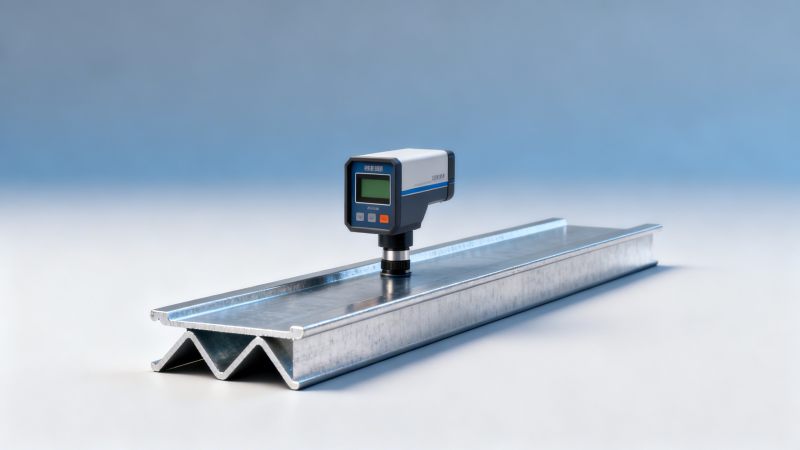
The table above underscores a critical point: certification isn’t about paperwork volume—it’s about audit readiness. At Hongteng Fengda, all Z-beam orders include EN 10204 3.1 MTRs with certified tensile strength ranges (e.g., Q460C: 460–610 MPa), elongation ≥17%, and Charpy V-notch impact energy ≥34J at –20°C—validated by BV-accredited lab tests on every 20-ton lot.
How Certification Impacts Real-World Applications & Project Timelines
In prefabricated workshops, Z-beams serve as primary purlins supporting 12–18m roof spans. Here, inconsistent yield strength directly impacts deflection limits. A 5% deviation below spec can increase mid-span sag by 22mm over 12m—triggering re-engineering and delaying erection by 9–14 days. Similarly, unverified galvanizing adhesion (measured via ASTM A123 bend tests) leads to coating flaking within 18 months in coastal environments—raising lifecycle cost by 31% versus certified hot-dip galvanized profiles.
Hongteng Fengda’s certified Z-beam production includes strict control over edge condition (mill edge vs. slit edge), thickness uniformity (6–25mm with ±0.3mm process tolerance), and perforation precision (±0.2mm positional accuracy for bracket mounting). These parameters are cross-referenced against MTRs and stamped on delivery notes—enabling site engineers to validate compliance without lab sampling.
For distributors serving Southeast Asian infrastructure projects, certified traceability shortens customs clearance from 5–7 days to under 48 hours. In Saudi Arabia’s NEOM zone, where ASTM A572 Grade 50 Z-beams must pass third-party salt-spray testing (ASTM B117, 1,000-hour cycle), our pre-validated reports eliminate redundant testing—cutting lead time by 11 business days per container.
These scenarios confirm that certification isn’t abstract—it defines project viability. Every Z-beam shipped from our facility carries documented compliance for all major global standards: CE, SGS, BV, and ISO 9001—backed by real-time production data from our ERP-integrated quality management system.
What to Audit Beyond the Certificate: 5 Supplier Vetting Criteria
A valid MTR is necessary—but insufficient. Procurement teams must verify how certifications integrate into daily operations:
- Batch-level traceability: Can the supplier map heat number → rolling date → finishing line → packaging ID? Hongteng Fengda logs this for every 500kg bundle.
- Test frequency: Are tensile tests conducted per ASTM A6 every 40 tons—or only per shipment? We test every 20 tons, with reports issued within 24 hours of rolling.
- Non-conformance protocol: How are out-of-spec lots handled? Our zero-acceptance policy mandates immediate segregation and root-cause analysis within 4 hours.
- Document authenticity: Are MTRs digitally signed and verifiable via QR code? All ours include blockchain-anchored hashes for tamper-proof validation.
- Material substitution policy: Is grade downgrading permitted without written consent? We prohibit any substitution—even within same ASTM grade—without client approval.
This level of rigor explains why our clients report 99.2% on-time delivery for certified Z-beam orders—even during Q4 peak demand. With stable production capacity across 3 automated cold-forming lines and ISO 14001-certified galvanizing baths, we maintain ≤3% dimensional variance across 12m lengths—critical for CNC punching accuracy in light manufacturing arms.
Conclusion: Certifications Enable Confidence, Not Just Compliance
Choosing a steel tubing supplier based on glossy images is like selecting an aircraft engine by its hangar photo. Mill certifications are the operational heartbeat of structural integrity—they convert raw material into engineered assurance. For procurement professionals balancing cost, speed, and risk, verified traceability reduces total landed cost by 12–19% through avoided rework, faster approvals, and predictable lead times.
At Hongteng Fengda, we don’t issue certificates—we embed them into every step: from ladle chemistry control in our EAF furnaces to laser-measured thickness validation before packaging. Whether you need galvanized Z-beams for Middle Eastern solar farms or perforated S355 profiles for German automotive assembly lines, our certified supply chain delivers engineering-grade reliability—not just inventory.
Ready to source structural steel with full mill traceability, consistent quality, and documented compliance? Contact Hongteng Fengda today for customized Z-beam solutions, sample MTR review, and lead time confirmation.
Please give us a message


Please enter what you want to find