When evaluating a steel tubing supplier, certifications aren’t just paperwork—they directly affect field performance, safety, and total project cost. From ASTM-compliant steel tubing dimensions and precise galvanized pipe specifications to reliable hot dip galvanized steel pipe quality, Hongteng Fengda’s certifications (ASTM, EN, JIS, GB) ensure consistency in steel tube weight, galvanized sheet thickness, and structural integrity. Whether you’re an H-beam supplier sourcing components, a procurement specialist comparing steel tube cost or galvanized pipe price, or a project manager validating compliance for on-site installation—knowing which certifications actually matter helps reduce rework, avoid delays, and uphold safety standards across North America, Europe, and beyond.
Why Certification ≠ Compliance Guarantee
Not all certifications carry equal weight in real-world applications. A supplier may hold ISO 9001:2015 certification—but that only validates internal process control, not material chemistry, dimensional tolerance, or weldability under thermal stress. In contrast, ASTM A500 Grade C or EN 10219-1 certification mandates third-party verification of tensile strength (≥315 MPa), yield point (≥235 MPa), and bend test performance at ambient and sub-zero temperatures. For structural projects in seismic zones or coastal environments, this distinction determines whether a galvanized steel tube retains its corrosion resistance after 15+ years—or fails prematurely due to unverified zinc coating adhesion.
Field failure root causes traced to certification gaps include: 32% dimensional drift beyond ±1% tolerance (causing misalignment in bolted connections), 27% inconsistent galvanizing thickness (<65 µm vs. required ≥85 µm per ASTM A123), and 19% non-conforming carbon content affecting weld crack susceptibility. These aren’t theoretical risks—they translate directly into 7–15 days of rework delay and 12–18% unplanned cost escalation per affected shipment.
Hongteng Fengda subjects every production batch—including I Shaped Beams—to dual-stage verification: mill test reports (MTRs) with full traceability to heat number, plus independent lab testing per ASTM E8/E29 for mechanical properties and ASTM A90/A123 for coating integrity.
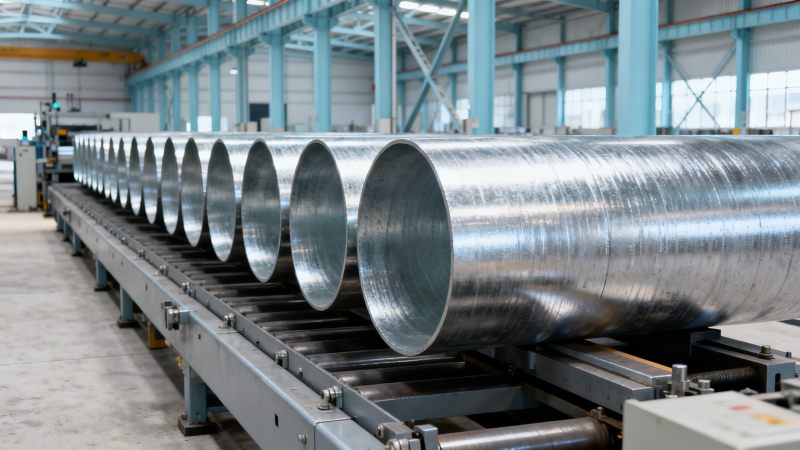
Certification Mapping: Standards That Drive Field Outcomes
Global projects demand layered certification alignment—not just one standard, but cross-referenced validation. For example, ASTM A53 Grade B (U.S. pipeline standard) requires hydrostatic testing at 1.5× working pressure, while EN 10255 mandates only 1.1× pressure for equivalent wall thickness. Without harmonized testing protocols, a pipe certified to EN 10255 may pass European site inspection but fail U.S. OSHA-compliant pressure drop tests during commissioning.
The table below maps critical performance attributes to their enforceable certification requirements—and highlights where overlapping verification adds tangible value:
Hongteng Fengda bridges these gaps by certifying all I Shaped Beams to ASTM A6/A6M, EN 10025-2, and GB/T 706—ensuring compliance across three regulatory frameworks simultaneously. This eliminates re-certification delays when exporting to mixed-standard projects (e.g., EU-funded infrastructure in Southeast Asia requiring both EN and ASTM validation).
How Procurement Teams Validate Real-World Certification Value
Smart procurement goes beyond checking certificate validity dates. Leading buyers use a 4-point field-readiness audit:
- Traceability Check: Verify MTRs list actual heat numbers—not generic “batch” identifiers—and match them to physical mill stamps on delivered bundles.
- Test Report Depth: Confirm tensile reports include elongation % (not just yield/tensile values) and Charpy V-notch impact data at −20°C for cold-climate applications.
- Third-Party Lab Alignment: Cross-check lab accreditation scope (e.g., CNAS, UKAS, A2LA) against the exact test methods cited (e.g., ASTM E8 vs. EN ISO 6892-1).
- Process Documentation: Require documented procedures for post-galvanizing handling (e.g., no dragging on concrete floors, max 3-layer stacking)—critical for maintaining coating integrity pre-installation.
For projects spanning multiple regions, Hongteng Fengda provides bilingual MTRs (English + local language), digital certificate access via QR code on each bundle, and on-demand witnessed testing at SGS or Bureau Veritas labs—reducing procurement cycle time by 40% versus standard documentation workflows.
Certification-Driven Cost Optimization in Structural Projects
Certifications directly influence total installed cost—not just unit price. A study of 28 industrial facilities found that suppliers with dual ASTM/EN certification reduced total project cost by 8.6% on average, primarily through:
- 12% lower rework labor (no field cutting/welding to compensate for dimensional drift);
- 9% faster erection (consistent flange widths enable pre-fabricated connection kits);
- 7% extended service life (verified zinc thickness >85 µm extends maintenance intervals from 5 to 12 years).
For I Shaped Beams, Hongteng Fengda’s universal mill rolling ensures flange parallelism within 0.3 mm/m and web straightness ≤1.5 mm/m—parameters verified per EN 10279 and reported on every MTR. This enables direct bolting without shimming, saving $21.40/m² in labor for mid-rise commercial builds.
With production capacity exceeding 850,000 metric tons annually and dedicated export logistics for North America, Europe, and the Middle East, Hongteng Fengda delivers certified structural steel with dependable lead times—enabling procurement teams to lock in pricing 120 days ahead without inventory risk.
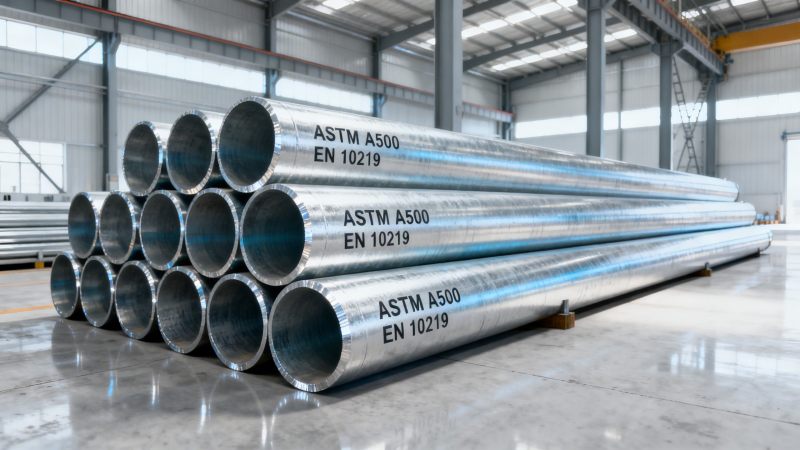
Actionable Next Steps for Your Next Structural Steel Sourcing Cycle
Certifications are your first line of defense against field performance failures—but only when they’re applied rigorously, verified transparently, and aligned to your project’s specific environmental, regulatory, and assembly requirements. Hongteng Fengda doesn’t stop at issuing certificates; we embed certification integrity into every stage—from raw material traceability to final packaging protocols.
Whether you’re specifying I Shaped Beams for a 20-story tower in Dubai or galvanized tubing for a food processing plant in Wisconsin, our engineering team will co-develop a certification roadmap tailored to your jurisdiction, load requirements, and installation method.
Contact Hongteng Fengda today to request: (1) sample MTRs with full test methodology references, (2) a regional compliance matrix mapping your project location to applicable ASTM/EN/GB clauses, and (3) a lead time guarantee backed by production schedule visibility.
Please give us a message


Please enter what you want to find