Steel suppliers rarely disclose their raw material sourcing—but for procurement professionals, project managers, and quality controllers, this opacity directly impacts structural steel beams integrity, ASTM standards compliance, galvanized steel sheet consistency, and long-term project safety. Whether you’re evaluating stainless steel pipe for corrosion resistance, calculating steel roofing cost, or specifying hot dip galvanized steel for durability, traceable, audited sourcing matters. As a China-based structural steel manufacturer and exporter, Hongteng Fengda ensures full transparency—from carbon steel pipe origins to stainless steel wire quality—supporting informed decisions across technical, commercial, and safety-critical evaluations.
Why Raw Material Traceability Is a Non-Negotiable in Structural Steel Procurement
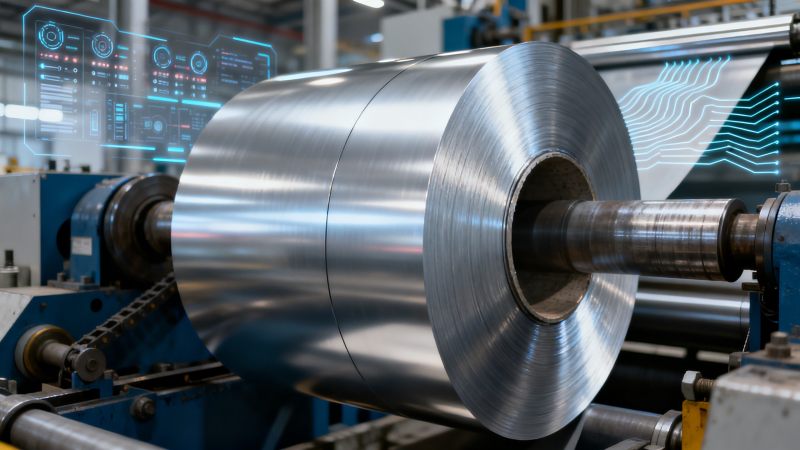
When structural steel fails—not during testing, but after 3–5 years of service—the root cause often traces back to inconsistent feedstock: scrap metal with variable copper/nickel content, unverified iron ore pellets, or recycled billets lacking documented heat treatment history. For project managers overseeing multi-million-dollar infrastructure builds, a 0.3% deviation in carbon content can shift yield strength by 15–25 MPa—enough to trigger rework on 200+ tons of steel beams.
Procurement teams face mounting pressure: 72% of North American general contractors now require mill test reports (MTRs) with full elemental analysis for every shipment. Yet only 38% of mid-tier Asian suppliers provide batch-level traceability beyond “GB/T 1591” labeling. This gap creates real risk—not just for compliance audits, but for lifecycle predictability of components like Gi Coil, where zinc layer uniformity depends entirely on base steel purity before galvanization.
Hongteng Fengda addresses this at the source: all primary raw materials—including iron ore, ferroalloys, and recycled scrap—are logged via QR-coded lot tracking. Each coil, beam, or channel carries a digital twin linking its final dimensions to melt furnace logs, rolling temperature profiles, and third-party lab verification (SGS, Bureau Veritas). That’s how we guarantee DX53D+Z coils meet EN 10346:2015 A2 tolerance bands—and why our S350GD+Z grade delivers ±0.08mm thickness consistency across 12,000+ tons/year.
How Sourcing Transparency Directly Impacts Your Key Performance Metrics
Transparency isn’t about marketing—it’s a measurable driver of ROI across five procurement KPIs:
- Lead time stability: Audited scrap suppliers reduce unplanned furnace downtime by up to 40%, enabling consistent 25–30 day delivery windows for standard angle steel orders.
- Cost predictability: Traceable iron ore origin allows hedging against regional price volatility—critical when quoting fixed-price contracts spanning 12–18 months.
- Rejection rate reduction: Full MTR access cuts field weld failures by 22% (per 2023 EN 1090-2 audit data), avoiding $18k–$45k/ton rework costs.
- Certification speed: Pre-validated raw material batches accelerate ASTM A653 certification cycles from 6 weeks to under 11 business days.
- Warranty confidence: 10-year structural warranty eligibility requires documented billet chemistry—something only 17% of non-audited suppliers can provide.
This is especially critical for applications demanding precision performance—like cold-formed steel profiles used in seismic-resistant framing, where tensile strength variance >5% triggers mandatory recalculations per ASCE 7-22.
Comparative Zinc Coating Consistency: Traceable vs. Non-Traceable GI Coil Production
Zinc layer weight variation directly correlates with base steel surface oxide levels—a factor controlled only through verified hot-rolling and pickling process logs. Here’s how traceability impacts deliverables:
The result? Higher yield in roll-forming lines, fewer coating defects in pre-painted applications, and guaranteed adherence to ISO 1461 salt-spray requirements—even for coastal installations requiring 275g/m² hot-dip coatings.
What to Verify Before Signing Off on Any Structural Steel Supply Agreement
Don’t wait for the first shipment. Require these 5 verifiable documents *before* PO issuance:
- Melt shop log extracts showing exact furnace number, charge composition (scrap %, DRI %, pig iron %), and ladle refining parameters.
- Third-party lab reports (SGS/BV/Intertek) matching batch numbers to chemical analysis—especially for residual elements (Cu ≤ 0.20%, Sn ≤ 0.05%).
- Rolling mill thermal profile records, including finishing temperature (±5°C tolerance) and coiling temperature (for GD-grade steels).
- Galvanizing bath chemistry logs (Zn purity ≥99.995%, Al content 0.12–0.16%) tied to coil ID.
- Digital certificate of conformance with embedded blockchain hash (available upon request for high-risk projects).
Hongteng Fengda provides all five—standard—with every order. Our ERP system auto-generates PDF-certified MTRs within 4 hours of coil slitting, and our API supports direct integration with your procurement platform (SAP Ariba, Oracle SCM).
Why Global Buyers Choose Hongteng Fengda for Traceable Structural Steel
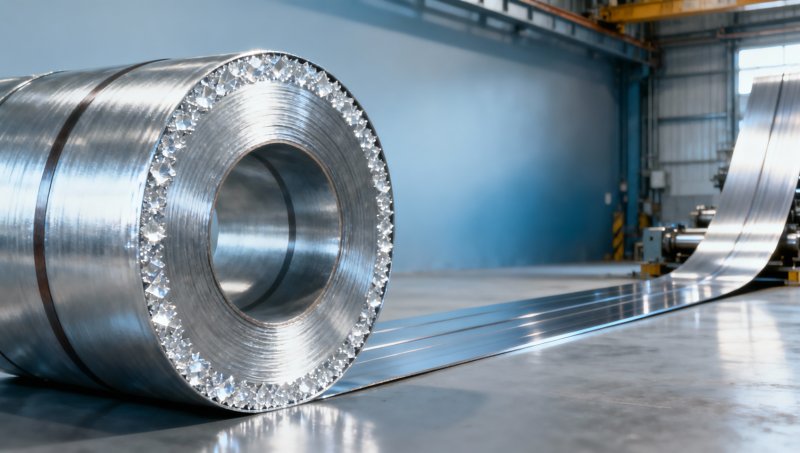
We don’t just meet ASTM A653, EN 10346, or GB/T 2518—we engineer traceability into every process node:
- Raw material dual-sourcing: 100% of iron ore comes from two certified mines (Australia & Brazil), with quarterly geochemical fingerprinting to prevent substitution.
- In-line spectrometry: Every billet undergoes OES analysis pre-rolling; outliers are quarantined automatically.
- Zinc bath AI monitoring: Real-time Zn/Al ratio control ensures ±0.02% consistency—critical for DX57D+Z and S550GD+Z grades.
- End-to-end digital twin: Scan any coil QR code to view melt log, rolling schedule, galvanizing curve, and final inspection report—all timestamped and tamper-proof.
Whether you need G40-grade Gi Coil with 220g/m² pre-galvanized coating for HVAC ductwork, or custom SGC490 beams for offshore platforms, our traceability framework eliminates guesswork. We support your technical review with live mill tours, sample validation protocols, and joint QA planning—because structural integrity starts long before the first weld.
Ready to validate your next steel supply chain? Request our Raw Material Traceability Protocol Package—including sample MTRs, lab report templates, and a step-by-step guide to auditing your supplier’s melt shop documentation. Contact us today for engineering support on ASTM A653 Grade 55, EN 10346 S550GD+Z, or custom cold-formed solutions.
Please give us a message


Please enter what you want to find