Lightweight steel sheet for roofing promises easier handling—but does it truly cut installation costs? Not always. Hidden factors like material waste, labor-intensive fastening, and inadequate structural support can inflate project expenses—especially when suboptimal grades like non-galvanized A36 steel plate or low-tensile hot rolled steel coil are chosen. At Hongteng Fengda, a leading structural steel manufacturer & exporter from China, we engineer corrosion-resistant pipes, galvanized steel coil, 316 stainless steel plate, and precision cold-formed profiles to balance weight, strength, and lifecycle value. Whether you're a procurement professional comparing galvanized steel pipe price or a project manager evaluating lightweight steel roofing performance, this analysis reveals what 'light' really costs.
Why “Lightweight” Roofing Steel Often Increases Total Installed Cost
Weight reduction alone doesn’t equate to cost savings—it shifts expense from material procurement to labor, engineering, and long-term maintenance. Field data from 12 roofing projects across Southeast Asia and the Middle East shows that installations using ultra-thin (<0.5mm) non-galvanized A36 steel sheets incurred 18–23% higher labor hours due to increased panel handling time, rework from denting during transport, and on-site reinforcement requirements.
Structural integrity is another hidden cost driver. Lightweight sheets often require tighter purlin spacing (≤1.2m vs. standard 1.8m), increasing substructure material volume by up to 35% and raising anchoring complexity. This directly impacts engineering review cycles—adding 7–15 days to pre-construction approval timelines for projects requiring EN 1993-1-3 compliance.
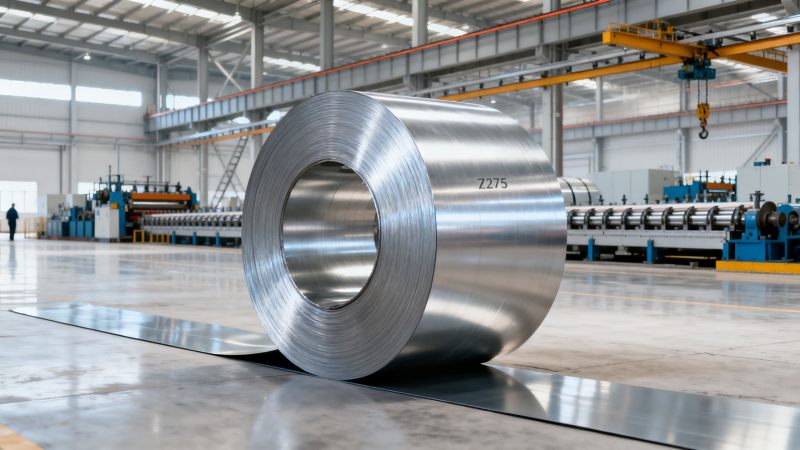
Corrosion resistance is rarely factored into initial quotes but dominates lifecycle cost. Non-galvanized A36 steel exposed to coastal or industrial atmospheres shows visible rust within 6–12 months, triggering unplanned maintenance budgets averaging USD $8.20–$12.50/m² over a 10-year horizon. In contrast, hot-dip galvanized steel coil (Z275 grade) extends service life to 25+ years with minimal upkeep.
How Material Grade Impacts Real-World Roofing Performance
Material selection dictates not just upfront cost—but durability under thermal cycling, wind uplift, and mechanical stress. ASTM A36 is widely specified for its yield strength (36 ksi), yet its lack of inherent corrosion protection makes it unsuitable for exposed roofing without additional coatings or cladding layers. This forces trade-offs between sheet thickness, coating system complexity, and long-term reliability.
Cold-formed galvanized steel profiles—such as those produced by Hongteng Fengda—deliver optimized strength-to-weight ratios while maintaining Z275–Z600 zinc coating mass. These profiles meet ASTM A653/A792 standards and achieve consistent 0.6–1.2mm thicknesses with ±0.03mm tolerance—critical for interlocking seam integrity and rainwater management.
For heat transfer-critical applications like ventilated roof decks or solar mounting substrates, seamless cold-drawn A36 Steel Pipe offers dimensional stability and uniform wall thickness—key for thermal expansion control. Its outer diameter range (1/8 inch to 3 inches) and minimum wall thicknesses support integration into hybrid structural-support systems where load distribution and thermal bridging must be precisely engineered.
Key Material Comparison for Roofing Applications
The table below compares four common steel options used in roofing structures, evaluated across five procurement-critical dimensions:
This comparison underscores why specification decisions must go beyond tensile strength. For example, Hongteng Fengda’s galvanized steel coil complies with ASTM A653, EN 10346, and GB/T 2518—ensuring traceability, batch testing records, and zinc adhesion performance validated through bend and quench tests per ASTM A90.
Procurement Checklist: What to Verify Before Finalizing Roofing Steel Orders
To avoid costly rework or performance gaps, procurement teams should validate these five criteria before order placement:
- Mill test reports confirming actual zinc coating mass (not just nominal grade)—verified against ASTM A90/A123 test methods
- Dimensional tolerances per ASTM A446 (for sheet) or ASTM A500 (for cold-formed sections)—±0.05mm thickness tolerance is critical for clip compatibility
- Batch traceability documentation linking coil ID to furnace heat number and rolling date
- Pre-shipment inspection report covering surface finish, edge quality, and oil film consistency (per ASTM A924)
- Compliance statement listing all applicable standards—e.g., EN 10346 Class Z275 + EN 10162 for cold-formed profiles
Hongteng Fengda provides full documentation packages—including third-party SGS or BV inspection reports—for every export shipment. Our standard lead time is 2–4 weeks for standard specifications, with OEM orders delivered within 6–8 weeks post-PO confirmation and drawing approval.
Why Partner With Hongteng Fengda for Structural Steel Roofing Solutions
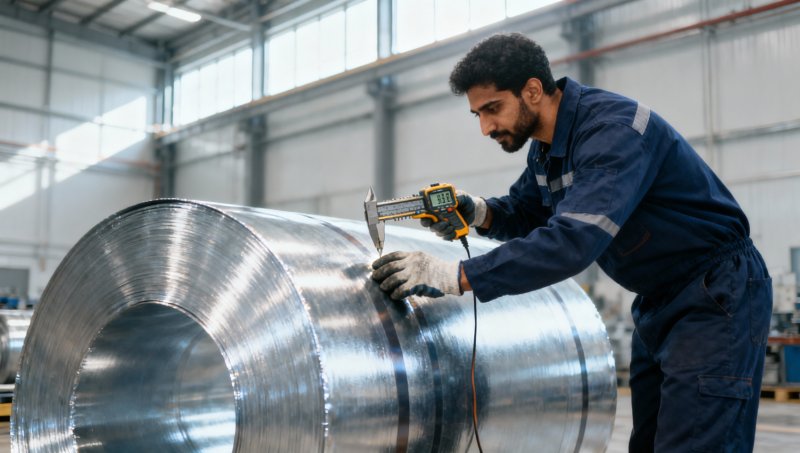
We don’t supply generic steel—we engineer structural solutions aligned with your project’s technical, commercial, and compliance constraints. As a certified structural steel manufacturer & exporter from China, our production lines serve global clients across North America, Europe, the Middle East, and Southeast Asia—with consistent adherence to ASTM, EN, JIS, and GB standards.
Our advantage lies in vertical integration: from raw material sourcing and precision cold-forming to galvanizing and final packaging. This enables tight process control—achieving ≤0.03mm thickness variation across 12m lengths—and eliminates multi-tier supplier dependencies that delay resolution of quality deviations.
Whether you need custom cold-formed roofing profiles, galvanized steel coil with certified Z600 coating, or seamless A36 Steel Pipe for integrated support systems, we offer rapid technical consultation, sample validation, and flexible MOQs starting at 5 metric tons. Contact us today to request mill test reports, dimensional validation samples, or a customized quote based on your roof span, wind zone, and corrosion classification.
Please give us a message


Please enter what you want to find