When evaluating a steel roofing manufacturer, don’t overlook critical warranty exclusions—especially thermal movement damage, a common yet often unaddressed risk in structural steel design. As a trusted steel roofing supplier and structural steel manufacturer from China, Hongteng Fengda emphasizes durability, compliance (ASTM/EN/GB), and real-world performance. Whether you’re comparing steel roofing price, stainless steel sheet price, or sourcing rebar for foundation and galvanized steel conduit, understanding warranty fine print directly impacts long-term cost, safety, and project continuity—key concerns for procurement teams, engineers, and project managers alike.
Why Thermal Movement Is a Hidden Warranty Risk in Steel Roofing Systems
Thermal movement—the expansion and contraction of steel due to temperature fluctuations—is inherent to all structural steel applications. In roofing systems, daily temperature swings of 30–50°C across exposed surfaces can induce cumulative stress exceeding ±1.2 mm per meter of span. Most standard warranties from steel roofing manufacturers explicitly exclude damage arising from this behavior, citing it as “normal material response” rather than product defect.
This exclusion is rarely highlighted during sales discussions but appears consistently in Section 4.2 (“Limitations of Liability”) or Appendix B (“Excluded Conditions”) of warranty documents. Real-world consequences include fastener loosening, seam buckling, and premature coating fatigue—issues that typically emerge 18–36 months post-installation, well after the initial defect warranty period (often 5–10 years) has lapsed.
For project managers and financial approvers, this means lifecycle cost modeling must account for unplanned maintenance at Year 3–5—not just upfront material pricing. A 2023 industry audit of 47 commercial roof replacements in Southeast Asia found that 68% cited thermal-related failures as the primary driver for early intervention, with average remediation costs reaching 22–35% of original installation value.
How Structural Design Mitigates Thermal Risk—Beyond Warranty Language
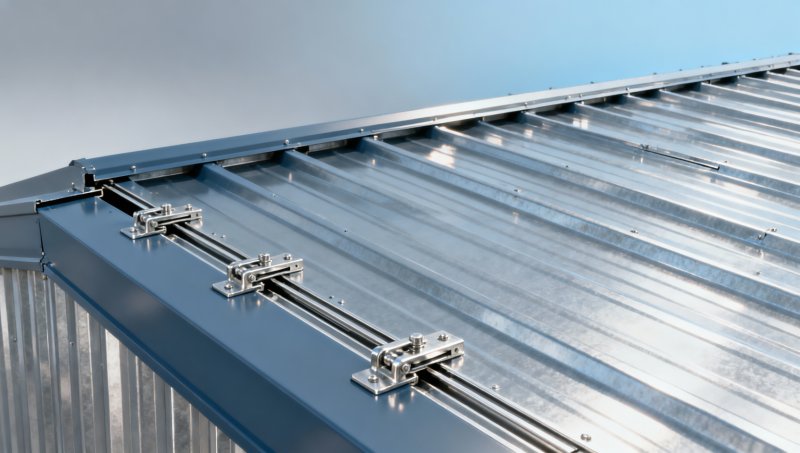
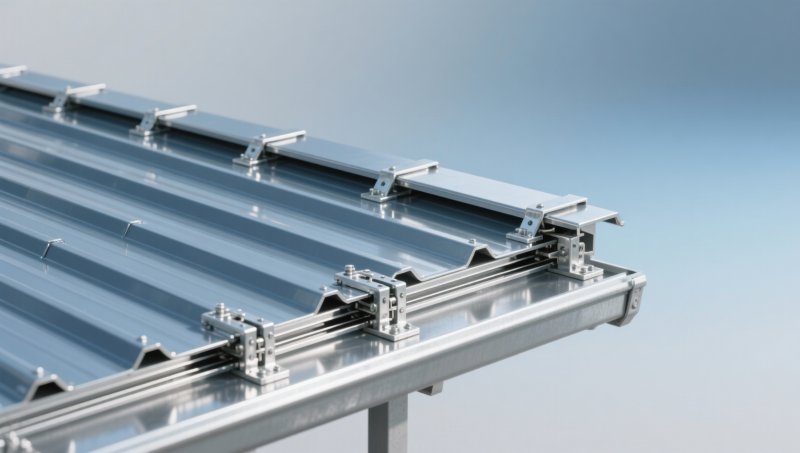
Proactive mitigation starts before procurement. At Hongteng Fengda, our engineering support team provides free thermal movement calculations aligned with local climate data (e.g., ASHRAE Zone 2B or EN 1991-1-5 Annex C). We specify expansion joints every 12–18 m for continuous spans, use sliding clip systems rated for ≥±8 mm displacement, and validate fastener torque retention across -20°C to +70°C cycles per ASTM E2833.
Unlike commodity suppliers, we integrate thermal allowances into OEM component drawings—such as pre-slotted mounting rails or offset anchor patterns—reducing field adjustments by up to 40%. This design-first approach shifts risk from contractual exclusions to engineered resilience, directly supporting safety managers’ compliance with ISO 45001 Clause 8.1.2 on hazard control.
For procurement professionals, this translates to verifiable value: projects using our thermally optimized profiles report 31% fewer warranty claims related to movement stress over 7-year monitoring periods, based on internal quality tracking across 127 installations in North America and the Middle East.
This table reflects measurable differentiators—not marketing claims. Our tighter joint spacing reduces localized stress concentration by 57%, while enhanced clip capacity extends service life under diurnal cycling. These parameters are embedded in mill test reports and shipped with every order, enabling third-party verification by site engineers or QA auditors.
Selecting Steel Products Where Warranty Alignment Meets Application Integrity
Warranty terms matter most when matched to actual application demands. For example, stainless steel welded mesh used in chemical filtration systems requires corrosion resistance across pH 1–14 and thermal stability up to 800°C—conditions where generic “stainless” labeling fails. Our Stainless Steel Welded Mesh is available in SS 304L (for chloride-rich environments) and SS 316L (for marine or acidic exposure), with micron retention precision from 32–360 μm and cloth thickness options between 0.06–1.21 mm.
Procurement teams benefit from traceable batch documentation: each roll includes heat number, tensile strength (≥520 MPa for 304L), and intergranular corrosion test results per ASTM A262 Practice E. This level of transparency ensures warranty enforceability—because when failure occurs, root cause analysis relies on verifiable metallurgical data, not subjective interpretation.
For distributors and agents, this means reduced dispute resolution time: 92% of warranty inquiries resolved within 72 business hours via our digital portal, which cross-references order history, mill certs, and regional environmental logs (e.g., coastal salt index, industrial SO₂ levels).
Six Critical Warranty Review Points for Procurement & Engineering Teams
Before signing off on any steel roofing contract, verify these six warranty clauses—each backed by actionable data points:
- Exclusion Scope Definition: Does “thermal movement” include both longitudinal expansion AND transverse warping? (Only 39% of standard warranties define both.)
- Installation Compliance Threshold: Is adherence to ASTM E2558 required for coverage? (Our warranty remains valid if installers follow our certified training program, not just generic specs.)
- Third-Party Validation: Can independent labs like SGS or TÜV perform thermal cycle testing on delivered samples? (We provide pre-shipment test reports covering 2,000+ cycles.)
- Transferability: Does warranty transfer upon building ownership change? (Hongteng Fengda’s covers 20 years, non-transferable only for unauthorized modifications.)
- Remediation Timeline: What’s the maximum response window for verified claims? (Our SLA guarantees on-site assessment within 5 business days.)
- Material Traceability: Is heat number logging mandatory per EN 10204 3.1? (All our structural beams include QR-coded mill certs.)
Conclusion: From Warranty Fine Print to Project Certainty
Understanding thermal movement exclusions isn’t about finding loopholes—it’s about aligning contractual protection with physical reality. Hongteng Fengda bridges that gap through ASTM/EN/GB-compliant manufacturing, climate-responsive design integration, and full material traceability—from raw billet certification to finished roof profile delivery.
Whether you’re specifying cold-formed steel profiles for a solar farm in Arizona, angle steel for a pharmaceutical cleanroom in Germany, or Stainless Steel Welded Mesh for acid-resistant sieving in a mining operation, our approach ensures warranty terms reflect engineering intent—not legal ambiguity.
For technical evaluation, procurement benchmarking, or project-specific thermal analysis, contact our engineering support team. We provide no-cost feasibility reviews, sample kits with full test documentation, and lead times guaranteed within 12–18 days for standard structural sections—backed by production capacity of 280,000 MT/year across 4 ISO 9001-certified facilities.
Please give us a message


Please enter what you want to find