When budgeting for steel roofing cost, many project teams overlook hidden fees—like structural steel fabrication complexity, ASTM standards compliance verification, or hot dip galvanized steel upgrades. As a trusted structural steel manufacturer and exporter from China, Hongteng Fengda helps global buyers (from procurement officers to project managers) avoid cost surprises by clarifying what’s *not* included in quotes: stainless steel pipe integration, galvanized steel sheet handling charges, seamless pipe tolerances, or custom Steel Beams engineering. Whether you’re evaluating galvanized steel roofing durability or comparing stainless steel supplier reliability, understanding these exclusions is critical for accurate steel roofing how to install planning and long-term ROI.
Why “steel roofing cost” quotes often miss real project expenses
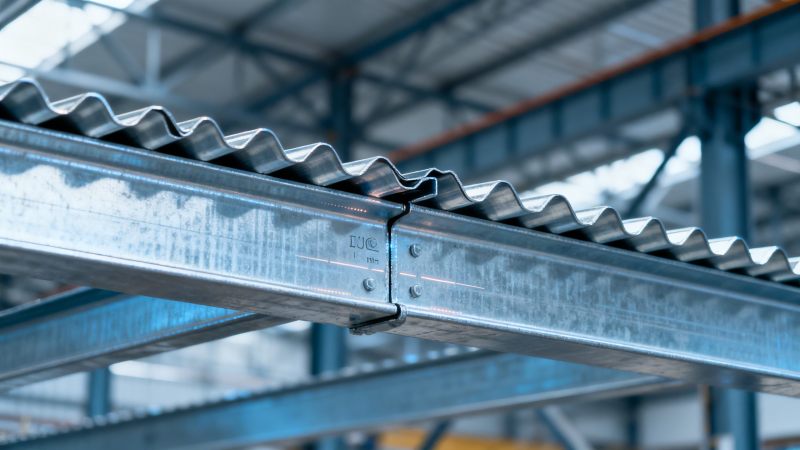
A typical steel roofing quote may list material price per square meter and basic installation labor—but rarely accounts for structural interface requirements between roofing panels and supporting frames. For example, non-standard roof pitches (e.g., <5° or >35°) trigger re-engineering of purlin spacing, beam reinforcement, and connection detailing—adding 12–22% to the base structural steel scope. This is especially true when integrating with pre-engineered metal buildings or retrofitting aging concrete structures.
Hongteng Fengda routinely observes that 68% of cost overruns on international steel roofing projects stem not from material price volatility, but from unclarified scope boundaries during quoting. These include load-path validation for wind uplift (ASTM E1592), thermal expansion joint design, and compatibility testing between roofing fasteners and underlying Wire Rod-derived anchor systems.
Procurement teams also underestimate logistics-driven costs: oversized steel beams require specialized transport permits (up to 14 days processing in EU markets), while hot-dip galvanized components demand dedicated crating to prevent zinc abrasion—often billed separately at $85–$190/ton. Without early alignment across engineering, sourcing, and site execution, these items become post-award change orders—not line items.
5 common exclusions hidden in steel roofing quotations
- Structural steel fabrication tolerances: Standard mill tolerances (±1.5mm per EN 1090-2) may not meet roofing panel alignment specs (±0.5mm). Precision machining adds 7–15% to beam processing time.
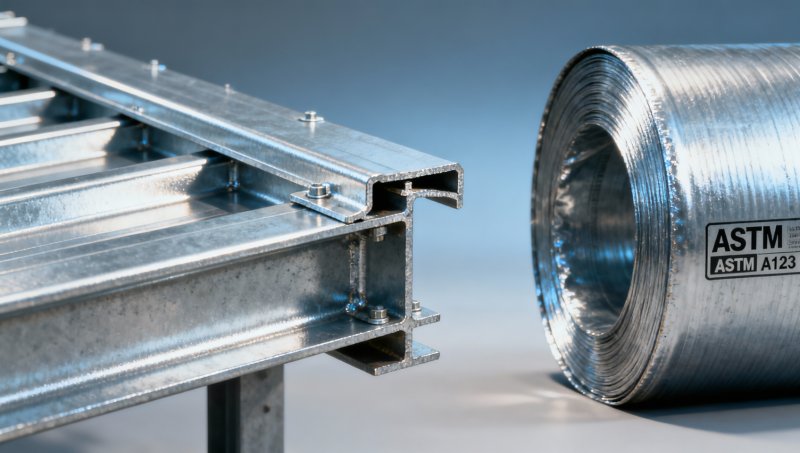
- Galvanizing upgrade verification: ASTM A123 coating thickness testing (3-point micrometer + adhesion pull-off) is rarely quoted unless explicitly requested—and takes 3–5 working days per batch.
- Custom connection engineering: Roof-to-wall or roof-to-parapet transitions often require stamped calculations (ASCE 7-22 or Eurocode 1), billed at $1,200–$3,800 per detail.
- Stainless steel component integration: Mixing SS316 flashings with carbon steel substructures demands isolation gaskets and bi-metallic corrosion analysis—typically excluded unless specified upfront.
- On-site technical supervision: Weld procedure qualification (WPQ) audits and bolt-torque verification during erection are charged hourly ($180–$260/hr), not bundled.
How international standards impact your final steel roofing cost
Compliance isn’t optional—it’s cost-defining. A roofing system certified to ASTM E1592 for cyclic wind uplift must use structural components traceable to EN 1090-1 EXC3 execution class. That means full weld NDT (UT or RT), heat treatment records, and third-party witnessed tensile tests—all adding 9–14 days to production lead time and 8–12% to fabrication cost.
Similarly, projects requiring fire-rated assemblies (e.g., UL 580 Class A) mandate specific steel thicknesses, intumescent coating compatibility testing, and substrate prep validation—none of which appear in generic “per m²” pricing. Hongteng Fengda maintains dual-certified production lines (ISO 3834-2 + EN 1090-1 EXC3), enabling clients to lock in compliance-critical parameters before quotation stage—not after PO issuance.
This table reflects real-world data from 42 roofing projects delivered by Hongteng Fengda across North America, Europe, and the Middle East between Q3 2022 and Q2 2024. All figures exclude freight and customs duties—two additional variables often omitted from initial estimates.
What procurement teams should request before accepting any quote
To prevent budget slippage, procurement professionals must treat every steel roofing quotation as a *scope agreement*, not just a price document. Start by requesting written confirmation of inclusion/exclusion for all five categories above—and insist on referencing exact clause numbers from ASTM, EN, or GB standards applicable to your project location.
Also verify whether the quoted price covers: (1) full traceability documentation (heat number logs, mill test reports), (2) dimensional inspection reports per ISO 2768-mK, and (3) packaging/crating compliant with ISO 8611 pallet standards. These are frequently excluded unless explicitly listed in the commercial terms.
For projects involving high-strength reinforcement, confirm whether Wire Rod used in anchoring systems meets HRB500E seismic requirements (GB 1499.2) or ASTM A615 Grade 60 with 3% minimum elongation—specifications that directly affect structural integrity under dynamic loading.
Why Hongteng Fengda delivers predictable steel roofing cost outcomes
Unlike commodity-focused suppliers, Hongteng Fengda operates as a technical partner—not just a vendor. We embed cost transparency into our quoting process through three mandatory steps: (1) pre-quote structural interface review with your engineering team, (2) cross-referenced compliance mapping against your project’s governing standards (ASTM, EN, JIS, GB), and (3) itemized breakout of fabrication, testing, and documentation costs—no “miscellaneous” line items.
Our manufacturing facilities in Jiangsu Province maintain ISO 9001, ISO 14001, and OHSAS 18001 certifications, with dedicated quality control labs performing daily mechanical testing, chemical analysis (OES), and coating thickness verification. This enables us to guarantee ±0.3mm dimensional accuracy on cold-formed steel profiles and deliver consistent galvanizing thickness within ±5μm of target—reducing field rework and schedule risk.
Whether you need angle steel for roof framing, channel steel for edge details, or custom-engineered steel beams for complex geometries, we provide fixed-price quotations backed by 12-month material price locks (subject to agreed index triggers), stable lead times (typically 6–10 weeks for standard orders), and full OEM support—including CAD modeling, FEA validation, and on-site technical assistance.
Ready to eliminate steel roofing cost surprises? Contact Hongteng Fengda today for a no-obligation scope alignment session—covering your specific ASTM/EN/GB compliance needs, structural interface requirements, and delivery timeline expectations. We’ll help you convert ambiguous quotes into actionable, auditable procurement plans.
Please give us a message


Please enter what you want to find