When specifying steel rod for construction, engineers and procurement teams increasingly prioritize yield strength over nominal diameter—especially in seismic zones or high-load applications. As a trusted steel rod manufacturer and supplier from China, Hongteng Fengda delivers ASTM/EN-compliant steel rod for construction with certified tensile and yield properties, competitive steel rod price transparency, and seamless integration with complementary products like H-beam steel price-optimized structural systems and precision-engineered steel tube for construction. Whether you're a project manager evaluating steel tube specifications or a technical assessor validating material performance, our quality-controlled solutions reduce sourcing risk while ensuring compliance, safety, and cost efficiency.
Why Yield Strength Matters More Than Diameter in Structural Design
Diameter is often the first visual cue in steel rod selection—but it’s yield strength (typically measured in MPa or ksi) that determines how much load the rod can sustain before permanent deformation begins. In high-seismic regions like California, Japan, or Türkiye, or in heavy industrial foundations, a 16mm-diameter rod with 500 MPa yield strength outperforms a 20mm rod rated at only 300 MPa under cyclic stress. That difference directly impacts ductility, energy absorption, and post-yield behavior—critical for life-safety compliance.
Hongteng Fengda produces hot-rolled and cold-drawn steel rods conforming to ASTM A615 (Grade 60/420), EN 10080 (B500B/B500C), and GB/T 1499.2 (HRB400E/HRB500E). All batches undergo 100% mechanical testing per ISO 17834, with certified yield strength tolerance of ±25 MPa and elongation ≥14% at break—ensuring predictable performance across 2–4 week lead times.
Misjudging this metric risks under-engineering (e.g., insufficient confinement in concrete columns) or over-specifying (e.g., unnecessary cost premiums on oversized diameters). Our technical support team helps clients cross-reference design loads against certified yield data—not just catalog dimensions—before order finalization.
How to Evaluate Steel Rod Performance Beyond Nominal Size
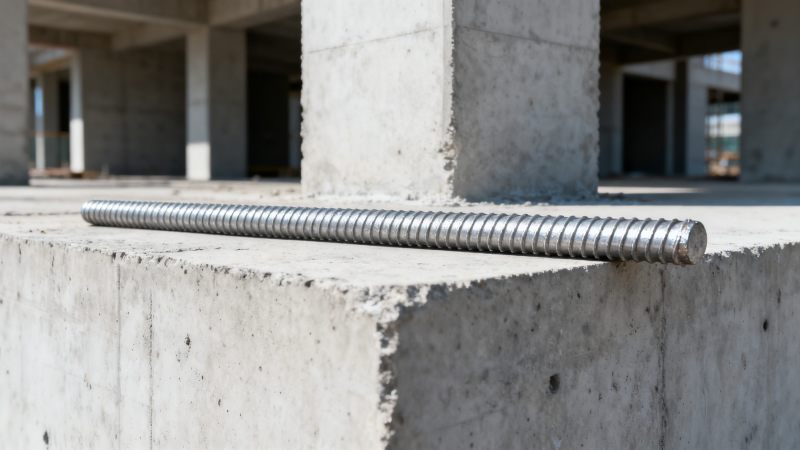
Yield strength isn’t standalone—it interacts with tensile strength, elongation, bendability, and chemical composition. For example, ASTM A615 Grade 60 requires minimum yield = 414 MPa and tensile strength ≥ 620 MPa, with carbon equivalent (CEV) ≤ 0.54 to ensure weldability. A rod meeting only yield criteria but failing CEV or bend tests may crack during site fabrication.
Our QA process includes batch-level spectrographic analysis (OES), transverse bend testing per ASTM A370, and microstructure verification via metallography. Every shipment includes mill test reports (MTRs) traceable to heat number, with third-party inspection options (SGS, BV, TÜV) available upon request.
Key Mechanical & Chemical Parameters for Critical Applications
This table highlights why regional standards aren’t interchangeable—even when yield strength appears similar. EN B500C mandates stricter ductility requirements for earthquake resilience, while GB/T HRB500E enforces higher tensile-to-yield ratios (>1.25) to prevent brittle failure. We help procurement teams align spec sheets with local building codes—not just global benchmarks.
Integrating Steel Rod with Complementary Structural Components
Steel rod rarely works in isolation. It anchors into concrete footings, connects to Galv Steel Tube bracing systems, or reinforces composite beams. That’s why we offer coordinated engineering support: our rod diameters (6–40 mm) are optimized to match standard coupler sizes, and surface rib patterns comply with EN 10080 bond strength requirements (≥ 2.1 MPa after 28-day curing).
For multi-material frameworks, we validate compatibility between steel rod and galvanized tubing—particularly where thermal expansion differentials or galvanic corrosion could compromise long-term integrity. Our DX52D-grade Galv Steel Tube features Zn coating ≥ 275 g/m² and meets ASTM A53/A106, EN 10219, and GB/T 3091—making it ideal for combined use in scaffolding, trestle piles, and pipeline supports.
Procurement Checklist: What to Verify Before Ordering Steel Rod
Avoid delays and rework with these 5 non-negotiable checks:
- Confirm yield strength certification is heat-specific—not averaged across production runs
- Verify bend test results (180° around mandrel diameter = 3× rod diameter) are included in MTRs
- Check carbon equivalent (CEV) if welding or field splicing is planned (target: ≤ 0.45 for arc welding)
- Ensure dimensional tolerances meet ASTM A615 Table 2 (±0.4 mm for 16–25 mm diameters)
- Validate packaging method: coiled rods require moisture-barrier wrapping for >30-day sea freight
Hongteng Fengda offers pre-shipment sample validation, digital MTR access via QR code on each bundle, and 7–15 day expedited testing turnaround for urgent projects—reducing procurement cycle time by up to 40% versus conventional suppliers.
Why Global Projects Choose Hongteng Fengda for Steel Rod Supply
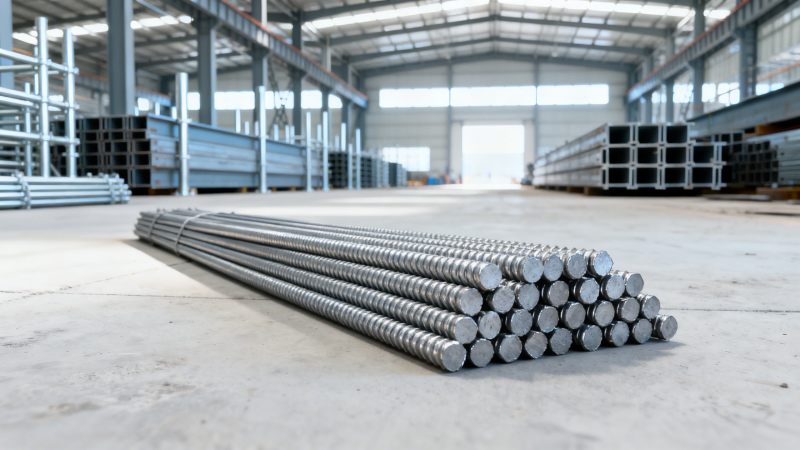
We don’t just ship steel—we de-risk your supply chain. With ISO 9001-certified facilities in Hebei and Jiangsu, we maintain 12,000+ MT monthly capacity, 98.7% on-time delivery across 37 countries, and dual-standard compliance (ASTM + EN + GB) on all export orders. Unlike spot-market vendors, we guarantee fixed pricing for 90 days and absorb raw material volatility through forward hedging.
Whether you need 50 tons of HRB400E rods for a Dubai metro station, custom-bent ASTM A615 Grade 60 for a wind turbine foundation, or bundled delivery with matching Galv Steel Tube for a Philippine port expansion—we deliver engineered consistency, not just commodity steel.
Contact us today for: yield strength validation against your structural model, free MTR review, customized packaging logistics, or joint technical review with your design team. Let’s build certainty—starting with what matters most.
Please give us a message


Please enter what you want to find