Steel rebar cost includes hidden logistics surcharges — how to spot them
When evaluating steel rebar cost, many procurement professionals and project managers overlook hidden logistics surcharges that inflate final landed prices—especially for imported carbon steel price benchmarks or galvanized steel price comparisons. As a trusted steel rebar manufacturer and steel rebar supplier from China, Hongteng Fengda helps global buyers uncover these opaque fees through transparent quoting, real-time freight analytics, and end-to-end supply chain visibility. Whether you’re sourcing H beam manufacturer-grade materials, steel plate for construction, or galvanized steel wire for fencing, understanding true steel rebar cost starts with logistics clarity—not just base rates.
Why “steel rebar cost” on paper rarely matches what you actually pay
Most buyers compare quotes using only the FOB (Free On Board) price per ton—and stop there. But for international procurement—especially from Asia—the real cost driver isn’t the mill price; it’s the *layered logistics surcharge stack* applied after the factory gate. These aren’t incidental fees—they’re structural, recurring, and often non-negotiable unless flagged early.
At Hongteng Fengda, we see buyers routinely overpay by 8–15% on landed cost due to unanticipated charges like: container imbalance fees, port congestion surcharges (PCS), low-sulfur fuel surcharges (LSS), customs valuation adjustments, inland haulage markups, and even “documentation handling” fees disguised as administrative costs. Worse: many are buried in fine print or added post-booking—leaving procurement teams with zero leverage at the critical decision stage.
5 hidden logistics surcharges you must audit—before signing
Here’s how to spot them—and what each one really means for your budget and timeline:
- Origin Terminal Handling Charge (THC) escalation: Often quoted flat, but actual THC at Chinese ports (e.g., Qingdao, Tianjin, Ningbo) can spike 30–50% during peak export seasons. Verify whether your quote locks in THC—or leaves it “subject to carrier announcement.”
- Detention & demurrage risk passed to buyer: If your shipment is delayed at origin due to document discrepancies or customs hold (common with new importers), detention fees accrue daily—and most standard contracts shift liability to the consignee. Ask for a clear clause on who bears this risk.
- “Fuel Adjustment Factor” (FAF) vs. “Bunker Adjustment Factor” (BAF): Two names, same impact—but BAF is regulated and published monthly; FAF is often vendor-defined and unverifiable. Always request the BAF reference index used (e.g., Platts Bunker Index).
- Inland transport markup: A 200 km truck move from mill to port may be quoted at $80/ton—but the actual carrier rate is $45. The $35 difference? Often absorbed silently into the “logistics package.” Request line-item breakdowns—not bundled totals.
- Customs valuation uplift on related-party transactions: If your supplier also handles export clearance or acts as your “export agent,” customs authorities (especially in the EU and US) may reassess value based on transfer pricing rules—triggering duty recalculations months post-import. Confirm if your supplier provides independent commercial invoices with arm’s-length pricing.
How material choice impacts logistics transparency—and cost predictability
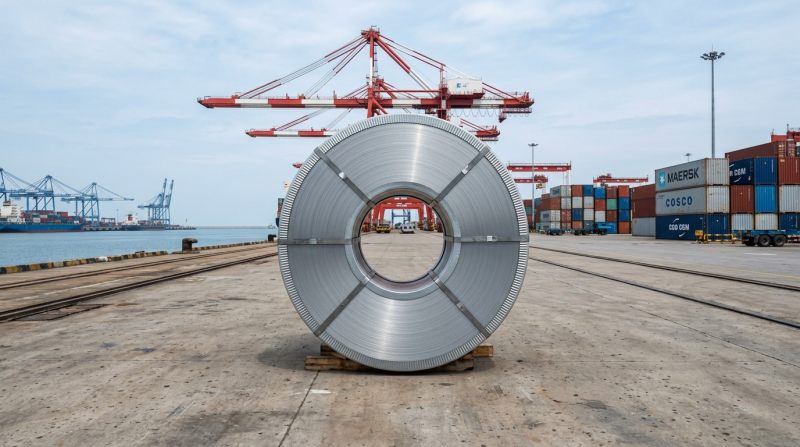
Your steel specification directly affects how easily surcharges can be forecasted and controlled. For example, Hot Rolled Coil Hrc—with its standardized widths (600–1250 mm), tight thickness tolerances (±0.03 mm), and broad compliance (ASTM, EN, JIS, CE)—enjoys higher carrier acceptance, lower stowage risk, and more predictable port handling. That translates to fewer unexpected THC escalations and smoother customs clearance—especially when paired with pre-verified mill test reports and EN 10204 3.1 documentation.
In contrast, custom-cut rebars or non-standard coil IDs often trigger manual inspection, extended yard dwell time, and ad-hoc handling surcharges. At Hongteng Fengda, we proactively align material specs with global port infrastructure realities—not just mill capability—to compress logistics uncertainty. That’s why our clients sourcing Hot Rolled Coil Hrc report 22% fewer post-quote cost surprises than those ordering bespoke rebar configurations.
What procurement teams can do—starting today
You don’t need to become a freight forwarder—but you *do* need three operational shifts:
- Require granular, line-item quotes: Reject any “all-in logistics” figure. Demand separate entries for THC, BAF, inland haulage, documentation, and insurance—with supporting references (e.g., “BAF per Maersk Q3 2024 bulletin”).
- Lock in validity windows—not just prices: A quote valid for 7 days is useless if port surcharges reset every 14. Insist on minimum 30-day validity for *all* logistics components.
- Verify documentation readiness upfront: Ask for sample packing lists, commercial invoices, and COO drafts *before* PO issuance. Gaps here cause delays—and detention fees—that hit your P&L, not the supplier’s.
At Hongteng Fengda, we embed these checks into our quoting workflow—not as exceptions, but as standard practice. Every quote includes a Logistics Cost Transparency Dashboard: real-time BAF indexing, port-specific THC benchmarks, and a “surcharge watchlist” flagging upcoming regulatory changes (e.g., EU ETS maritime phase-in).
Bottom line: True steel rebar cost isn’t found in a spreadsheet—it’s revealed in the supply chain
Hidden logistics surcharges aren’t unavoidable “cost of doing business.” They’re symptoms of opacity—between mill, port, carrier, and customs. When you partner with a manufacturer that owns both production *and* export execution—like Hongteng Fengda—you gain visibility where it matters most: before the container is sealed.
That means no surprise fees. No last-minute cost revisions. And no compromise on quality—whether you’re specifying Q345B rebar for seismic framing or SS400-series Hot Rolled Coil Hrc for industrial cladding. Because the most reliable cost isn’t the lowest headline number—it’s the one you can trust, end to end.
Please give us a message


Please enter what you want to find