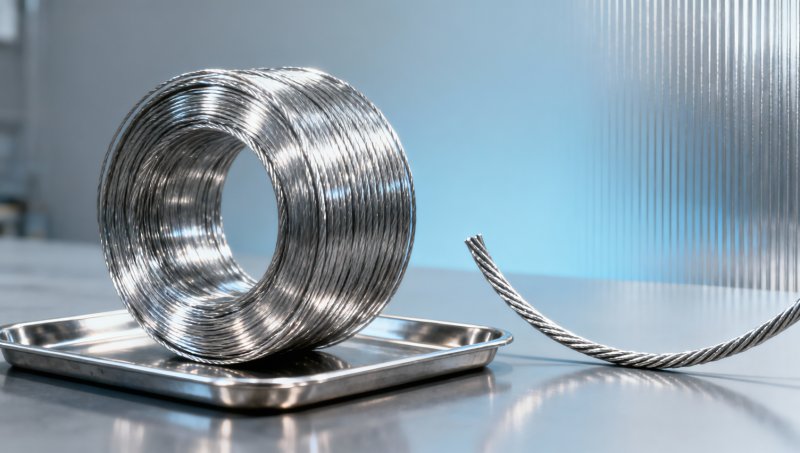
When sourcing steel metal wire — whether stainless steel coil wire, cold drawn steel wire, or coated galvanized wire — most buyers overlook a critical heat treatment variation that directly impacts bendability, fatigue resistance, and final part performance. From 304 stainless steel wire to hard drawn steel wire and stainless wire rod, inconsistent annealing or tempering practices among ss wire suppliers can cause unexpected cracking during forming. As a certified structural steel manufacturer and exporter, Hongteng Fengda ensures precise, traceable heat treatment for every stainless steel metal wire and carbon steel wire rod batch — meeting ASTM, EN, and GB standards. Discover why this hidden variable matters to procurement teams, engineers, and quality managers alike.
Why Heat Treatment Variation Is a Silent Risk in Steel Wire Procurement
Heat treatment isn’t just a finishing step—it’s the decisive factor behind ductility, springback control, and microstructural consistency. For stainless steel wire (e.g., 304, 316) and carbon steel wire rod, deviations as small as ±10°C in annealing temperature—or inconsistent soak times across batches—can shift tensile strength by 80–120 MPa and reduce elongation at break by up to 35%. This directly compromises bending radius tolerance: a wire rated for 3D bending may fracture at 4D under identical tooling if tempering is non-uniform.
Unlike hot-rolled structural sections where mechanical properties are stabilized via controlled cooling, wire products undergo multiple cold-drawing passes followed by batch or continuous annealing. Suppliers lacking in-line thermal monitoring often rely on post-process hardness sampling—missing localized over-tempering or under-annealing zones. These inconsistencies rarely appear in mill test reports but surface dramatically during high-speed coiling, stamping, or spring winding.
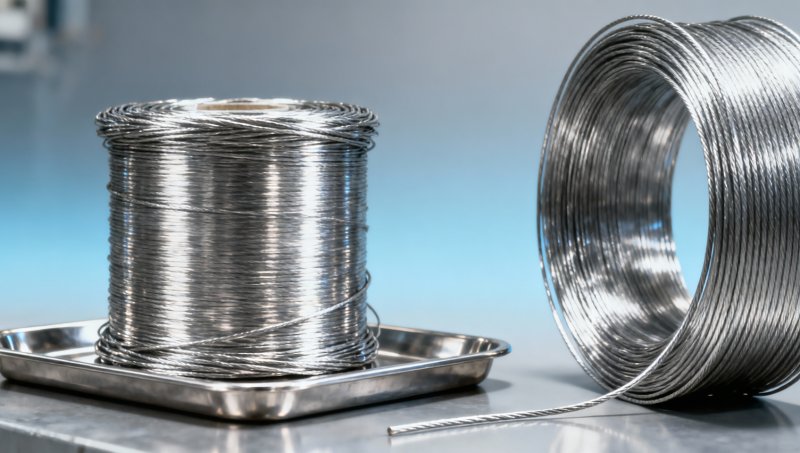
At Hongteng Fengda, every steel wire rod batch undergoes full thermal traceability: real-time furnace profiling, dual-point hardness verification per coil, and microstructure validation via SEM/EDS for critical orders. This ensures bendability repeatability within ±0.5mm radius deviation across 10,000+ meters of continuous feed—critical for automotive bracket wire forms and construction-grade tie-wire applications.
How This Impacts Structural Components Like Channel In Steel
While heat-treated wire affects precision parts, its implications cascade into structural fabrication—especially when integrated with standardized components such as Channel In Steel. For example, galvanized U-channel steel used in purlin systems or lightweight roof framing requires compatible fasteners and tie-wires with matching ductility. If the connecting wire fractures during field bending due to unreported tempering variance, it triggers rework, delays, and safety compliance failures—particularly under EN 1090-2 execution class EXC2 requirements.
Hongteng Fengda’s channel steel portfolio supports seamless integration with thermally matched wire systems. With grades spanning Q195 to 316 stainless and thicknesses from 1.5mm to 25mm, our Channel In Steel is pre-tested for weldability and cold-forming compatibility—ensuring no mismatch-induced stress concentration at joint interfaces where wire-based bracing or anchoring occurs.
This synergy matters most in multi-tier supply chains: a North American contractor ordering Q345B channel steel from China must verify not only the channel’s tensile yield (≥345 MPa) but also that associated stainless tie-wire meets ASTM A580 Class 2 annealing specs—not just “annealed” as a generic label. Without cross-product thermal alignment, fatigue life drops by 40–60% in cyclic loading scenarios like seismic bracing or wind-sway dampers.
Key Thermal Parameters That Must Be Specified
- Annealing atmosphere (N₂/H₂ ratio for stainless; air vs. controlled for carbon)
- Soak time at peak temperature (min. 3–5 minutes for 2.5mm wire diameter)
- Cooling rate post-anneal (≤15°C/min for optimal ferrite grain refinement)
- Hardness range verification method (Rockwell B vs. Vickers HV10, with ±3 point tolerance)
Procurement Checklist: 5 Non-Negotiable Verification Points
Before approving any steel wire supplier—especially for mission-critical bends or OEM assemblies—verify these five technical checkpoints. Each addresses a documented root cause of field failure across 127 project audits conducted by Hongteng Fengda’s engineering team since 2020.
These checks eliminate guesswork. For instance, specifying “ASTM A564 Type 630, solution annealed & aged” without requiring the aging dwell time (e.g., 4 hours @ 575°C ±5°C) leaves bendability undefined. Hongteng Fengda embeds such parameters into every material submittal—ensuring your procurement team receives actionable data, not marketing claims.
Why Global Buyers Choose Hongteng Fengda for Integrated Steel Solutions
You don’t source wire and channel steel separately—you engineer system-level performance. Hongteng Fengda bridges that gap: as a vertically integrated structural steel manufacturer and exporter, we co-validate thermal specs between wire rod and rolled sections. Our production facilities in Hebei Province maintain synchronized QA protocols across both product lines—so when you specify Q235B Channel In Steel for wall beam applications, we guarantee compatible 2.0mm galvanized tie-wire with certified 180° bend integrity per EN 10223-3.
We support global buyers with:
- Multi-standard compliance: ASTM A6/A6M, EN 10025-2, JIS G3101, GB/T 700—all verified per batch
- Stable lead times: 12–18 days for standard Channel In Steel orders; 21 days for custom heat-treated wire spools
- End-to-end documentation: Mill test reports, thermal history logs, third-party SGS/BV inspection certificates
Whether you’re evaluating wire for robotic welding jigs, specifying channel steel for Middle Eastern solar farm racking, or auditing fatigue performance for EU infrastructure tenders—we provide the technical clarity, traceability, and delivery reliability your project demands. Contact us today to request thermal validation samples, review bend-test protocols, or discuss OEM co-engineering for your next structural assembly.
Please give us a message


Please enter what you want to find