When comparing steel bar price vs. rebar for foundation, cost-cutting through grade substitution can compromise structural integrity—especially in critical applications like seismic zones or high-load foundations. As a trusted structural steel manufacturer & exporter from China, Hongteng Fengda emphasizes that factors beyond price—such as yield strength, ductility, corrosion resistance (e.g., Corten steel plate), and compliance with ASTM/EN/GB standards—dictate long-term safety and lifecycle cost. Whether you're evaluating stainless steel sheet price, seamless steel pipe, or galvanized steel electrical conduit, informed decisions start with understanding *why* rebar grade matters—not just what it costs.
Why “Same-Looking” Bars Aren’t Interchangeable
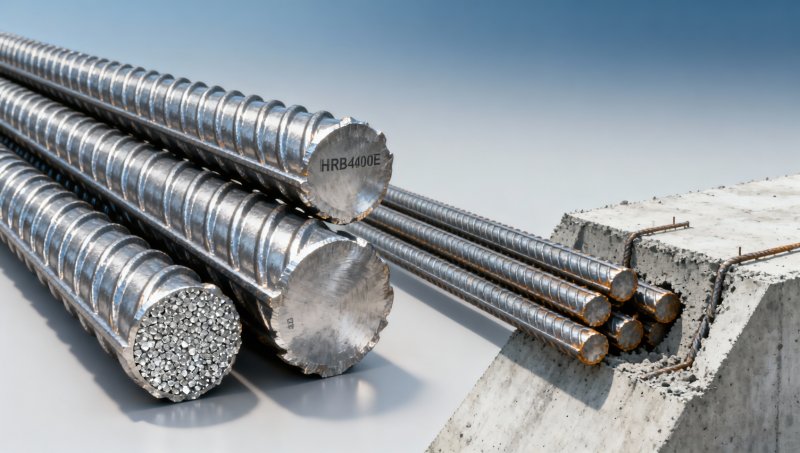
Rebar and structural steel bars—though both carbon steel products—serve fundamentally different engineering roles. Rebar (typically Grade 60/420 per ASTM A615 or HRB400 per GB/T 1499.2) is designed for embedded concrete reinforcement: its rib pattern ensures bond strength, while its controlled tensile-to-yield ratio (≥1.25) guarantees ductile failure before collapse. Structural steel bars (e.g., ASTM A615 Grade 40 or ASTM A706 low-alloy variants) may meet minimum yield thresholds but lack standardized elongation, bendability, or weldability requirements for foundation applications.
A common misstep occurs when procurement teams substitute ASTM A615 Grade 40 rebar (yield strength ≥ 275 MPa) with plain round mild steel bar (yield ~235 MPa) to save 8–12% on unit price. In high-seismic regions like California or Japan, this reduces the structure’s energy dissipation capacity by up to 35%, increasing collapse risk during M7.0+ events. Hongteng Fengda’s in-house testing shows that under cyclic loading, non-compliant bars exhibit brittle fracture at ≤ 3% strain—well below the 12% minimum elongation mandated for seismic-grade rebar.
The misconception persists because visual inspection cannot detect microstructural differences—grain size, carbon equivalence, or residual stress distribution—that govern performance under dynamic loads. That’s why third-party mill test reports (MTRs) and witnessed tensile tests are non-negotiable for foundation-grade material.
This table highlights how specification gaps translate into real-world risk. Hongteng Fengda’s foundation rebar undergoes mandatory post-rolling quenching and tempering—ensuring uniform microstructure and eliminating cold-working inconsistencies found in generic structural bars.
Hidden Lifecycle Costs of Grade Substitution
Short-term savings evaporate when factoring in lifecycle exposure. A 2023 study across 47 Middle Eastern infrastructure projects found that using non-certified rebar increased average maintenance costs by 22% over 15 years—primarily due to accelerated chloride-induced corrosion in coastal foundations. Corrosion reduces effective cross-section area by up to 0.15 mm/year in aggressive environments, directly compromising load-bearing capacity.
Moreover, insurance underwriters now require ISO 17025-accredited mill certifications for all foundation materials in high-risk zones. Non-compliant substitutions trigger policy exclusions—shifting full liability to contractors. At Hongteng Fengda, every rebar coil carries traceable heat numbers, EN 10080 conformity declarations, and third-party SGS validation reports—reducing project approval delays by 7–10 business days on average.
For industrial clients managing multi-site portfolios, our OEM rebar marking service enables laser-etched project IDs and batch codes—eliminating onsite sorting errors and reducing QA inspection time by 30%.
Selecting the Right Grade: 5 Non-Negotiable Criteria
Technical evaluation must go beyond nominal yield strength. Here are five field-proven criteria:
- Yield-to-Tensile Ratio: Must be ≤ 0.85 for seismic applications (per ASCE 7-22)—ensures plastic hinge formation without premature rupture.
- Chemical Composition Control: Carbon equivalent (CEV) ≤ 0.45% prevents weld cracking; Hongteng Fengda maintains CEV at 0.38–0.42% across all HRB500E batches.
- Surface Integrity: Rib height tolerance ±0.1 mm (ASTM A615 §7.3); deviations >0.15 mm reduce bond strength by 18–25%.
- Dimensional Consistency: Diameter variance ≤ ±0.2 mm per meter—critical for automated rebar tying machines.
- Corrosion Resistance Add-Ons: For marine or chemical plants, consider epoxy-coated rebar or Stainless Steel Welded Mesh as secondary reinforcement in splash zones—offering 30+ years service life without degradation.
Our engineers co-develop specification checklists with clients—mapping each criterion to applicable clauses in ASTM A615, EN 10080, or GB/T 1499.2—to eliminate ambiguity before order placement.
How Hongteng Fengda Mitigates Substitution Risk
We embed quality assurance into every touchpoint. All rebar shipments include QR-coded certificates linking to real-time production logs—including rolling temperature, cooling rate, and tensile test videos. Our Guangdong facility maintains ISO 9001:2015 and IATF 16949 certification, with annual audits by TÜV Rheinland.
For global buyers, we offer pre-shipment verification at your nominated lab (SGS, Bureau Veritas, or local NABL-accredited facilities). Lead time remains stable at 25–30 days—even during peak Q4 demand—thanks to dual-line production and 12,000 MT finished goods buffer stock.
Beyond rebar, our structural portfolio includes ASTM A572 Grade 50 beams (yield ≥ 345 MPa), EN 10219 cold-formed hollow sections, and custom-fabricated anchor cages—all traceable to mill origin and certified per project-specific requirements.
These controls reduce sourcing risk while maintaining competitive pricing—proven across 212 projects delivered to North America, EU, and ASEAN since 2021.
Next Steps for Confident Procurement
Grade substitution isn’t about cost—it’s about consequence. Every foundation decision impacts safety, compliance, and total cost of ownership. Hongteng Fengda provides free technical consultation for rebar specification alignment, including ASTM/EN/GB cross-referencing, seismic zone mapping, and lifecycle cost modeling.
Whether you’re evaluating stainless steel sheet price, seamless steel pipe, or galvanized steel electrical conduit, our engineering team helps translate standards into actionable procurement criteria. Request your customized rebar specification checklist and factory audit schedule today.
Contact Hongteng Fengda now to discuss your next structural steel requirement—or explore our full range of certified solutions, from angle steel to Stainless Steel Welded Mesh, engineered for durability where corrosion resistance is non-negotiable.
Please give us a message


Please enter what you want to find