When sourcing steel bars, inconsistencies in yield strength often trace back not to raw material quality—but to gaps in supply chain control, specification alignment, and mill-level process transparency. As a certified steel bar manufacturer and steel beams supplier from China, Hongteng Fengda bridges this gap with mill-direct oversight, rigorous testing of hot dip galvanized angle steel and high strength stainless steel pipe, and full compliance with ASTM/EN standards. Whether you’re evaluating corrosion resistant stainless steel pipe for harsh environments or comparing hot dip galvanized steel price versus steel roof sheet price, understanding where yield variability originates is the first step toward resilient procurement—especially for project managers, procurement teams, and technical evaluators.
The Hidden Origin of Yield Inconsistencies: Beyond Raw Material Blame
Yield strength deviations in structural steel bars are frequently misattributed to “low-grade billets” or “substandard scrap.” In reality, metallurgical consistency begins at the rolling mill—but is only preserved through tightly controlled downstream processes. A single deviation in reheating temperature (±15°C), finishing pass reduction (±0.8%), or cooling rate (e.g., air-cooled vs. accelerated water-quenched) can shift yield values by 12–25 MPa—even when starting from identical chemical compositions.
This variance amplifies across tiers: mills supplying generic billets to fabricators rarely share real-time rolling logs, thermal profiles, or tensile test certificates per heat lot. Without mill-direct traceability, buyers rely on batch-level averages—not individual coil performance. For projects requiring strict yield-to-tensile ratios (e.g., ASTM A615 Grade 60 demands ≥60 ksi yield with ≤75 ksi tensile), such averaging introduces unacceptable risk.
Hongteng Fengda mitigates this by operating as both mill-integrated producer and certified exporter—maintaining direct oversight from slab casting through final straightening and testing. Every heat lot undergoes 100% ultrasonic testing, and yield data is logged per 6-meter segment—not per coil—to support purlin layout optimization and load-path validation.
Manufacturer vs. Mill-Direct Sourcing: A Structural Decision Matrix
Choosing between a structural steel manufacturer (like Hongteng Fengda) and a mill-direct supplier involves trade-offs across seven procurement dimensions: specification fidelity, dimensional tolerance control, surface treatment accountability, documentation granularity, lead time predictability, minimum order flexibility, and post-delivery technical support.
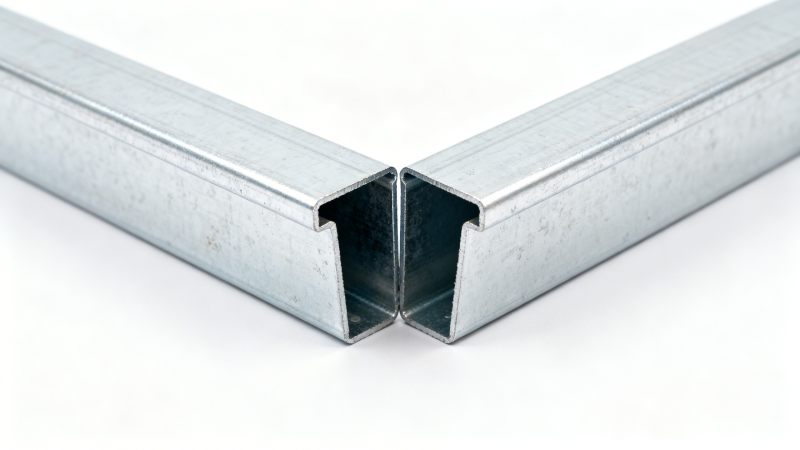
The table reveals a critical insight: mill-direct sourcing optimizes for raw tonnage cost, while certified manufacturers optimize for *application readiness*. For example, Hongteng Fengda’s C Sections Steel—used in purlins and wall beams of steel structure buildings—undergoes automated cold roll forming with real-time thickness monitoring, ensuring ±1% dimensional accuracy across 1mm–12mm gauges and lengths up to 12m. This precision directly reduces field welding rework by an estimated 30–45% versus mill-sourced blanks requiring secondary fabrication.
Where Yield Gaps Manifest in Real Projects
Yield inconsistencies rarely appear during lab testing—they emerge at installation and service. Consider three high-frequency failure vectors:
- Purlin buckling under wind uplift: When nominal yield is 235 MPa but actual segments measure 212–248 MPa, localized low-yield zones reduce effective section modulus by up to 18%, triggering premature lateral-torsional buckling.
- Bolted connection slip: Variance in yield affects clamping force retention. A 15 MPa drop in base metal yield can increase bolt preload loss by 22% over 12 months in coastal environments.
- Weld fusion zone cracking: Mismatched yield between parent metal (Q345) and filler (E70T-1) widens heat-affected zone brittleness—especially when mill batches vary >10 ksi in yield.
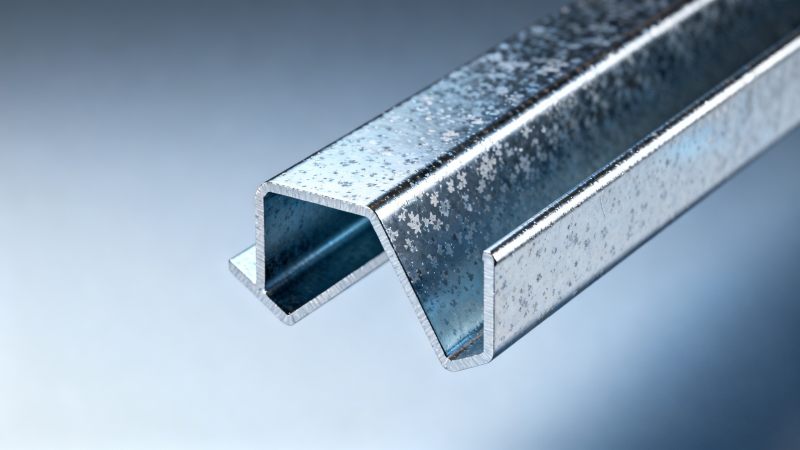
Hongteng Fengda addresses these by aligning production with end-use physics: all C Sections Steel are formed using servo-controlled C-shaped steel forming machines that auto-adjust roll pressure based on real-time thickness feedback. This ensures consistent cross-section geometry—and thus predictable yield distribution—across every meter of product.
Procurement Protocol: 5 Non-Negotiable Checks Before Order Release
To prevent yield-related delays or rejections, procurement teams must verify these five checkpoints before approving purchase orders:
- Heat-specific tensile reports: Require ASTM E8/E8M-compliant curves—not just “meets spec” stamps—with yield, tensile, elongation, and reduction-of-area values.
- Mill log access: Confirm ability to review reheating temperature, finishing stand exit speed, and coiling temperature per heat number.
- Galvanizing adhesion verification: Specify ASTM D3359 tape test results (≥4B rating) and coating thickness mapping across flange/web/junction zones.
- Length-wise yield sampling: Mandate tensile tests from start/mid/end of each 12m bar—not just one sample per coil.
- Traceability matrix: Demand QR-coded labels linking physical bar → heat lot → mill log → lab report → shipping manifest.
Hongteng Fengda embeds all five into standard delivery: every shipment includes digital access to mill logs and lab reports via secure portal, with physical QR tags applied pre-galvanizing. Lead times remain stable at 25–35 days—even for mixed-spec orders including Q235, Q345, A36, and S235JR grades.
Conclusion: Yield Consistency Is a Process Outcome—Not a Material Attribute
Yield strength is not an intrinsic property stamped onto steel—it is the cumulative result of 17+ controlled process variables across melting, casting, rolling, cooling, cutting, and surface treatment. Relying solely on mill certifications without verifying execution discipline invites systemic risk. Certified structural manufacturers like Hongteng Fengda deliver yield consistency by owning the entire value chain—from molten steel chemistry control to final dimensional verification—while maintaining full compliance with ASTM, EN, JIS, and GB standards.
Whether you're specifying cold-formed C Sections Steel for lightweight roof trusses or evaluating hot dip galvanized angle steel for marine infrastructure, yield reliability starts with who controls the process—not just who supplies the billet. With production capacity across 6m, 9m, and 12m lengths; surface options including galvanized, powder-coated, and black varnish; and certifications from CE, SGS, BV, and ISO, Hongteng Fengda supports global buyers in reducing sourcing risk, controlling total landed cost, and ensuring on-site constructability.
Contact our engineering team today to request heat-specific yield data samples, review mill log access protocols, or obtain a customized quote for your next structural steel requirement.
Please give us a message


Please enter what you want to find