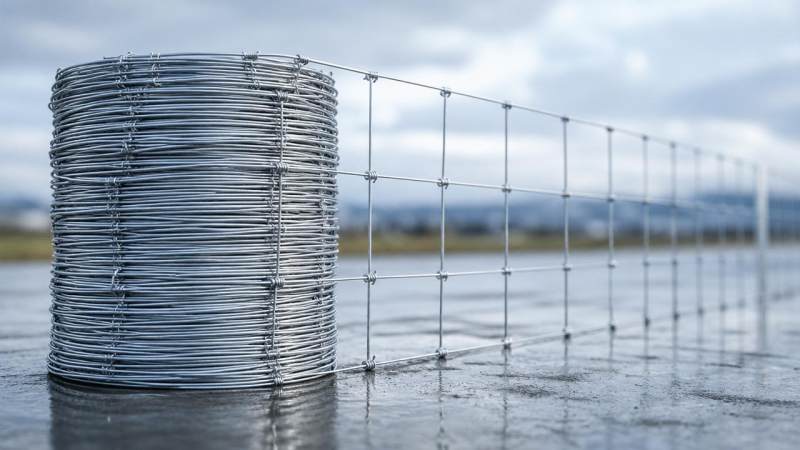
Choosing the right steel wire for fencing can mean the difference between a fence that lasts for years and one that rusts, sags, or fails too soon. For homeowners and property users, durability depends on more than just wire thickness—it also involves coating quality, steel strength, and resistance to weather and corrosion. Understanding these factors helps you make a smarter, longer-lasting investment.
What actually makes fencing wire last longer?
When people compare steel wire for fencing, they often focus on price first. In practice, service life is shaped by four elements: the base steel, the surface protection, the fence structure, and the local environment. A wire that performs well in a dry inland area may fail quickly near coastal salt air or in places with frequent rain and freeze-thaw cycles.
For end users, the goal is not just to buy “strong wire,” but to choose a system that can resist rust, stay taut, and keep its shape for 5, 10, or even more years depending on use and maintenance. That is why thickness alone is never enough. A 2.0 mm wire with weak coating may age faster than a slightly thinner wire with better galvanizing and tighter manufacturing control.
Key durability factors to compare
The most reliable way to judge fencing wire is to compare measurable factors instead of marketing claims. The table below shows the main points that affect durability in real use.
In short, the longest-lasting fences are usually the ones built from balanced specifications, not the ones with the thickest wire alone. If your property is exposed to rain, soil moisture, or chemical fumes, surface protection should be treated as a priority, not an optional upgrade.
Common failure points buyers should avoid
Many fencing problems start during selection. A wire that looks acceptable on day one can still fail early if it is poorly coated, over-stretched, or mismatched with the fence posts. For example, using light-duty wire in a high-wind area often leads to loosening within 12–18 months.
- Thin or uneven coating that exposes steel edges.
- Low-strength material that bends under repeated load.
- Incorrect tension, especially on long fence runs above 30 meters.
- Poor drainage around the base, which keeps the lower wire wet.
These issues are avoidable when the product is selected for the actual site conditions. That is why residential buyers should think in terms of “system life” rather than wire price alone.
How to select steel wire for fencing by application and budget
A practical purchase decision starts with the fence’s purpose. Garden boundaries, livestock areas, security perimeters, and decorative property lines all need different balance points between strength, corrosion resistance, and cost. For homeowners, the best choice is often the one that matches the environment and expected maintenance schedule, not the most expensive option on the shelf.
In many projects, buyers also compare wire solutions with related stainless steel products used in construction and utility systems. For instance, a 201 Stainless steel pipe and 304 stainless steel are often evaluated in the same decision set when users need durable metal parts with moderate cost control, strong mechanical performance, and better resistance to corrosion than basic carbon steel materials. In fencing-related environments, this comparison helps buyers understand how material choice affects long-term maintenance, even when the final product shape is different.
Material and specification comparison
The following table helps clarify how typical steel-related material choices are judged for outdoor durability, cost, and maintenance burden. It is useful when comparing fencing wire, supporting components, and nearby metal structures.
For homeowners, the best budget choice is usually not the lowest upfront cost, but the lowest cost over 5 to 8 years. A wire that needs repeated repairs, replacement clips, or re-tensioning will often become more expensive than a slightly better product purchased once.
Recommended buying checklist
Before placing an order, check these 6 points: wire diameter, coating type, tensile performance, roll length, installation method, and expected weather exposure. If the fence is near coastal air, wet soil, or fertilizer storage, upgrade the corrosion protection level rather than saving a small amount on material cost.
Technical reference that helps with metal selection
Although fencing wire is a different product from pipe or structural sections, end users often want a basic sense of metal performance. The reference below shows common stainless steel property ranges used in related metal products, which helps explain why corrosion resistance and mechanical strength matter so much in outdoor applications.
These numbers are useful because they reflect the broader principle behind durable fencing materials: a stable metal base, reliable surface treatment, and consistent processing all contribute to longer service life. For buyers comparing options, that is often the difference between a fence that merely looks strong and one that stays strong.
Installation, maintenance, and long-term buying advice
Even the best steel wire for fencing can fail early if the installation is careless. Proper post alignment, correct tension, and periodic checks are essential. Most residential fence systems benefit from a visual inspection every 3 to 6 months, especially after heavy rain, storms, or seasonal ground movement.
A simple 5-step maintenance routine
- Check for rust spots, scratches, or coating damage.
- Confirm the wire is still taut across all spans.
- Inspect corners and joints, where stress is usually highest.
- Clear mud, fertilizer residue, or trapped moisture from the fence base.
- Repair damaged sections before corrosion spreads.
This routine takes little time, but it can add years to the fence’s usable life. In many cases, early maintenance is far cheaper than replacing a line of wire after visible sagging or corrosion has already spread.
When to consider a stronger metal solution
If your property includes water exposure, fertilizer storage, chemical contact, or frequent temperature changes, standard wire may not be enough. In those situations, buyers often look at upgraded metal materials and related components with better oxidation resistance, more stable surface finish, and improved resistance to acids, alkaline gases, and other media. For outdoor property users, that usually means fewer repair cycles and more predictable performance over time.
For purchasing decisions, ask for the coating type, production tolerance, test standard, and expected delivery schedule. Standard-sized metal products are often available in 1–6 meter lengths or common tube formats, while custom solutions can be arranged for special fence systems, support frames, and replacement parts. A clear specification sheet reduces sourcing risk and helps avoid mismatched materials.
If you are planning a new fence or replacing an aging one, compare the full life-cycle cost rather than only the first invoice. The right choice should give you stable performance, fewer maintenance visits, and better value over a 3–10 year use period. If you need a reliable material recommendation or customized metal solution, contact us to discuss your project requirements and get a suitable option.
Please give us a message


Please enter what you want to find