Many buyers trust a steel wire rope manufacturer based on brochures alone, but real performance needs evidence. From certificates and testing data to production traceability and export experience, every claim should be verified before purchase. This matters even more when sourcing from a steel wire rope supplier or comparing a carbon steel manufacturer for demanding industrial and construction applications.
Before you accept any supplier claim, focus on one practical question: can the manufacturer prove consistent quality, compliance, and delivery performance with documents, records, and real-case experience? For buyers, engineers, QC teams, project managers, and decision-makers, the answer should never rely on marketing language alone. It should come from verifiable proof.
What Buyers Really Need to Verify Before Trusting a Steel Wire Rope Manufacturer
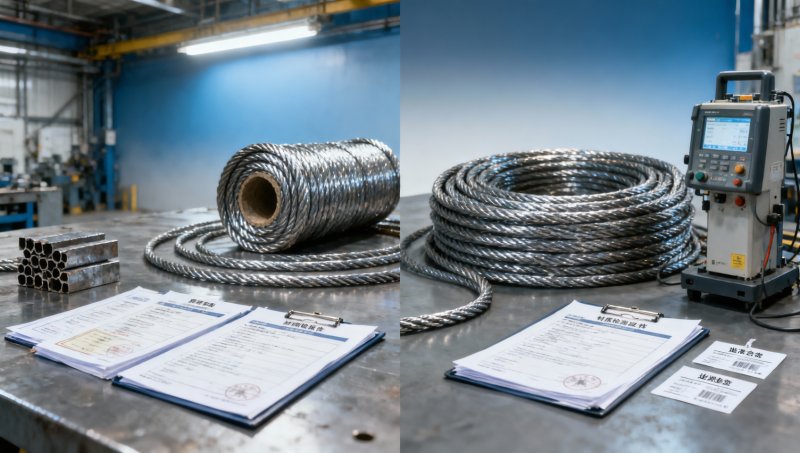
The core search intent behind this topic is clear: readers want to know which manufacturer claims are credible, how to verify them, and how to reduce sourcing risk before placing an order. They are not looking for vague descriptions of product quality. They want a practical evaluation framework.
Different stakeholders often look at the same supplier from different angles:
- Procurement teams want stable pricing, reliable lead times, and low claim risk.
- Technical evaluators want material consistency, standards compliance, and test evidence.
- QC and safety managers want traceability, inspection records, and defect control.
- Project managers want supply continuity and reduced installation or schedule delays.
- Business and financial decision-makers want lower total procurement risk, fewer rejections, and predictable commercial outcomes.
That means the most useful article is not one that repeats “high quality” or “advanced equipment.” It is one that explains which claims matter, what proof should support them, and what red flags suggest caution.
Which Manufacturer Claims Actually Need Proof
When evaluating a steel wire rope supplier, or even a broader carbon steel manufacturer, the following claims should always be supported by evidence.
1. “Our products meet international standards”
This should be backed by clear references to applicable standards, such as ASTM, EN, JIS, or GB, depending on the product and destination market. Ask for:
- Mill test certificates
- Material grade declarations
- Dimensional inspection reports
- Mechanical property test results
- Third-party verification when required
If a supplier says products comply with multiple standards, they should explain exactly which standard applies to which item, specification, or export market.
2. “We have strict quality control”
This is one of the most common claims and one of the least meaningful unless it is documented. Real proof includes:
- Incoming raw material inspection procedures
- In-process control records
- Final inspection checklists
- Calibration records for testing equipment
- Nonconformance and corrective action procedures
A serious manufacturer should be able to show how defects are detected, recorded, isolated, and prevented from recurring.
3. “We offer stable quality in every batch”
Batch consistency is critical for industrial users and project buyers. You should ask for:
- Heat number or batch number traceability
- Sample inspection records from multiple shipments
- Historical quality stability data
- Packaging and labeling control methods
Consistency matters more than one perfect sample. A reliable manufacturer proves repeatability, not just isolated performance.
4. “We have strong export experience”
Export experience should mean more than saying “we ship globally.” Useful proof includes:
- Destination market experience
- Knowledge of local documentation requirements
- Packaging suited for long-distance transport
- On-time shipment records
- Customer references or anonymized case examples
A supplier familiar with North America, Europe, the Middle East, or Southeast Asia is often better prepared for compliance, logistics, and communication requirements.
What Documents and Data Should You Ask For Before Purchase
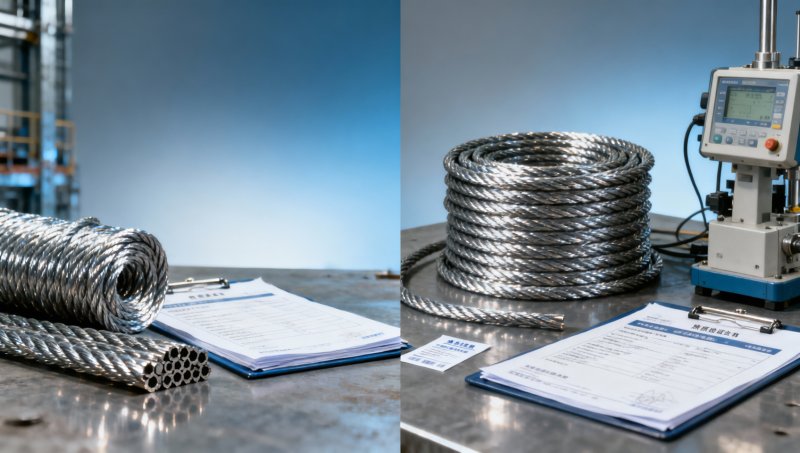
If you want to compare suppliers objectively, request a standard documentation package. This makes it easier to verify claims and spot weak points early.
A practical supplier review checklist includes:
- Business licenses and export credentials
- Quality management certifications
- Product test certificates
- Material traceability records
- Inspection and testing process descriptions
- Production photos or factory audit materials
- Packing specifications
- Lead time commitments
- Sample order policy
- Complaint handling process
For technical teams, it is also useful to check whether the supplier can explain deviations, tolerances, coating details, and application limitations in clear terms. A manufacturer that responds precisely is usually more dependable than one that only repeats general claims.
In many industrial sourcing situations, buyers compare rope products with other structural or carbon steel materials used in the same project. For example, when evaluating overall material sourcing capability, some buyers also review related steel products such as A36 Carbon Steel Round Bar. This kind of product is widely used in construction, manufacturing, engineering, decoration, water supplying systems, handrails, railings, staircases, doors, windows, balconies, fences, furniture, and shipment-related applications. With available diameters from 5–2500 mm and common lengths such as 2 m, 5 m, 6 m, and 12 m, it reflects how a supplier handles specification diversity, standards like ASTM, DIN, JIS, GB, and EN, and surface treatment options such as oiling, phosphating, lacquer sealing, galvanized finishes, PVC, or anti-rust coatings. For buyers, this broader capability can be a useful indicator of manufacturing discipline and documentation maturity.
How to Separate Real Manufacturers From Trading-Only Claims
Not every supplier presenting itself as a manufacturer actually controls production. This does not automatically mean poor service, but it does change the risk profile. If production control matters, verify the supplier’s real role.
Questions to ask include:
- Is the factory owned, partner-operated, or outsourced?
- Which production steps are completed in-house?
- Can they provide factory photos, videos, or audit access?
- Who controls raw material procurement and inspection?
- Who signs off on final quality release?
A genuine manufacturer or tightly managed export manufacturer should be able to explain its production flow clearly. If answers are vague or inconsistent, that is a warning sign.
Red Flags That Suggest a Claim May Not Be Reliable
Some problems become visible before any order is placed. Common red flags include:
- Certificates without matching product details
- Test reports that appear generic or reused
- No batch traceability
- Unclear response on standards compliance
- Very low prices without technical explanation
- Refusal to provide sample inspection data
- Lead times that seem unrealistic for the quantity
- Inability to explain claim handling procedures
Price alone should never decide industrial sourcing. A low purchase price can quickly become expensive if it creates delays, rework, rejection, or safety concerns.
What a Reliable Chinese Structural Steel Exporter Should Be Able to Prove
For global buyers sourcing from China, proof of capability matters more than country assumptions. A reliable structural steel manufacturer and exporter should be able to demonstrate:
- Stable production capacity for repeat orders
- Compliance with major international standards
- Consistent quality control procedures
- Custom manufacturing or OEM support when needed
- Experience serving multiple overseas markets
- Clear communication on specifications, lead times, and shipment planning
For companies serving construction, industrial, and manufacturing projects, strong sourcing support means more than delivering steel. It means helping buyers reduce sourcing risk, control total cost, and keep projects moving on schedule.
Conclusion: Trust Evidence, Not Just Supplier Language
The best way to evaluate a steel wire rope manufacturer is to treat every important claim as something that should be proven. Quality, compliance, consistency, export experience, and delivery reliability are all measurable when the supplier has the right systems and records.
For buyers, engineers, QC personnel, and decision-makers, the practical standard is simple: if a claim affects safety, cost, schedule, or performance, ask for evidence. A trustworthy supplier will not only provide documents but also explain them clearly and consistently. That is the difference between marketing confidence and real manufacturing credibility.
Please give us a message


Please enter what you want to find