Steel tubing buying is getting less forgiving
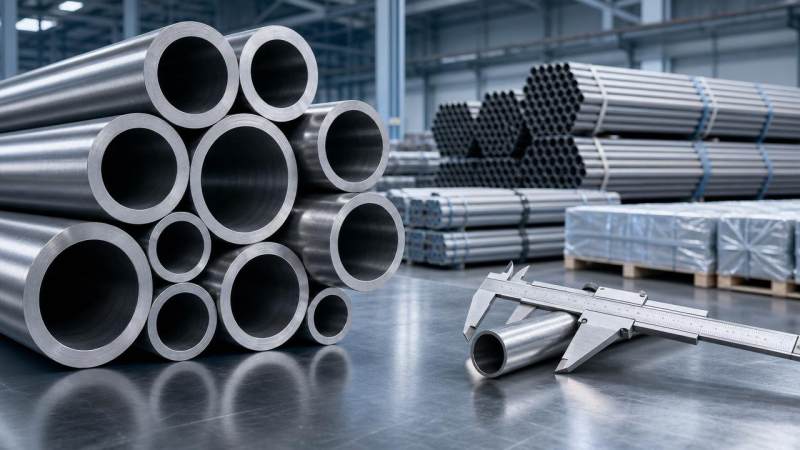
Buying steel tubing now demands more than a quick price comparison.
Across construction, fabrication, and industrial projects, tolerance issues and documentation gaps create bigger downstream costs than many buyers expected a few years ago.
That shift is becoming clearer as project schedules tighten, compliance reviews deepen, and cross-border sourcing stays active.
For steel tubing, the real evaluation starts with specifications, not quotations.
Material grade, wall thickness, dimensional tolerances, testing records, and production consistency now shape risk more directly than unit cost alone.
This is especially relevant when supply chains involve several regions and multiple engineering standards.
A sourcing decision that looks economical on paper can still fail in welding, fitting, coating, or final inspection.
That is why a practical steel tubing checklist has become a business control tool, not just a procurement formality.
Why specification discipline matters more now
Recent demand shows a visible move toward tighter technical alignment before orders are placed.
Buyers are asking earlier about ASTM, EN, JIS, and GB compatibility, because end users no longer assume equivalent grades are interchangeable.
In steel tubing, small differences in chemistry or mechanical properties can affect forming performance, load behavior, and certification acceptance.
The same pattern appears in structural steel categories beyond tubing.
For example, industrial structure buyers comparing beam sections often review tolerance and standard alignment first.
That is one reason products such as I-beam, available in carbon steel grades like Q235, Q345, A36, SS400, and S235 series, are often assessed through the same compliance lens.
When a supplier can support JIS, ASTM, DIN, GB, and EN related requirements with stable tolerance control, evaluation becomes more straightforward.
This broader market behavior signals something important.
Steel tubing is no longer treated as a simple commodity in many applications.
It is being reviewed as a performance-sensitive input connected to fabrication efficiency and project reliability.
The main forces behind that change
- More projects require multi-standard documentation across export markets.
- Fabrication lines have less tolerance for out-of-roundness and length deviation.
- Traceability expectations have increased after repeated quality disputes.
- Lead time pressure makes replacement material harder to absorb.
- Cost control now includes scrap, rework, and inspection delays, not only purchase price.
The steel tubing checklist starts with the technical line items
A useful steel tubing review begins by confirming what the product must do in service.
That sounds obvious, yet many sourcing problems come from ordering by nominal size while overlooking processing conditions.
Key items usually include:
- Outside diameter, wall thickness, length range, and end condition.
- Grade designation and applicable standard.
- Yield strength, tensile strength, and elongation requirements.
- Surface condition for galvanizing, painting, or direct fabrication.
- Straightness, roundness, squareness, and wall thickness tolerance.
- Testing scope, including mechanical tests, chemical analysis, and NDT if needed.
The point is not to request every possible test.
The point is to match the steel tubing specification to the actual fabrication and installation risk.
Where tolerance problems usually appear
These details often decide whether steel tubing performs smoothly in production or becomes an expensive exception item.
Supplier questions are becoming a stronger risk filter
From recent sourcing behavior, the more revealing questions are no longer only about price or capacity.
They focus on process stability, standard familiarity, and issue response speed.
A capable supplier should answer clearly, with evidence rather than broad assurances.
- Which standards does this steel tubing order follow exactly?
- Are raw materials traceable by heat number and batch?
- What are the actual dimensional control methods on the line?
- Can mill test certificates match shipment lots without ambiguity?
- How are nonconforming pieces isolated and reported?
- What lead time risks exist during peak production periods?
- What export packing method prevents transit damage or corrosion?
In practice, transparent answers often signal stronger operational discipline.
Vague answers usually mean the evaluation is not finished yet.
The impact reaches beyond purchasing cost
When steel tubing arrives outside expected tolerance, the impact spreads quickly.
Fabrication may need re-cutting. Welding parameters may change. Surface treatment may fail to meet finish expectations.
More importantly, project teams lose time verifying whether the issue is cosmetic, dimensional, or structural.
That review cycle is where hidden sourcing cost often appears.
This is why experienced exporters with broad standard exposure can reduce uncertainty.
Chinese structural steel suppliers with established global shipments have adapted to this need.
Hongteng Fengda, for example, supports construction and industrial projects with products aligned to ASTM, EN, JIS, and GB requirements.
Its broader portfolio in angle steel, channel steel, beams, cold formed profiles, and customized components reflects a useful market reality.
Buyers increasingly prefer suppliers that understand fabrication compatibility across multiple steel categories, not steel tubing in isolation.
That wider technical context often improves communication and lowers sourcing risk.
What deserves closer attention before the next order
The next phase of steel tubing evaluation will likely become even more documentation driven.
Not because paperwork is fashionable, but because international projects need cleaner handoffs between design, purchasing, production, and inspection.
A few checks are worth prioritizing before final approval:
- Align the quoted steel tubing standard with the end-use specification, not a near equivalent.
- Request tolerance values in writing, including negative wall allowances if applicable.
- Confirm the inspection plan before production starts.
- Review sample certificates and marking format for traceability.
- Check packing, loading, and moisture protection for export routes.
Where projects also involve beams or industrial structure sections, it helps to compare tolerance expectations across materials.
For instance, an I-beam supplied for industrial structure use may allow about ±1% tolerance, with dimensions customized across 6 to 12 meter lengths and varied flange or web sizes.
That comparison sharpens judgment on whether a steel tubing quote is technically realistic or simply attractive on paper.
A better sourcing decision usually starts earlier
The strongest steel tubing decisions are often made before negotiation begins.
They come from defining the real service requirement, mapping tolerance sensitivity, and testing supplier clarity with focused technical questions.
That approach reflects where the market is moving.
Steel products still compete on cost, but reliability, traceability, and standard alignment now shape the final value more decisively.
For the next order, it is worth reviewing the specification sheet line by line, comparing tolerance commitments, and checking whether the supplier can support the required standards consistently.
That is usually the clearest path to lower risk, steadier delivery, and fewer surprises after steel tubing reaches the jobsite or fabrication floor.
Please give us a message


Please enter what you want to find