For procurement teams, understanding steel tube weight is more than a technical detail—it directly affects material cost, transport planning, structural performance, and supplier comparison. Even small weight differences can lead to budget gaps or specification issues in large-volume orders. This article explains why steel tube weight matters and how accurate data helps buyers make safer, more cost-effective sourcing decisions.
Why Steel Tube Weight Has Become a More Sensitive Purchasing Signal
In today’s steel market, buyers are paying closer attention to steel tube weight because procurement conditions have changed. Freight costs remain volatile, project schedules are tighter, and international sourcing now involves more detailed cost comparison across mills, traders, and fabricators. In that environment, a seemingly small variation in theoretical or actual unit weight can influence the final landed cost far more than many buyers expect.
For structural steel projects, steel tube weight affects not only raw material billing but also loading plans, lifting arrangements, fabrication tolerance, and compliance with design intent. This matters especially for import buyers managing container utilization or break-bulk shipments from China to North America, Europe, the Middle East, and Southeast Asia. A difference of a few kilograms per piece may appear minor on paper, but once multiplied across hundreds or thousands of lengths, it can reshape budget calculations and even supplier rankings.
Another reason this topic is receiving more attention is the increasing expectation for data transparency. Procurement teams are under pressure to justify why one quote is lower, why one shipment exceeds the expected tonnage, or why one supplier’s steel tube weight chart does not match another’s. As quality control standards rise, purchasing decisions are becoming more data-driven and less dependent on rough estimation.
What Has Changed in the Market Around Steel Tube Weight
The market has not changed because weight formulas are new; it has changed because the consequences of inaccuracy are larger. Buyers used to focus mainly on price per ton. Now they also evaluate consistency between theoretical weight, mill tolerance, and delivered weight. This shift is being driven by several practical developments:
In short, steel tube weight has moved from being a technical reference to a commercial control point. Procurement teams that ignore it may still secure a low quoted price, but they face greater risk of cost drift later in the transaction.
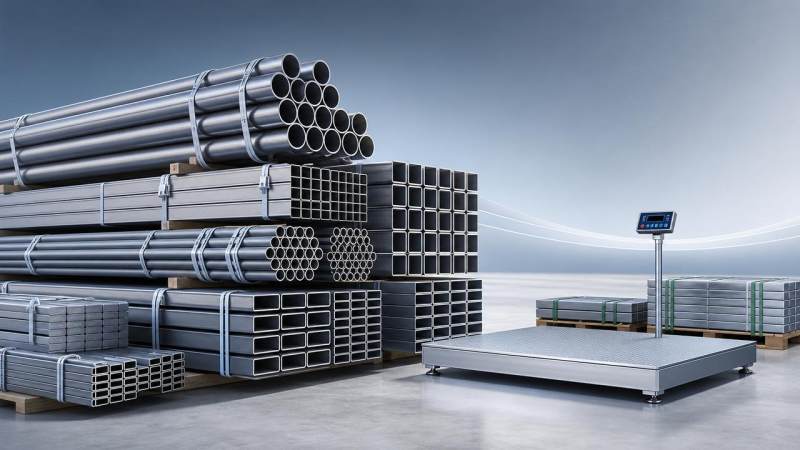
Why Small Weight Differences Create Large Commercial Effects
The core issue is scale. A small difference in wall thickness, outside diameter tolerance, or steel density assumption can alter the actual steel tube weight per meter. If a buyer orders a limited quantity, the impact may be manageable. But for infrastructure, industrial buildings, equipment frames, storage systems, or fabrication contracts with repeated dimensions, tiny deviations become financially meaningful.
Consider how this works in practice. A supplier may quote by theoretical weight based on standard formulas, while another may estimate using a slightly different tolerance assumption. A third may deliver products that remain within standard but lean toward the upper side of thickness tolerance. All three can appear similar during quotation review, yet the final payable tonnage, shipping weight, and fabrication handling costs can differ noticeably.
For buyers, the key lesson is that steel tube weight is not only a calculation issue; it is a contract interpretation issue. It influences how price competitiveness is measured, how inventory planning is done, and how receiving inspection should be organized. This is why experienced procurement teams request both specification details and the basis of weight calculation before confirming orders.
The Main Drivers Behind Weight Sensitivity in Steel Purchasing
Several market and technical drivers are making weight accuracy more important than before.
1. Freight Is Now a Strategic Cost Line
For exported structural steel, transport is often no longer a secondary cost. Ocean freight, inland haulage, and terminal charges all interact with shipment weight. If estimated steel tube weight is too low, container loading plans may fail, requiring split shipments or revised packing. That creates delay and added cost.
2. Design and Fabrication Tolerance Are Under More Scrutiny
Modern projects are less tolerant of mismatch between procurement documents and fabrication reality. Heavier-than-expected tubes may affect handling equipment, welding rhythm, or support design assumptions. Lighter sections may raise compliance questions even if they appear close to nominal values. Therefore, accurate steel tube weight data supports both commercial review and engineering confidence.
3. Multi-Supplier Sourcing Requires Better Normalization
When buyers compare suppliers from different regions, they often receive quotations based on different standards, tolerances, or material assumptions. One supplier may follow ASTM logic, another EN or JIS practice, and another GB-based production habits. Without normalized steel tube weight comparison, apparent price differences may be misleading.
4. Buyers Are Expanding Beyond Single-Product Purchasing
Many procurement teams now source full material packages rather than one product category. A project may include steel tubes, beams, channels, angles, and stainless products for equipment, cladding, or food-processing environments. For example, in mixed-material procurement, buyers may also evaluate 304 Stainless Steel Plate for chemical, food industry, medical equipment construction, ship parts, kitchen supplies, conveyor belts, vehicles, bolts, nuts, springs, or screens. With tensile strength of at least 520MPa, yield strength of at least 275MPa, elongation of about 55%–60%, density of 7.93g/cm³, and finishes such as BA, 2B, NO.1, NO.4, HL, and 8K, it shows how weight, density, and specification discipline matter across steel categories, not only for carbon or structural tube buying.
Who Feels the Impact of Steel Tube Weight Changes Most Clearly
Not every department experiences steel tube weight issues in the same way. Understanding the affected roles helps buyers build a more reliable internal review process.
This is why advanced buyers increasingly treat steel tube weight as shared data rather than a purchasing detail owned by one department alone.
What Procurement Teams Should Check Before Comparing Suppliers
In a market where small differences matter, the best response is not more negotiation alone, but better comparison logic. Before selecting a supplier, buyers should confirm how steel tube weight has been determined and whether all offers are based on the same assumptions.
Key checkpoints include the nominal outside diameter, wall thickness range, applicable standard, permissible tolerance, length basis, and billing method. Buyers should also ask whether the quotation uses theoretical mass per meter, actual weighed tonnage, or another contractual basis. If the supplier exports regularly, it is also worth confirming how packing lists, mill test certificates, and shipping documents reflect weight data.
For companies sourcing from China, supplier capability is another important signal. Manufacturers with stable production capacity, modern equipment, and strict quality control are generally better positioned to keep steel tube weight consistency within expected ranges. This is especially relevant when supplying projects under ASTM, EN, JIS, or GB requirements, where documentation discipline matters as much as manufacturing output.
The Next Trend: Buyers Will Demand More Weight Transparency, Not Less
Looking ahead, the market direction is clear: procurement will become more detail-sensitive. As steel purchasing becomes more digital and comparative, steel tube weight will be checked earlier in the buying process, not only after delivery or invoice review. Buyers will increasingly expect suppliers to provide clearer unit-weight references, tolerance explanations, and standard-based calculation support.
This trend does not mean every order will become complicated. It means efficient buyers will standardize their evaluation templates. They will identify where weight uncertainty can affect total cost, ask the right technical questions early, and choose partners who can explain deviations clearly. In practice, this shortens negotiation cycles and lowers the risk of post-shipment claims.
For exporters and manufacturers, this is also a signal. The market is rewarding not just low prices, but reliable specification control and transparent communication. Suppliers that can align product quality, documentation, and shipment data will be more competitive in global structural steel sourcing.
Practical Judgement Framework for Safer Steel Tube Buying
If your team wants to improve purchasing decisions, use steel tube weight as a judgement tool rather than a passive number. Ask these questions during supplier evaluation:
- Is the quoted price based on the same specification and standard across all suppliers?
- Does the unit weight reflect nominal dimensions only, or expected tolerance ranges as well?
- How will weight be shown on the contract, packing list, and invoice?
- Will shipment planning change if actual tonnage is higher than expected?
- Can the supplier provide stable quality across repeated batches?
- Is there enough internal coordination between procurement, engineering, and logistics before order release?
These checks are especially valuable for buyers managing large-volume structural steel programs, OEM fabrication packages, or mixed-material sourcing. They help convert steel tube weight from a source of uncertainty into a basis for stronger negotiation and more predictable project execution.
A More Reliable Sourcing Direction for Global Buyers
As a structural steel manufacturer and exporter from China, Hongteng Fengda supports global construction, industrial, and manufacturing projects with angle steel, channel steel, steel beams, cold formed steel profiles, and customized structural steel components. For procurement teams, the real value of working with a dependable supplier is not limited to supply volume. It also includes consistent quality, standard-compliant production, stable lead times, and better control over details such as steel tube weight, documentation, and shipment planning.
The most important takeaway is simple: in steel sourcing, small differences are no longer small once they reach project scale. If your business is comparing international suppliers, planning high-volume orders, or trying to reduce sourcing risk, steel tube weight deserves closer attention at the quotation stage, contract stage, and pre-shipment stage. The buyers who respond to this trend early are more likely to control cost, avoid disputes, and build stronger long-term supplier relationships.
Please give us a message


Please enter what you want to find