Choosing the right steel sheet for construction starts with understanding thickness. A wrong gauge can lead to structural weakness, wasted budget, or project delays. For builders, buyers, and engineers comparing structural steel beams for construction, steel beam for bridge applications, or even related products like stainless steel sheet for kitchen use, knowing the common thickness mistakes to avoid is essential for safe, cost-effective results.
In construction and industrial steel procurement, thickness is never just a number on a drawing. It affects load performance, weldability, bending behavior, coating results, transport weight, and total project cost. A difference of 1 mm or 2 mm may seem small during sourcing, but across hundreds of sheets or multiple fabrication stages, that mismatch can create significant structural, commercial, and scheduling consequences.
For technical evaluators, project managers, buyers, distributors, and decision-makers, the challenge is not only selecting a steel sheet that looks suitable on paper. The real task is matching thickness to application, standard, processing method, and service environment. This is especially important when projects involve ASTM, EN, JIS, or GB requirements and when material consistency must be maintained across international supply chains.
As a structural steel manufacturer and exporter from China, Hongteng Fengda supports global construction and industrial projects with angle steel, channel steel, steel beams, cold formed steel profiles, and customized structural steel components. In this guide, we will examine the most common steel sheet thickness mistakes, explain how to avoid them, and provide practical selection advice for safer procurement and smoother project execution.
Why Thickness Matters More Than Many Buyers Expect

Steel sheet thickness directly influences structural behavior. In many building applications, a sheet is expected to resist bending, local buckling, vibration, impact, or deformation during installation. If the sheet is too thin, it may fail under design loads or require unexpected reinforcement. If it is too thick, it may increase dead load, welding time, cutting cost, and transport expense by 8% to 20% depending on project volume.
Thickness also affects downstream fabrication. For example, a 2.0 mm sheet behaves very differently from a 6.0 mm plate during punching, roll forming, or welding. The selected gauge changes heat input, edge quality, distortion risk, and machine setup. Fabricators and site teams often discover that the wrong thickness creates delays not during ordering, but during bending, fitting, or assembly.
In procurement, one of the biggest misunderstandings is assuming all thickness references mean the same thing. Nominal thickness, minimum thickness, tolerance range, and coated thickness are not identical. A sheet ordered as 3.0 mm may deliver differently depending on standard, tolerance class, and whether it is hot rolled, cold rolled, galvanized, or stainless.
For project managers and quality teams, this matters because inspection is based on measurable acceptance criteria. If the order documents only mention “3 mm steel sheet” without tolerance, standard, or application detail, disputes can arise during receiving inspection. In multi-country sourcing, even a tolerance deviation of ±0.15 mm to ±0.30 mm can affect compliance and fit-up.
How thickness influences core project outcomes
The table below shows how sheet thickness decisions typically affect key construction outcomes. It is useful for both technical review and commercial comparison before placing a bulk order.
The key takeaway is simple: thickness should be selected based on load case, fabrication method, and applicable standard together, not by price alone. The cheapest sheet per ton may become the most expensive option once rework, delay, or excess weight is included.
The Most Common Thickness Mistakes in Construction Steel Sheets
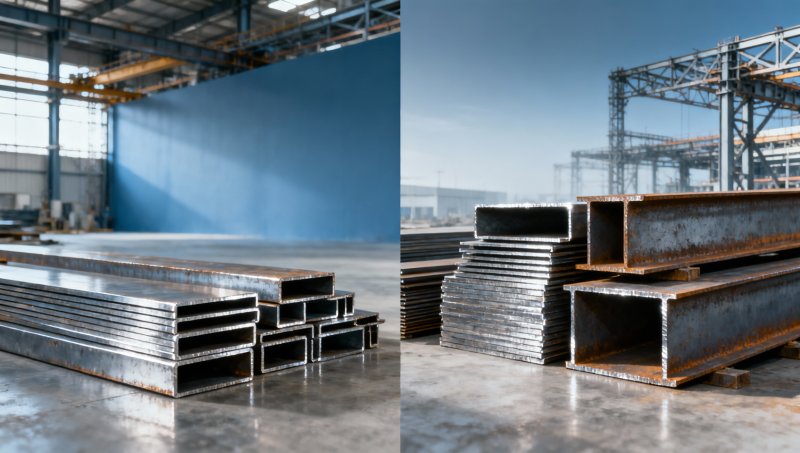
Most thickness mistakes happen before production starts. They are often created by incomplete specifications, rushed substitutions, or confusion between similar products. A project may begin with a structural intent, but by the time a purchase order is issued, the final thickness requirement may have been simplified too much.
One frequent error is choosing thickness based only on a previous project. A 4 mm sheet used successfully in one warehouse or equipment enclosure does not automatically fit another application. Span, support spacing, fastening method, wind load, impact exposure, and corrosion allowance can all change the real requirement.
Another common problem is treating gauge and metric thickness as perfectly interchangeable. In practice, gauge references vary by material type and regional convention. If a buyer requests “12 gauge” without confirming the exact millimeter equivalent, the received product may differ from the engineer’s expectation by enough to affect fabrication or acceptance.
A third mistake is ignoring corrosion environment. In outdoor, coastal, chemical, or high-humidity conditions, sheet thickness may need to account for both structural requirement and expected material loss over time. Even when protective coatings are used, design teams often add a corrosion allowance depending on service life targets such as 10 years, 20 years, or longer.
Five mistakes that cause avoidable project risk
- Ordering by nominal thickness only, without tolerance range or standard reference.
- Substituting thinner sheet to reduce unit cost without structural or fabrication review.
- Using the same thickness for roofing, wall cladding, stiffeners, covers, and load-bearing parts.
- Ignoring welding distortion risk when thin sheet is joined to heavier structural members.
- Failing to check whether coating, finish, or forming process changes effective thickness behavior.
Where mistakes often appear in real projects
In building frames, access platforms, equipment guards, and support panels, sheet thickness errors are usually discovered during load testing, assembly, or site installation. In bridge-related applications, the risk increases because vibration, fatigue, and outdoor exposure create stricter performance expectations. In industrial projects, thin sheet may buckle near welded zones or deform during transport if packaging is not adapted.
For procurement teams, the practical lesson is to document at least 4 items in every steel sheet order: thickness, tolerance, standard, and intended use. Adding dimensions, grade, and surface condition further reduces sourcing risk. This is especially important when comparing quotations from multiple suppliers across different countries.
Hongteng Fengda commonly supports overseas buyers who need standard specifications as well as OEM structural steel solutions. In those cases, thickness control is reviewed not only from the material side but also from the fabrication side, helping customers avoid mismatch between drawings, manufacturing, and on-site assembly.
How to Select the Right Thickness for Different Construction Scenarios
The correct thickness depends on use case. A sheet used as architectural cladding does not follow the same logic as a sheet used for a bracket base, equipment housing, walkway cover, or formed structural component. Selecting the right range starts with defining whether the part is decorative, protective, semi-structural, or load-bearing.
For light enclosures, internal partitions, and non-load-bearing covers, common sheet ranges may begin around 0.8 mm to 2.0 mm depending on material and stiffness requirements. For formed channels, support panels, and medium-duty construction applications, 2.0 mm to 6.0 mm is often more realistic. For plate-like structural parts, base components, or heavy industrial sections, thickness can move well above 6.0 mm.
Design teams should also consider processing. If the part will be laser cut, bent twice, and welded to a steel beam, the ideal thickness may be different from a flat plate bolted directly to a frame. A material that performs well in service but poorly in forming is not a practical selection.
The comparison table below gives a practical decision framework for common construction and industrial steel sheet scenarios. These ranges are general references and should always be checked against design load, code requirement, and fabrication method.
This type of range-based thinking helps both engineers and buyers avoid overgeneralization. Instead of asking for the “best” thickness, ask which thickness best fits the exact function, service environment, and fabrication route.
A 5-step thickness selection checklist
- Define the component role: cosmetic, protective, formed, or structural.
- Confirm load, span, support spacing, and exposure environment.
- Check standard and tolerance requirement such as ASTM, EN, JIS, or GB.
- Review processing steps including cutting, bending, punching, welding, and coating.
- Match material thickness with logistics, budget, and installation practicality.
In projects that combine multiple metal products, buyers should maintain the same disciplined approach across related items. For example, filtration, screening, partition, or architectural infill systems may require stainless mesh rather than plain sheet. In such cases, performance depends on mesh count, wire diameter, open area, and corrosion resistance instead of only sheet gauge.
A practical example is Stainless Steel Welded Mesh, which is used in filters, sieve systems, chemical industry, mining, architecture, and residential applications. Available grades include SS 201, 304, 304L, 316, 316L, and 430, with wire diameter from 0.0008″ to 0.12″, mesh from 2 to 635, open area from 25 to 84.6, roll width up to 240″, and roll length up to 2000′. For buyers, this highlights an important principle: thickness selection must always match the real functional requirement of the steel product category.
Where corrosion, acid, alkali, heat, or chemical resistance is a priority, stainless mesh or stainless sheet may be more suitable than carbon steel sheet. Where primary structural load is the focus, engineered structural steel members and properly specified plate thickness remain the safer choice. Product selection should follow function first, material second, and price third.
Procurement, Inspection, and Quality Control Tips for Thickness Accuracy
Thickness control is not finished when the order is placed. It must continue through quotation review, production confirmation, incoming inspection, and fabrication release. For international buyers, especially those importing structural steel from China or other export markets, document clarity is one of the strongest tools for reducing procurement risk.
At the quotation stage, buyers should request at least 6 key details: steel grade, nominal thickness, tolerance standard, dimensions, surface condition, and application description. If the material will be galvanized, painted, or formed into a profile, these points should be written into the technical requirement rather than discussed only by email or phone.
At inspection stage, thickness should be measured with calibrated tools such as micrometers or ultrasonic gauges, depending on product type. Measurements should be taken at multiple points, not only at sheet center. In many practical receiving inspections, checking 3 to 5 points per sheet and sampling across each lot gives a clearer picture of consistency than a single-point check.
For fabrication and project teams, consistency matters as much as average thickness. If a batch varies too much, fit-up time increases and welding parameters may need adjustment. That translates into lost hours on the shop floor and a higher chance of dimensional deviation during assembly.
What buyers and QC teams should verify
The following table can be used as a practical checklist during sourcing and receiving inspection.
The biggest commercial benefit of this checklist is predictability. When thickness accuracy is controlled from order to delivery, buyers can compare suppliers more fairly, finance teams can estimate landed cost more accurately, and project managers can reduce last-minute substitutions.
Supplier questions worth asking before order confirmation
- Which standard controls the thickness tolerance for this product?
- Is the quoted thickness nominal, minimum, or actual measured average?
- Will processing such as galvanizing or forming affect final dimensions?
- How is the material packed to prevent edge damage or deformation during shipment?
- What is the typical production and delivery lead time, such as 2 to 4 weeks or 4 to 6 weeks, for this thickness range?
Hongteng Fengda supports this process with stable production capacity, quality control, and customized structural steel supply for global projects. For buyers managing cross-border sourcing, working with a supplier that understands both manufacturing details and project documentation can make thickness control far more reliable.
Frequently Asked Questions About Steel Sheet Thickness in Construction
Many buyers and end users ask similar questions when reviewing construction steel sheets. The answers below address practical concerns from engineering, procurement, installation, and commercial perspectives.
How much thickness tolerance is usually acceptable?
The acceptable tolerance depends on product type, standard, and thickness range. In practice, tolerance may be tighter for cold rolled products and wider for heavier hot rolled material. Instead of relying on assumptions, always reference the applicable ASTM, EN, JIS, or GB standard and write that requirement directly into the purchase documents.
Is thicker steel sheet always safer?
No. Thicker material may increase load capacity, but it also adds dead weight, cost, and fabrication difficulty. In some assemblies, a thicker sheet can even shift stress to connectors or supporting members that were designed for lower weight. Good design is about balance, not maximum thickness.
What should procurement teams focus on besides thickness?
At minimum, procurement should verify grade, standard, tolerance, dimensions, surface condition, and application. For fabricated parts, it is also important to check bending requirements, weld preparation, coating system, and delivery condition. These factors often determine whether the chosen thickness will perform as intended.
How can distributors and project teams reduce the risk of wrong-thickness orders?
Use a structured approval flow with 3 stages: technical confirmation, commercial confirmation, and pre-production confirmation. This process helps ensure the drawing, quotation, and order all use the same thickness basis. It is especially useful for OEM structural steel components and mixed-product shipments.
Avoiding thickness mistakes in construction steel sheets is not only a technical issue. It is a project control issue that affects safety, fabrication efficiency, procurement accuracy, and overall cost. The most reliable approach is to define thickness together with standard, tolerance, application, and processing requirements from the beginning.
For buyers, engineers, distributors, and project decision-makers, working with an experienced structural steel manufacturer helps reduce uncertainty across design review, production, and delivery. Hongteng Fengda provides structural steel products and customized solutions for global construction and industrial projects, with attention to specification control, international standards, and dependable lead times.
If you are comparing steel sheet options, evaluating structural steel components, or planning an OEM steel sourcing project, now is the right time to review your thickness specifications before ordering. Contact us today to get a tailored solution, discuss product details, or learn more about reliable structural steel supply for your next project.
Please give us a message


Please enter what you want to find