Choosing the right steel sheet piles for retaining walls is critical to controlling project risk, cost, and construction efficiency. For project managers handling waterfront structures, basements, roadworks, or temporary excavation support, pile selection affects installation speed, structural performance, and long-term durability. This guide highlights key factors such as soil conditions, load requirements, corrosion protection, standards compliance, and supplier reliability, helping you make informed sourcing decisions and keep your retaining wall project on schedule.
Why steel sheet piles for retaining walls require early project decisions
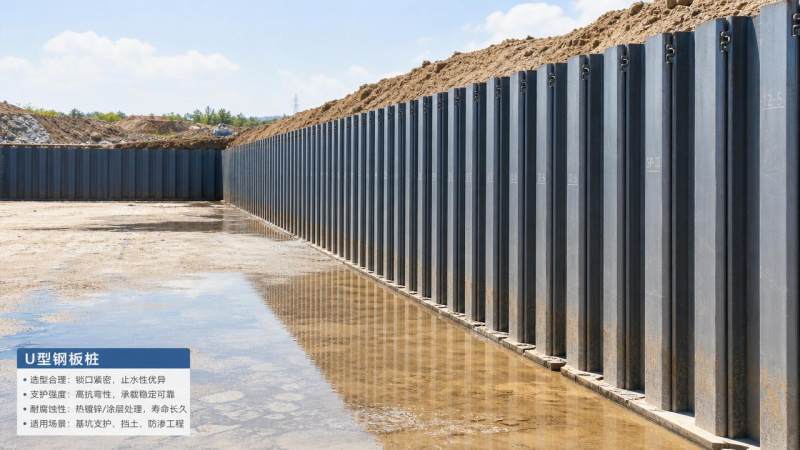
Steel sheet piles for retaining walls are not just commodity steel items. They are structural elements that influence excavation safety, earth pressure resistance, water control, and site sequencing.
When pile decisions are delayed, project teams often face redesign work, equipment mismatch, higher freight costs, or installation interruptions during critical construction windows.
A project manager should treat pile selection as a coordination task between design, procurement, logistics, installation, and inspection teams.
Key decisions that affect schedule and risk
- Confirm soil data before procurement, because clay, sand, gravel, and mixed fill create different driving resistance and deflection behavior.
- Check retained height and surcharge loads, especially near cranes, roads, storage yards, buildings, or temporary construction traffic.
- Clarify whether the wall is temporary or permanent, since corrosion allowance, coating, and extraction requirements can change significantly.
- Coordinate pile length with available driving equipment, transport limits, joint requirements, and site access constraints.
For steel sheet piles for retaining walls, early technical alignment usually costs less than correcting a poor specification after production or shipment.
How to match pile type with retaining wall conditions
Different retaining wall projects require different section shapes, thicknesses, steel grades, and interlock performance. A basement excavation does not behave like a riverbank wall.
The following comparison helps project teams screen common scenarios before requesting detailed calculations for steel sheet piles for retaining walls.
This table should not replace engineering design, but it gives buyers a practical framework for discussing steel sheet piles for retaining walls with suppliers.
Hongteng Fengda supports structural steel buyers by reviewing specifications, drawings, and project constraints before confirming production and export arrangements.
What technical parameters matter most in selection?
For steel sheet piles for retaining walls, the lowest unit price rarely represents the lowest project cost. Technical parameters directly affect installation, safety, and durability.
Project managers should request clear documentation rather than relying on verbal descriptions of steel grade, dimensions, weight, or surface condition.
Practical parameter checklist
- Section modulus should match bending moment demands created by retained soil, water pressure, surcharge, and excavation depth.
- Steel grade should be aligned with design requirements, welding needs, availability, and applicable standards such as ASTM, EN, JIS, or GB.
- Pile length should consider embedment depth, cutting loss, installation equipment capacity, and transport restrictions.
- Interlock condition should be checked when seepage control, watertightness, or repeated installation cycles are important.
- Surface treatment should reflect environmental exposure, including soil chemistry, groundwater, marine contact, and design service life.
The following table summarizes how procurement teams can translate engineering requirements into purchasing questions for steel sheet piles for retaining walls.
A structured parameter review reduces disputes because each commercial offer can be checked against measurable requirements, not only tonnage and price.
Procurement risks project managers should not overlook
Many failures in retaining wall procurement begin with unclear responsibility. The designer specifies performance, while the buyer must confirm supply feasibility.
When buying steel sheet piles for retaining walls internationally, documentation, packaging, loading plans, and delivery windows become part of risk management.
Common mistakes in international sourcing
- Selecting only by weight per meter without checking section geometry, bending capacity, and interlock compatibility.
- Ignoring local installation equipment, which may limit pile length, section depth, or driving resistance.
- Comparing quotations without confirming whether inspection documents, bundling, marking, and export packaging are included.
- Failing to reserve time for technical clarification, production scheduling, customs clearance, and port congestion risks.
Hongteng Fengda helps global buyers reduce these risks through stable production capacity, quality control, and export support for structural steel products.
Where related steel products fit into retaining wall projects
Retaining wall projects often require more than piles. Bracing frames, tie rods, wale beams, lifting accessories, and temporary works may involve multiple steel categories.
For auxiliary lifting, suspension, tensioning, or site handling requirements, project teams may also evaluate galvanized wire rope specifications.
A related option is 0.7mm 0.8mm 1.2mm 1.6mm 1.8mm 2mm diameter Galvanized Steel Wire Rope, available in structures such as 6X7+FC, 6X19+IWR, and 8x19S+FC.
Its normal tensile strength range of 1470 MPa to 1960 MPa and zinc coating options support different corrosion conditions in industrial, marine, crane, pile-driving, and foundation applications.
How to keep auxiliary steel sourcing controlled
- Separate permanent structural materials from temporary lifting or handling materials in purchase orders and inspection plans.
- Confirm coating thickness, tensile strength, diameter range, and applicable standards before mixing products in one shipment.
- Ask suppliers to identify product markings clearly, reducing confusion between piles, beams, channels, wire rope, and custom components.
This approach helps project managers maintain traceability while sourcing steel sheet piles for retaining walls and related structural steel materials.
Cost control: when lower steel price becomes higher project cost
Cost control should include material price, fabrication readiness, logistics, installation productivity, inspection, maintenance, and risk allowance.
Steel sheet piles for retaining walls may look expensive by ton, but a better section can reduce driving time, bracing complexity, or wall movement.
The table below shows common cost drivers that should be reviewed before approving a purchase order.
A realistic cost comparison considers the installed wall, not only the delivered steel price. This is especially important for tight urban or marine projects.
Standards, inspection, and compliance questions to confirm
Standards reduce ambiguity. For steel sheet piles for retaining walls, buyers should confirm the required standard before production begins.
Common references may include ASTM, EN, JIS, and GB systems, depending on project location, designer preference, and authority requirements.
Documents to request before shipment
- Mill test certificates showing chemical composition, mechanical properties, heat number, product standard, and steel grade.
- Dimensional inspection records covering length, thickness, straightness, section shape, and other agreed tolerances.
- Surface inspection confirmation for rust condition, coating scope, marking, and packaging before loading.
- Commercial documents aligned with export requirements, including packing list, invoice, shipping marks, and certificate requests.
Hongteng Fengda manufactures and exports structural steel products under strict quality control and can support buyers with standard and customized requirements.
Implementation workflow for smoother retaining wall delivery
A clear workflow helps avoid late-stage surprises. Steel sheet piles for retaining walls should move through technical, commercial, and logistics checks.
The following sequence is useful for project managers coordinating engineering teams, procurement departments, and overseas suppliers.
Following this workflow makes supplier communication easier and provides a record for internal approval, budget tracking, and quality management.
FAQ: steel sheet piles for retaining walls
How do I choose steel sheet piles for retaining walls in soft soil?
Soft soil often requires attention to embedment depth, wall deflection, bracing, and construction stages. Do not choose only by thickness.
Ask the engineer to verify bending moment, passive resistance, groundwater pressure, and settlement sensitivity before finalizing steel sheet piles for retaining walls.
Are steel sheet piles suitable for temporary retaining walls?
Yes, they are widely used for temporary excavation support because they can be installed quickly and may be extracted for reuse.
However, reuse depends on driving damage, interlock condition, soil abrasiveness, pile straightness, and whether extraction is practical after construction.
What should I check when comparing supplier quotations?
Check steel grade, standard, section properties, length tolerance, inspection documents, surface treatment, packing, delivery terms, and production lead time.
For steel sheet piles for retaining walls, a quotation with missing technical details can create expensive disputes after shipment or installation.
How early should procurement start before construction?
Procurement should begin after preliminary design and soil data are available, but before the site schedule becomes fixed.
Allow time for technical confirmation, production arrangement, inspection, export documentation, sea freight, customs clearance, and inland transport.
Why choose Hongteng Fengda for structural steel sourcing?
Hongteng Fengda is a structural steel manufacturer and exporter from China, serving construction, industrial, and manufacturing projects across global markets.
We supply angle steel, channel steel, steel beams, cold formed steel profiles, and customized structural steel components for standard and OEM requirements.
For steel sheet piles for retaining walls, our team can help review project specifications, confirm suitable material standards, and coordinate production feasibility.
Buyers can consult us about steel grade selection, dimensional requirements, corrosion protection, packaging, lead time, certification documents, sample support, and quotation details.
If your retaining wall project involves tight delivery, complex specifications, or multi-product sourcing, contact Hongteng Fengda to discuss a practical supply plan.
Please give us a message


Please enter what you want to find