Choosing the right Steel Sheet Pile for retaining walls is not only an engineering decision but also a financial one. For budget-focused approvers, balancing upfront cost, service life, maintenance needs, and project risk is essential. This article explains how steel sheet piles can support long-term value, helping decision-makers compare investment efficiency, durability, and lifecycle return with greater confidence.
For finance teams, the key question is rarely limited to price per ton. A retaining wall system affects excavation safety, schedule certainty, maintenance planning, and the probability of costly remedial work over 20–50 years.
That is why Steel Sheet Pile for retaining walls should be reviewed as a lifecycle asset. Buyers who compare only the initial quotation may overlook installation efficiency, corrosion allowance, recoverable steel value, and reduced land occupation in constrained sites.
How Financial Approvers Should Evaluate Steel Sheet Pile for Retaining Walls
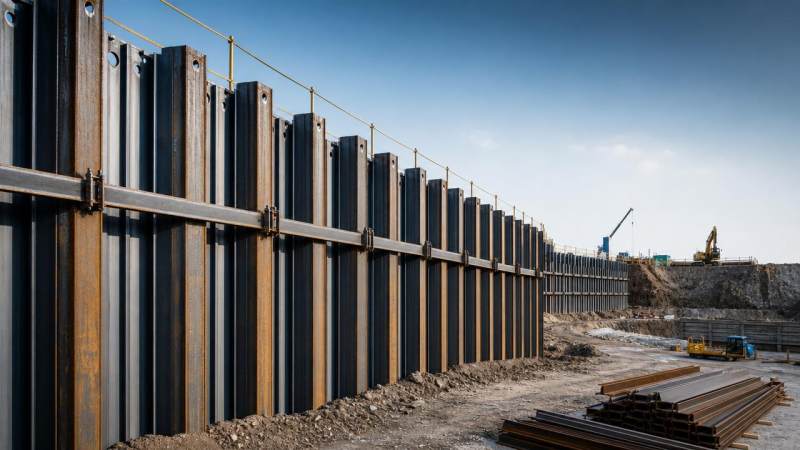
A financial review works best when technical variables are translated into budget impact. In most projects, 4 cost layers matter: material purchase, logistics and installation, maintenance during service life, and end-of-life value or removal cost.
Steel sheet piles are often selected for temporary works lasting 6–24 months and permanent retaining walls designed for 25–50 years. The same section may not fit both objectives, so approval criteria should match the actual design life.
Beyond the Initial Unit Price
Compared with concrete retaining systems, Steel Sheet Pile for retaining walls can reduce excavation width, shorten installation time, and lower wet-work dependency. On urban sites, even a 5%–10% reduction in occupied area can create meaningful commercial value.
Installation speed also influences finance. Driven or vibrated steel sheet piles may support faster sequencing than cast-in-place alternatives, especially when dewatering, formwork, and curing time would otherwise add 2–4 weeks to the schedule.
Four metrics that matter in approval meetings
- Total installed cost per linear meter, not just ex-works steel price
- Expected service life under soil, groundwater, and marine exposure conditions
- Maintenance frequency, typically reviewed at 5-year, 10-year, or 15-year intervals
- Residual or recoverable value if piles are extracted after temporary use
The table below helps financial approvers compare common cost drivers that influence the total ownership profile of Steel Sheet Pile for retaining walls in practical procurement scenarios.
The financial lesson is simple: the cheapest section on day 1 may become the most expensive option by year 10 if corrosion, deflection, or maintenance downtime were underestimated during approval.
Typical Service Life Ranges and What Changes Them
Service life is not fixed by the product alone. It depends on pH level, chloride exposure, soil resistivity, tidal variation, stray current, and whether the pile sits fully buried, partially exposed, or in splash zones.
In moderate inland conditions, properly specified steel sheet piles may deliver decades of service. In marine or chemically aggressive soils, the design may require corrosion allowance, coatings, cathodic protection, or thicker sections to protect the return on capital.
- Temporary support works: often 6–24 months
- Permanent inland retaining walls: commonly 25–50 years
- Marine or severe corrosion zones: service life depends strongly on coating strategy and corrosion design margin
Cost Versus Service Life: Making the Right Trade-Off
When comparing Steel Sheet Pile for retaining walls, the most useful approach is to divide options into at least 3 categories: lowest upfront cost, balanced lifecycle value, and maximum durability for aggressive environments.
This avoids a common procurement mistake: approving a lower specification for a 30-year wall because it looked competitive against a temporary project benchmark. The risk is not only steel replacement but also excavation interruption and claims exposure.
A Practical Comparison Framework
The following table summarizes how budget-oriented buyers can assess option differences without relying on oversimplified price comparisons. It is especially useful during pre-approval and supplier clarification stages.
In many approval cases, the middle option delivers the strongest value. It keeps the capital budget controlled while avoiding the hidden expenses that often arise from under-specification after 8–15 years of service.
Where hidden costs usually appear
- Delayed installation due to incomplete geotechnical or driving data
- Higher equipment cost when pile refusal or obstruction was underestimated
- Additional coating or welding after site exposure conditions changed
- Drainage or anchoring upgrades when wall movement exceeded expectations
- Maintenance access cost in ports, basements, or narrow boundary lines
For that reason, finance approvers should ask for 5 core inputs before sign-off: design life, environmental category, section type, installation method, and inspection plan. Without these, “low price” is not a reliable procurement conclusion.
Risk Control Through Material and Surface Strategy
Although retaining wall systems rely primarily on structural sections, corrosion management across the wider steel package also matters. Ancillary components, cladding interfaces, drainage covers, and fabricated accessories often influence long-term maintenance exposure.
In related steel applications where corrosion resistance and formability are required, buyers may also review AZ150 Galvalume Steel Coil. This material is available in grades such as SGCC, DC51D, DX52D, and S250GD-S550GD, with coating ranges from AZ30 to AZ275 g/m².
Its common supply dimensions include thickness from 0.125–2.0 mm, width from 30–1500 mm, and coil weight of 3–10 tons. Features such as chromated, oiled, dry, AFP, and skin-pass finishes support different fabrication and protection requirements in steel-related project packages.
For procurement teams, the broader point is strategic: matching steel products to exposure conditions at the specification stage can reduce repainting frequency, lower replacement rates, and support more stable maintenance forecasting across the project lifecycle.
What to Ask Suppliers Before Approving a Purchase
A capable supplier should do more than issue a weight-based quotation. For Steel Sheet Pile for retaining walls, commercial clarity depends on whether the supplier can align manufacturing, standards, tolerances, and lead time with the actual project risk profile.
Hongteng Fengda, as a structural steel manufacturer and exporter from China, supports global buyers with standard and customized steel solutions, stable production planning, and quality control aligned with ASTM, EN, JIS, and GB requirements where applicable.
Supplier Review Checklist for Finance and Procurement Teams
The table below provides a practical checklist for comparing suppliers during RFQ and contract review. It is designed for decision-makers who need clear approval criteria rather than purely technical discussion.
If a supplier cannot clearly answer these 4 areas, the probability of post-order changes rises sharply. Those changes often cost more than the initial price gap between competing offers.
Questions worth raising before final approval
- Is the quotation based on permanent or temporary service assumptions?
- What corrosion allowance or protective treatment is included?
- Are accessories, welding preparations, and delivery packaging included in scope?
- What is the realistic shipment window: 2 weeks, 4 weeks, or longer?
- Can the supplier support OEM or customized structural steel components if the project scope expands?
Common Approval Mistakes to Avoid
One common mistake is approving a retaining wall package solely on tonnage price while ignoring driving conditions. Hard layers, obstructions, or vibration limits can change installation cost by a double-digit percentage if not assessed early.
Another mistake is using a generic corrosion assumption for all project zones. A wall with sections exposed above groundwater, buried below grade, and subjected to seasonal wet-dry cycles should not be budgeted like a uniform inland application.
A third mistake is failing to consider interface costs. Anchors, waling beams, capping beams, drainage details, and adjacent steel components may account for a meaningful share of total system cost, sometimes more than 15% of the package.
Why Global Buyers Look for Reliable Steel Supply Partnerships
For financial approvers, supplier reliability is part of the cost equation. Late delivery, inconsistent quality, or weak communication can disrupt project sequencing and consume internal management time that never appears in a simple unit-price comparison.
A manufacturer with modern facilities, consistent QC, and export experience helps reduce sourcing risk. That matters when projects serve North America, Europe, the Middle East, or Southeast Asia, where standards alignment and shipping discipline directly influence project execution.
Hongteng Fengda focuses on structural steel supply for construction, industrial, and manufacturing projects, including angle steel, channel steel, steel beams, cold formed steel profiles, and customized components. This broader capability can simplify procurement when retaining wall packages connect with surrounding structural steel needs.
The Value of a Long-Term Procurement View
When reviewing Steel Sheet Pile for retaining walls, the best financial decisions usually come from a 3-step logic: define design life, align specification with exposure conditions, and choose a supplier that can deliver quality and schedule consistency.
If those 3 steps are handled well, buyers are more likely to control total cost, avoid avoidable maintenance, and protect project timelines. That is a stronger outcome than chasing the lowest initial quote without a lifecycle view.
Steel Sheet Pile for retaining walls delivers value when cost is assessed together with service life, corrosion exposure, installation efficiency, and supplier reliability. For budget-conscious approvers, the right choice is usually the option that balances 25–50 year performance expectations with realistic procurement and maintenance planning.
If you are comparing retaining wall steel options, evaluating lifecycle cost, or planning a customized structural steel package, Hongteng Fengda can help you review specifications, supply scope, and delivery strategy. Contact us now to get a tailored solution, discuss product details, and explore more steel sourcing options for your project.
Please give us a message


Please enter what you want to find