Choosing the right steel rebar supplier is critical when construction schedules, budgets, and compliance requirements depend on predictable material performance.
A poor supplier choice can create defects, delivery delays, hidden costs, documentation gaps, and project risks that are difficult to recover from.
This checklist explains what to verify before confirming a steel rebar supplier, especially for international sourcing and large construction projects.
Why Steel Rebar Supplier Selection Needs a Checklist
Rebar looks simple, but every batch affects structural safety, on-site efficiency, and inspection approval.
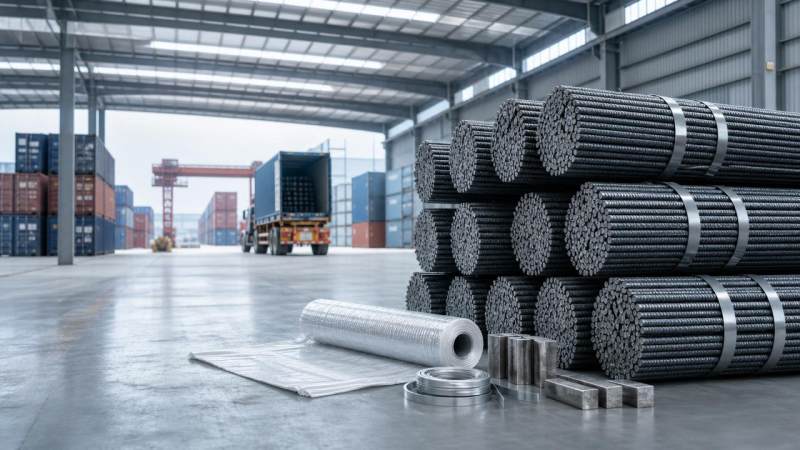
A checklist reduces emotional decisions and replaces price-only comparisons with measurable supplier evaluation.
The right steel rebar supplier should prove quality consistency, standard compliance, stable output, and responsible shipment control.
Without structured verification, small sourcing mistakes can become expensive site delays or rejected deliveries.
Core Checklist for Evaluating a Steel Rebar Supplier
Use the following points before approving any steel rebar supplier for construction, infrastructure, industrial, or export projects.
- Verify mill certificates, heat numbers, chemical composition, yield strength, tensile strength, elongation, and traceability before accepting any commercial quotation.
- Confirm standards such as ASTM, EN, JIS, or GB, and match them with project specifications before production begins.
- Check whether the steel rebar supplier controls rolling, cutting, bundling, marking, and inspection under a documented quality system.
- Review production capacity, available sizes, normal lead times, and emergency response capability for schedule-sensitive construction projects.
- Ask for packaging photos, bundle labels, loading records, and container protection methods before approving sea freight shipment.
- Compare payment terms, export documents, freight support, and after-sales handling instead of judging only the unit price.
- Request recent project references, inspection reports, and repeat order evidence to test long-term reliability.
Risk 1: Buying Rebar Without Confirmed Standards
One major risk is ordering material that does not match the engineering specification.
A reliable steel rebar supplier should clearly state grade, diameter tolerance, rib geometry, mechanical properties, and applicable standards.
For example, ASTM A615, ASTM A706, BS4449, and GB/T standards may serve different design and inspection requirements.
Never assume that similar grades are automatically interchangeable without engineering approval.
Risk 2: Accepting Weak Traceability
Traceability connects each bundle to production records and test results.
If a steel rebar supplier cannot provide heat numbers or batch identification, quality disputes become difficult to solve.
Traceability is especially important for bridges, high-rise buildings, public works, and audited construction sites.
Bundle tags, mill test certificates, and packing lists should match exactly.
Risk 3: Focusing Only on Low Price
Low prices can hide inconsistent rolling quality, uncontrolled scrap sources, poor packaging, or unreliable shipment promises.
A steel rebar supplier offering an unusually low price should explain raw material basis, production route, and quality assurance process.
The true cost includes inspection, handling, storage, rework, replacement, and schedule impact.
A slightly higher unit price can be cheaper when quality and delivery remain stable.
Mid-Project Material Coordination and Related Steel Solutions
Rebar sourcing often happens alongside procurement of beams, channels, angle steel, sheet products, or coated coils.
When one supplier network supports multiple steel categories, communication becomes easier and documentation stays more consistent.
For related coated steel needs, DX53D Galvalume Steel Coil can support roofing, walling, appliances, agricultural buildings, and automotive components.
This aluminium-zinc coated low-carbon steel offers corrosion resistance, heat reflectivity, adhesion, and formability.
Typical technical values include 270–300 MPa yield strength, 350–450 MPa tensile strength, and elongation not less than 24%.
Its available thickness range includes 0.4mm to 3mm, with widths such as 1000mm, 1250mm, and 1500mm.
Combining rebar and complementary steel products under disciplined quality control can simplify sourcing for complex construction packages.
Application Scenarios That Require Extra Supplier Control
High-Rise and Commercial Buildings
High-rise projects require reliable rebar strength, bendability, and dimensional accuracy.
The steel rebar supplier should support stable batch quality because vertical structures often involve repeated deliveries over months.
Consistent diameter, rib pattern, and bundle identification help site teams reduce inspection delays.
Bridges and Infrastructure Projects
Infrastructure projects usually face stricter documentation and third-party inspection requirements.
A qualified steel rebar supplier should prepare certificates, test reports, packing details, and shipment records before dispatch.
Corrosion exposure, fatigue performance, and design compliance must be reviewed carefully before purchase confirmation.
Industrial Foundations and Manufacturing Facilities
Industrial foundations may need large quantities, fast delivery, and accurate cutting schedules.
A steel rebar supplier with stable production planning can reduce disruptions during foundation pouring and equipment installation.
Check whether the supplier can coordinate different diameters, bundle weights, and phased delivery plans.
Export and Cross-Border Projects
Export projects add customs, shipping, port handling, and documentation risks.
The steel rebar supplier should understand commercial invoices, packing lists, certificates of origin, inspection documents, and container loading requirements.
Strong export support reduces delays caused by missing papers or inconsistent product descriptions.
Commonly Ignored Risks When Choosing a Steel Rebar Supplier
Unclear Delivery Commitment
A delivery promise without production scheduling details is risky.
Ask the steel rebar supplier for rolling date, inspection date, loading date, and realistic shipping window.
Clear milestones help detect problems before the project schedule is affected.
Poor Packaging and Rust Protection
Rebar is strong, but careless packaging still causes handling damage, tag loss, and rust claims.
Check bundle tightness, steel straps, lifting safety, storage conditions, and waterproof protection when necessary.
Export shipments require stronger loading supervision than domestic truck delivery.
Incomplete Communication Before Production
Many disputes begin before production because specifications were not confirmed in writing.
Send drawings, standards, diameter lists, tolerance requirements, packaging needs, and inspection conditions before signing the order.
A professional steel rebar supplier should respond with a clear technical and commercial confirmation.
No Plan for Nonconforming Material
Even strong suppliers need a clear process for handling claims.
Define evidence requirements, response time, replacement options, credit terms, and third-party inspection rules in advance.
This reduces conflict if testing results or site inspections reveal a problem.
Practical Execution Steps Before Final Approval
A disciplined approval process helps separate capable suppliers from risky trading sources.
- Collect complete technical requirements, including grade, diameter, length, standard, tolerance, quantity, and inspection conditions.
- Request formal quotation documents with material details, delivery time, payment terms, packaging method, and validity period.
- Compare certificates, quality control procedures, export experience, and recent project references from each steel rebar supplier.
- Confirm pre-shipment inspection arrangements, including sampling rules, test reports, visual checks, and loading supervision.
- Approve the supplier only after technical, commercial, logistics, and documentation requirements are all aligned.
Hongteng Fengda supports global steel sourcing with structural steel manufacturing, export experience, and strict quality control.
Products include angle steel, channel steel, steel beams, cold formed profiles, and customized structural steel components.
International standards such as ASTM, EN, JIS, and GB can be supported according to project requirements.
Final Checklist Before Signing with a Steel Rebar Supplier
- Confirm grade, standard, diameter, length, tolerance, and mechanical properties in written documents.
- Match mill certificates, bundle tags, packing lists, and shipment documents before cargo release.
- Check whether production capacity supports the full project quantity without unstable batch changes.
- Review packaging, loading, rust protection, and container plans for safe transportation.
- Evaluate communication speed, technical accuracy, and problem-solving attitude before placing a large order.
Selecting a steel rebar supplier is not only a purchasing decision.
It is a risk control decision that affects structural quality, project timing, and total cost.
Use a checklist, verify evidence, and compare suppliers through standards, traceability, capacity, and export execution.
For stable structural steel sourcing from China, choose a partner that can provide consistent quality, dependable delivery, and professional documentation support.
Please give us a message


Please enter what you want to find