Choosing the right steel rebar manufacturer is essential for procurement teams that need consistent quality, compliant materials, and dependable delivery for construction and infrastructure projects. As global sourcing becomes more complex, buyers must verify product standards, mill certificates, production capacity, and quality control processes before placing orders. This guide highlights the key quality proof you should check when evaluating a supplier, helping you reduce sourcing risks, control costs, and secure reliable steel rebar for long-term project success.
Why Quality Proof Matters When Selecting a Steel Rebar Manufacturer
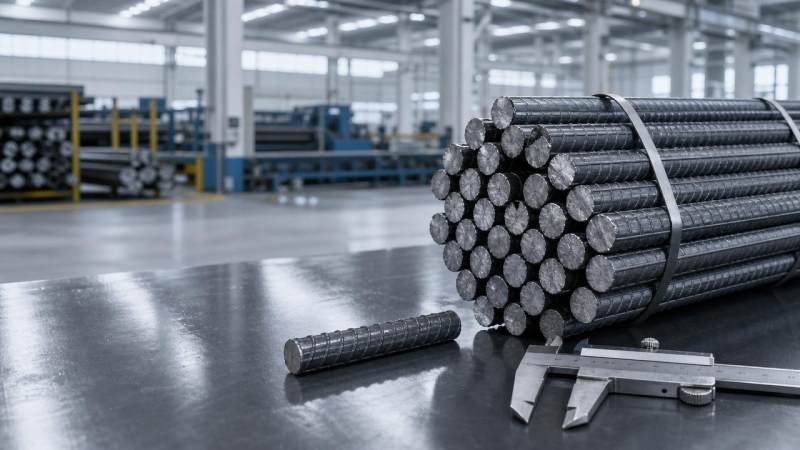
For procurement teams, rebar is not only a commodity item. It is a load-bearing material that directly affects structural safety, site productivity, and project compliance.
A qualified steel rebar manufacturer should provide evidence that each batch meets chemical, mechanical, dimensional, and delivery requirements before shipment leaves the mill.
When purchasing across borders, the verification process becomes more important. Buyers may need to confirm ASTM, EN, JIS, or GB specifications within 1–3 procurement cycles.
Common risks in global rebar sourcing
The main risks include inconsistent yield strength, unclear heat numbers, surface defects, shipment delays, and documents that do not match the delivered material.
Even a 2–3 week delay can disrupt concrete pouring schedules, crane booking, labor planning, and downstream fabrication at construction sites.
- Material mismatch between purchase order, mill test certificate, and actual bundle labels.
- Mechanical properties below specified yield strength, tensile strength, or elongation range.
- Diameter tolerance or rib geometry outside the required standard.
- Unclear production capacity for monthly demand such as 500 tons, 1,000 tons, or project-based call-offs.
What procurement teams should request first
Before negotiating price, buyers should ask the steel rebar manufacturer for a document package that proves product consistency and export readiness.
The package should normally include 4 core files: product specification, mill test certificate template, quality inspection workflow, and packing or loading details.
Hongteng Fengda supports global buyers with structural steel products, customized solutions, and manufacturing processes aligned with major international standards.
Key Documents to Verify Before Placing a Rebar Order
Documentation is the first layer of quality proof. A reliable steel rebar manufacturer should make technical records clear, traceable, and consistent with the order.
For most construction and infrastructure projects, buyers should check at least 6 document categories before confirming payment terms or production schedule.
Mill test certificate and heat traceability
The mill test certificate should show heat number, grade, diameter, chemical composition, mechanical test values, standard reference, and authorized inspection date.
A strong traceability system links each bundle to a heat number, allowing buyers to track production records within minutes during receiving inspection.
Important values to compare
Procurement teams should compare the certificate against the purchase order, drawing notes, and destination market standard. Differences must be clarified before shipment.
The following table summarizes practical verification points when assessing a steel rebar manufacturer for repeat project supply.
The key conclusion is simple: documents must match the physical product. A low unit price cannot offset unclear traceability or missing test records.
Third-party inspection and pre-shipment checks
Many buyers require SGS, BV, or similar inspection support for large orders, especially when the shipment exceeds several containers or 300 tons.
A cooperative steel rebar manufacturer should allow sampling, visual inspection, dimension measurement, document review, and loading supervision within an agreed schedule.
Production Capacity, Process Control, and Material Consistency
Quality proof is not limited to certificates. Buyers must understand whether the supplier can produce stable material across multiple batches and delivery windows.
A dependable steel rebar manufacturer should maintain controlled raw material sourcing, rolling parameters, cooling conditions, testing frequency, and finished product storage.
Questions to ask about production capacity
Capacity verification helps procurement teams avoid overpromised delivery. Ask whether the mill can support 2–4 week lead times during peak construction seasons.
For project supply, it is useful to split demand into monthly tonnage, diameter range, grade requirement, packing method, and destination port schedule.
- Confirm monthly rolling capacity for the required grade and diameter combination.
- Check whether standard stock can cover urgent 7–15 day shipment requests.
- Ask how heat numbers are separated across bundles and shipping lots.
- Review how nonconforming products are isolated, recorded, and corrected.
- Confirm communication rhythm, such as weekly production updates and loading photos.
Integrating structural steel supply with project purchasing
Many procurement teams source rebar together with beams, channels, angles, and cold formed profiles to simplify supplier management and logistics coordination.
Hongteng Fengda also supplies channel products for construction, automobile manufacture, steel structure purlins, wall beams, lightweight roofs, brackets, columns, and arms.
For buyers evaluating broader steel packages, the Channel Steel Supplier option covers U channel steel in carbon structural steel and galvanized finishes.
Available specifications include thickness from 1.5mm to 25mm, length from 6m to 12m, and height from 80mm to 160mm.
Typical tolerance can reach thickness +/-0.02mm and height +/-2mm, supporting applications where fit-up accuracy and repeatable fabrication matter.
How channel steel data helps supplier assessment
A supplier that can explain channel steel grades such as Q195, Q235B, Q345B, 304, and 316 often has broader technical support capability.
Corrosion-resistant options, including hot-dip galvanized and hot-blown galvanized surfaces, also indicate whether the supplier understands harsh environments and long-service requirements.
A Practical Checklist for Comparing Rebar Suppliers
Comparing suppliers only by price often leads to hidden costs. Procurement teams should score each steel rebar manufacturer across technical, commercial, and service factors.
A practical evaluation model can include 5 dimensions: compliance, production control, export experience, communication, and after-sales issue handling.
Supplier comparison criteria
The table below provides a structured way to compare shortlisted suppliers before requesting a final quotation or signing a framework agreement.
This comparison prevents procurement from treating unequal suppliers as interchangeable. The best choice balances price with traceability, lead time, and response speed.
Commercial terms that affect total cost
Beyond unit price, buyers should check MOQ, payment terms, validity period, packaging cost, port charges, and whether partial shipments are allowed.
A steel rebar manufacturer with clear quotation details helps buyers compare landed cost, not just ex-factory or FOB price per metric ton.
If specifications change after order confirmation, confirm whether the new production schedule adds 3–7 days or requires a revised deposit arrangement.
Red flags during negotiation
- The supplier refuses to provide a sample mill test certificate before order confirmation.
- Quotation descriptions use vague grades without standard references or chemical requirements.
- Lead time is promised as immediate, but stock details and bundle photos are unavailable.
- The payment request appears disconnected from production milestones or inspection arrangements.
How Hongteng Fengda Supports Global Procurement Teams
Hongteng Fengda is a structural steel manufacturer and exporter from China, serving construction, industrial, and manufacturing buyers in multiple regions.
The company focuses on angle steel, channel steel, steel beams, cold formed steel profiles, and customized structural steel components for project-based demand.
For procurement teams evaluating a steel rebar manufacturer, related structural steel capability can be important when consolidating packages for complex builds.
What buyers can expect from a long-term steel partner
A long-term partner should provide stable production capacity, consistent inspection procedures, professional export coordination, and timely communication across different time zones.
Hongteng Fengda works with standards including ASTM, EN, JIS, and GB, helping buyers align technical specifications with regional project requirements.
For buyers in North America, Europe, the Middle East, and Southeast Asia, dependable lead times can reduce sourcing risk over multiple project phases.
Recommended procurement workflow
- Send drawings, grade, standard, diameter range, quantity, destination port, and required delivery date.
- Request technical confirmation, quotation breakdown, and estimated production cycle within 1–2 business days.
- Review documents, quality proof, packing method, and inspection requirements before placing the order.
- Track production progress through scheduled updates, photos, and pre-shipment document review.
- Complete loading, receive final documents, and prepare site acceptance based on agreed specifications.
Final purchasing advice
The right steel rebar manufacturer should make quality visible before shipment, not after a problem appears at the destination site.
Procurement teams should verify certificates, standards, capacity, inspection records, packing details, and communication discipline before confirming long-term supply cooperation.
If your project requires structural steel products, customized components, or coordinated export support from China, Hongteng Fengda can help assess your requirements.
Contact us to discuss product details, request a tailored sourcing solution, or learn more about dependable steel supply for your next project.
Please give us a message


Please enter what you want to find