Understanding steel rebar cost is essential for procurement professionals managing construction budgets, supplier selection, and project timelines. This article breaks down the key cost factors behind rebar pricing, from raw material trends and specifications to logistics and sourcing strategy, helping buyers make more informed purchasing decisions while reducing risk and improving overall project cost control.
For buyers in commercial building, infrastructure, and industrial projects, rebar is rarely a minor line item. A small price movement per ton can materially affect total project spend when monthly demand reaches 200, 500, or even 2,000 tons. That is why understanding how suppliers build quotations matters as much as comparing headline prices.
In practice, steel rebar cost is shaped by 6 core variables: billet and scrap prices, grade and specification, processing requirements, order volume, transport terms, and delivery risk. Procurement teams that evaluate all 6 areas usually gain better cost visibility than those focused only on unit price.
What Drives Steel Rebar Cost in Construction Procurement
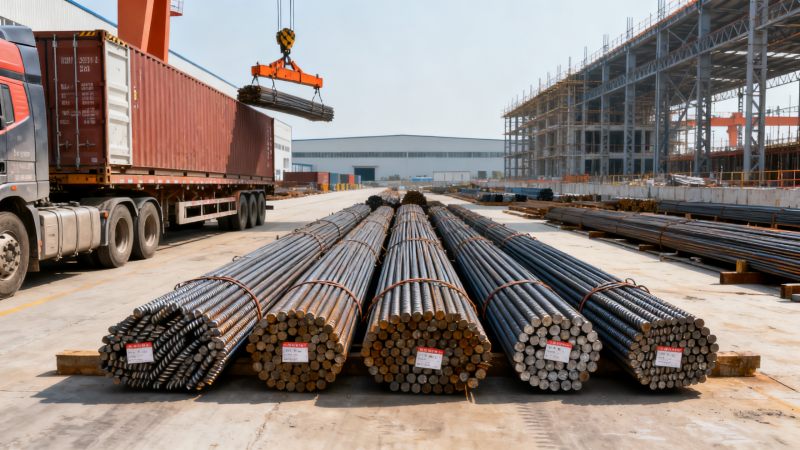
The most direct factor behind steel rebar cost is the base steel market. Rebar mills typically price against billet, iron ore, scrap, energy, and regional mill capacity. When feedstock moves by 3% to 8% within a month, finished rebar offers usually adjust quickly, especially for export shipments with 2 to 4 week production windows.
Raw material and mill-side pricing logic
Most suppliers calculate starting price from current raw material input costs plus rolling, labor, testing, packaging, and margin. If electricity or natural gas costs rise, processing cost per ton can increase even when ore prices remain stable. This is common in periods of capacity controls or seasonal energy pressure.
For procurement planning, it helps to treat rebar quotations as time-sensitive. In many export transactions, a quote may be valid for only 3 to 7 days. Delays in internal approval can mean a revised offer, especially when the order covers large tonnage or non-standard diameters.
Specification, grade, and compliance cost
Not all rebar is priced the same, even within one market. Grade, diameter range, rib pattern, length, and standard all affect steel rebar cost. Material complying with ASTM, BS, EN, or other project-specific standards may require tighter chemistry control, additional testing, or separate rolling schedules.
For example, standard commercial supply may be easier to source in common sizes such as 10mm, 12mm, 16mm, 20mm, and 25mm. Special lengths, tighter tolerance, or bundled mixed sizes can add handling cost. Even a modest surcharge of USD 10 to 30 per ton becomes meaningful on a 1,000-ton contract.
Typical cost additions buyers should verify
- Third-party inspection fees
- Mechanical and chemical test requirements
- Cut-to-length or bending services
- Special export packing or anti-rust protection
- Fumigation, marking, or palletizing
- Port congestion or peak-season booking surcharges
The table below shows how common pricing factors influence rebar procurement cost and negotiation strategy.
The key takeaway is that steel rebar cost is not a single market number. It is a layered commercial result shaped by material inputs, compliance demands, service scope, and shipping conditions. Procurement teams that compare quotations line by line usually avoid hidden cost surprises later in the project cycle.
How Rebar Specification Changes Total Project Cost
A common procurement mistake is to evaluate rebar only on ex-works or FOB price. In reality, specification decisions influence processing loss, site efficiency, storage, and installation speed. The cheapest offer per ton may produce a higher total installed cost if it creates more waste, delays, or quality disputes.
Diameter mix, length, and project yield
Projects using 4 to 6 standard diameters often buy more efficiently than those requiring many special combinations. Standard lengths may reduce rolling complexity, but project-specific cut lengths can lower site waste. Buyers should compare mill surcharge against expected cutting loss, which often ranges from 1% to 3% depending on fabrication practice.
When monthly demand is stable, long-term planning can reduce steel rebar cost by improving batch production. A supplier can often optimize rolling and packing when forecasts cover 8 to 12 weeks instead of ad hoc weekly orders.
Coating, processing, and corrosion environment
Not every construction project needs the same corrosion protection. Coastal, humid, or chemically exposed environments may justify added treatment or stricter storage conditions. While these measures increase initial material cost, they may reduce replacement and maintenance risk over the asset life.
Procurement professionals should also consider nearby structural steel components that influence total package value. For example, transport planning is often more efficient when steel orders include other engineered products needed for the same infrastructure program.
Related steel procurement example for infrastructure packages
In railway, bridge, and industrial access projects, buyers may source rebar together with sections, beams, or track-related products from one export partner. For projects involving rail structures or transport systems, Rail can be part of a broader steel package that improves shipment coordination and quality consistency.
Available grades include U74, U71Mn, PD2, PD3, BNbRE, Q235, 55Q, 50Q, U71, and 45Mn, with common applications in railway rail, bridge railings, and deck handrails. Typical technical ranges include 12m to 30m length, 3mm to 24mm thickness, rail height of 134mm to 170mm, and tolerance control within ±1%.
For procurement teams managing multimaterial tenders, combining such products under one supplier review process can reduce documentation duplication, inspection coordination time, and shipment fragmentation across 2 or 3 separate vendors.
Questions to ask before confirming specification
- Does the project standard require a specific grade or test frequency?
- Can standard stock sizes satisfy at least 70% to 80% of the demand mix?
- Will cut-to-length service reduce waste enough to offset the surcharge?
- Are storage and corrosion risks covered for the site climate and delivery window?
The table below can help buyers compare specification choices from a total-cost perspective rather than a price-only perspective.
This comparison shows that the best buying decision often balances mill price, yield, compliance, and logistics together. Looking at total delivered and usable material cost provides a more reliable benchmark than comparing tonnage price alone.
Logistics, Trade Terms, and Hidden Cost Risks
Freight can account for a meaningful share of steel rebar cost, especially in cross-border sourcing. Ocean rates, inland trucking, port charges, customs clearance, and cargo insurance all affect the final landed figure. In volatile shipping periods, freight changes faster than mill pricing.
FOB, CFR, and CIF are not directly interchangeable
A lower FOB offer may still be less competitive than a higher CFR price if vessel space is tight or destination handling is complex. Buyers should compare at least 3 numbers: mill price, freight estimate, and total landed cost. That comparison is especially important for destinations with seasonal congestion or long transshipment routes.
Lead time also affects cost. A supplier offering 15 to 20 days production may reduce site delay risk compared with a 30 to 45 day schedule, even if the initial unit price is slightly higher. For critical-path materials, schedule reliability can be a financial advantage, not just an operational one.
Packaging, storage, and claim prevention
Hidden costs often appear after shipment, not before order placement. Improper bundling, unclear heat number marking, and incomplete inspection records can create unloading delays or claim disputes. Those issues consume time for both procurement and site teams and can delay payment release.
A practical procurement checklist should include 5 items: commercial invoice accuracy, packing list detail, mill test certificate format, bundle marking visibility, and pre-shipment photo confirmation. These checks add little administrative effort but can prevent expensive downstream issues.
Common hidden cost triggers
- Demurrage caused by delayed documents
- Extra inland transport due to split shipments
- Re-inspection after unclear quality records
- Material loss from poor storage during rainy periods
- Currency fluctuation between quote date and payment date
For global buyers, working with an experienced Chinese structural steel manufacturer can help reduce these variables. Hongteng Fengda supplies structural steel products for construction, industrial, and manufacturing projects, with production aligned to ASTM, EN, JIS, and GB requirements. That standard familiarity can shorten technical clarification time during procurement reviews.
For buyers in North America, Europe, the Middle East, and Southeast Asia, stable production capacity and dependable lead times are often as important as quoted price. In many tenders, the supplier that offers clearer documentation, predictable scheduling, and responsive export service creates better total value over the full purchase cycle.
How Procurement Teams Can Control Rebar Cost More Effectively
Controlling steel rebar cost does not always mean pushing for the lowest number. It means building a disciplined sourcing process that improves comparability, reduces variability, and protects project continuity. A well-run procurement workflow can often save more than aggressive one-time price negotiation.
Use a structured supplier comparison model
A practical approach is to score suppliers across 4 dimensions: price structure, quality compliance, delivery capability, and communication efficiency. This helps procurement teams avoid selecting a low-cost supplier that later creates delays, claims, or costly change orders.
In many B2B projects, two suppliers may be only USD 15 to 25 per ton apart. Yet one may offer better lead time accuracy, faster drawing confirmation, or stronger export packing. Those differences can outweigh the nominal price gap once project risk is considered.
Improve forecasting and batching discipline
Suppliers usually plan production more efficiently when the buyer provides a rolling schedule covering 6 to 12 weeks. Better forecast visibility can support more favorable batching, fewer changeovers, and smoother shipment planning. In turn, that can stabilize steel rebar cost across multiple release orders.
Procurement teams should also align technical, commercial, and logistics reviews before release. Late changes in grade, quantity, or destination often trigger avoidable cost increases. A simple 3-step internal review process can reduce rework significantly.
Recommended 3-step internal control process
- Freeze specification and applicable standard before RFQ.
- Compare offers on the same trade term and documentation basis.
- Confirm production slot, shipping window, and inspection plan before PO.
Choose supply partners with broader steel capability
When projects require more than rebar, sourcing from a supplier with wider structural steel manufacturing experience can simplify execution. Hongteng Fengda provides angle steel, channel steel, steel beams, cold formed steel profiles, and customized structural components, supporting buyers who need both standard specifications and OEM-oriented solutions.
That broader capability is useful when procurement teams want to reduce sourcing risk, control cost across multiple product categories, and manage fewer vendor interfaces. For projects with phased deliveries, consistent quality control and dependable lead times can be more valuable than chasing the lowest spot price in each separate order.
Frequently asked buyer questions
How often should rebar prices be checked?
In active markets, weekly tracking is a reasonable minimum. For large tenders or volatile freight periods, checking twice per week may be justified until the purchase order is confirmed.
Is a larger order always cheaper per ton?
Not always, but larger and more standardized batches often improve mill efficiency. Savings are more likely when the order reduces size fragmentation and supports full-load shipment planning.
What should be included in a rebar RFQ?
At minimum, include grade, standard, diameter list, quantity by size, length, destination port, trade term, inspection requirement, packing request, and target delivery window. Missing details often lead to non-comparable quotations.
A clear understanding of steel rebar cost helps procurement teams move beyond price-only buying and toward better project outcomes. When buyers evaluate raw material trends, specification impact, logistics structure, and supplier reliability together, they gain stronger cost control and fewer delivery surprises.
If you are sourcing rebar or related structural steel products for international construction or industrial projects, Hongteng Fengda can support you with stable manufacturing, standards-based quality control, and responsive export service. Contact us now to get a customized quotation, discuss technical details, or explore broader steel supply solutions for your next project.
Please give us a message


Please enter what you want to find