Understanding the steel coil price per ton is essential for procurement teams managing project budgets, supplier comparisons, and delivery schedules. Quotes can vary widely depending on raw material costs, grade, thickness, coating, order volume, standards, and international freight conditions. For buyers sourcing from China, knowing how each cost factor is calculated helps reduce risks and negotiate with confidence. This guide explains how steel coil quotations are built and what global purchasers should check before confirming an order.
For a purchasing manager, the lowest number on a quotation is rarely the safest choice. A reliable steel coil price per ton should reflect material specification, production route, inspection scope, packing, port charges, and delivery terms. When these items are separated clearly, buyers can compare suppliers on equal conditions instead of comparing incomplete offers.
What Makes Up a Steel Coil Quotation?
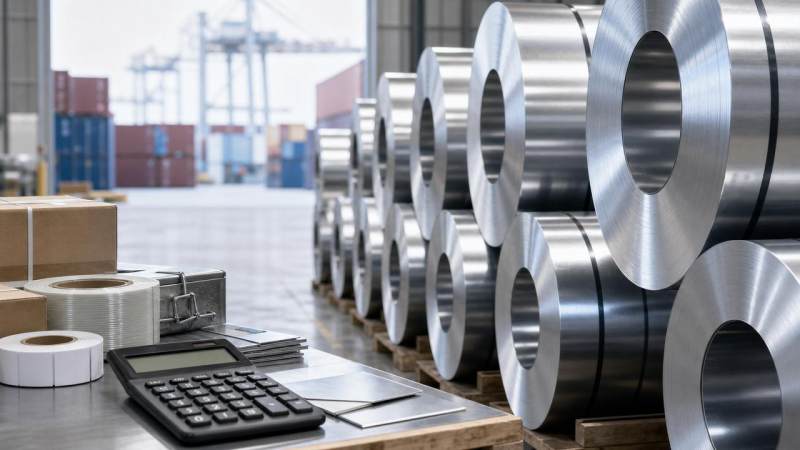
A steel coil quotation normally combines 6 major cost layers: base steel value, processing, coating or surface treatment, quality inspection, packaging, and logistics. Each layer may change with grade, thickness, order quantity, and shipment route.
The base steel value is usually the largest part of the steel coil price per ton. It is influenced by iron ore, scrap, coke, energy, billet, and hot rolled coil market movements. In active market periods, quotations may remain valid for only 3–7 days.
Processing costs depend on whether the buyer needs hot rolled, cold rolled, galvanized, pre-painted, pickled, oiled, slit, or cut-to-length coil. A narrow tolerance or special surface requirement can add measurable cost even when the base grade is unchanged.
The table below shows typical quotation components buyers should expect to see. It helps procurement teams identify whether a supplier has included all commercial and technical items in the offer.
The key conclusion is simple: the steel coil price per ton is not one number but a structured calculation. A transparent supplier will define each item, reducing later disputes over tolerance, coating, documents, and shipment cost.
Why Validity Period Matters
Steel markets can move quickly. In many export quotations, price validity may be 3 days, 5 days, or 1 week. If approval requires 2–3 internal signatures, buyers should reserve decision time before requesting a final price.
When a project needs 500 tons or more, even a 10 USD movement per ton changes the budget significantly. Procurement teams should align technical approval, payment terms, and shipping schedule before asking suppliers to lock prices.
Technical Factors That Change the Price per Ton
Technical requirements have a direct effect on the steel coil price per ton because mills must control chemistry, rolling schedule, surface condition, and testing frequency. Two coils with similar appearance may have very different cost structures.
Grade, Strength, and Standard
Grades such as ASTM, EN, JIS, and GB are not automatically interchangeable. Yield strength, tensile strength, elongation, and chemical limits must be checked line by line, especially for construction, machinery, and fabrication projects.
A higher strength grade can reduce structural weight in some designs, but it may increase rolling difficulty and inspection requirements. Buyers should evaluate total project cost, not only the steel coil price per ton.
Thickness, Width, and Tolerance
Common coil thickness ranges may include 0.3–3.0 mm for cold rolled or galvanized coil and 1.5–12 mm for many hot rolled coil applications. Thinner gauges often require tighter process control.
Width also matters. A coil width such as 914 mm, 1000 mm, 1219 mm, or 1500 mm may match standard mill capability, while special widths may require slitting, trimming, or longer lead time.
Surface and Coating Requirements
Galvanized coils, pre-painted coils, and pickled coils carry different production costs. Zinc coating mass, paint thickness, chromate-free treatment, oiling level, and packaging protection should be confirmed before the purchase order.
- For general fabrication, standard surface may be sufficient if coils will be welded, cut, or painted later.
- For exposed panels, surface grade and color consistency should be defined before production.
- For humid transport routes, seaworthy packing and anti-rust protection can prevent costly claims.
In midstream sourcing, buyers often compare coils with plates, beams, channels, and custom structural components. Hongteng Fengda also supports project buyers through its Mild Steel Plate Supplier capabilities, helping customers consolidate structural steel requirements when a project needs both coil-related materials and plate products.
For plate applications, models such as A572 and S355JR are widely used in construction, bridges, heavy machinery, bridge panels, support plates, mechanical mounting plates, transmission towers, and racks. Typical supplied dimensions may cover widths from 100 mm to 3000 mm, lengths from 1 m to 12 m, and thicknesses from 0.1 mm to 400 mm depending on processing route.
These plate products are based on low-carbon, low-alloy high-strength steel, with properties such as Grade 50 yield strength around 50 Ksi and tensile strength around 65 Ksi. Certifications can align with AISI, ASTM, ASME, DIN, BS, EN, ISO, JIS, GOST, and SAE requirements when specified.
When Technical Details Should Be Fixed
Technical details should be fixed before commercial negotiation reaches the final stage. Changing grade, coating, tolerance, or certificate type after price confirmation can restart the quotation and delay shipment by 7–15 days.
Commercial Terms Behind the Final Price
The steel coil price per ton changes significantly under FOB, CFR, CIF, DAP, or other trade terms. A quotation that looks cheaper may exclude inland transport, port handling, insurance, or destination charges.
Procurement teams should compare at least 3 commercial variables together: Incoterms, payment structure, and delivery schedule. A technically acceptable quote can still create risk if shipment timing or document requirements are unclear.
Order Quantity and MOQ
Steel coils are normally more cost-efficient when ordered in full coil lots or container-friendly volumes. For export projects, buyers often plan 20–25 tons per 20-foot container, depending on coil size and loading rules.
Small trial orders may carry higher per-ton handling costs. Large orders may receive better mill scheduling, but they also require stronger quality control plans and clear batch traceability.
Freight, Currency, and Lead Time
International freight may shift within 1–2 weeks during port congestion, peak season, or route disruption. Currency movement also affects export quotations, especially when payment and production are separated by several weeks.
A typical production and shipment plan may include 5–10 days for technical confirmation, 15–30 days for production, and additional sailing time based on destination region. Urgent orders should be identified early.
The following table gives a practical comparison of common trade terms and their effect on steel coil price per ton. It is useful when reviewing suppliers from different countries or ports.
The comparison shows why identical material can produce different landed costs. Buyers should calculate the delivered cost per ton, including taxes, customs clearance, port storage, and inland delivery to the project site.
A 5-Step Quote Review Process
- Confirm grade, standard, thickness, width, surface, coating, tolerance, and coil weight range.
- Request the price basis, including FOB port, currency, validity period, and MOQ.
- Check packing method, anti-rust protection, loading plan, and container limitation.
- Review documents, mill test certificate, inspection plan, and acceptance criteria.
- Compare landed cost, payment terms, lead time, and supplier communication response.
This 5-step process prevents a common mistake: approving a low unit price before confirming the commercial boundary. For international steel procurement, clarity often saves more money than aggressive negotiation alone.
How Buyers Can Reduce Risk When Sourcing from China
China remains an important sourcing base for structural steel, coil-related materials, beams, channels, angle steel, cold formed profiles, and customized components. The advantage is strongest when buyers work with suppliers that understand export documentation and project timelines.
Hongteng Fengda supports global buyers across North America, Europe, the Middle East, and Southeast Asia with structural steel products and customized solutions. The focus is stable production, consistent quality, and dependable lead times.
Check Production and Quality Control Capability
A professional supplier should explain how materials are checked before shipment. Buyers can request heat number traceability, dimensional inspection, surface review, packaging photos, and loading records for each batch.
For project orders, inspection points can be divided into 3 stages: before production, during processing, and before shipment. This structure improves visibility without waiting until the goods arrive overseas.
Avoid Common Quotation Mistakes
- Do not compare steel coil price per ton unless grade, thickness, surface, and tolerance are identical.
- Do not ignore coil weight range, because it affects loading, handling, and downstream processing.
- Do not accept vague descriptions such as “standard packing” without seaworthy packing details.
- Do not delay document confirmation when the project requires certificates before customs clearance.
These mistakes often appear small during quotation review but become expensive during delivery. A missing certificate or unsuitable packing method can delay unloading, fabrication, or site installation.
Supplier Questions Worth Asking
Before confirming a purchase order, ask whether the quoted steel coil price per ton includes export packing, port fees, inspection documents, and banking charges. Also confirm whether price adjustment applies if production is delayed by the buyer.
For repeat purchasing, request a monthly or project-based pricing framework. Some buyers use 2 quotation rounds: one for technical approval and one for final commercial confirmation after shipment schedule is fixed.
FAQ for Procurement Teams Reviewing Steel Coil Prices
Procurement teams often face similar questions when comparing international offers. The answers below address practical issues that affect price accuracy, supplier evaluation, and purchasing decisions.
Why do two suppliers quote different prices for the same grade?
The grade name may be the same, but thickness tolerance, surface level, coil weight, mill origin, coating, certificate type, and freight basis may differ. Always compare the full specification sheet.
How long should a buyer expect for delivery?
For common specifications, production may take 15–30 days after deposit and technical confirmation. Special grades, narrow tolerances, or custom packing may require longer scheduling.
Is the lowest steel coil price per ton always the best option?
Not necessarily. A lower quote may exclude freight, inspection, suitable packing, or required documents. The better benchmark is landed cost per ton plus delivery reliability and compliance risk.
What documents should be requested?
Common documents include commercial invoice, packing list, bill of lading, mill test certificate, certificate of origin when required, and inspection photos. Some projects may need third-party inspection reports.
Building a More Reliable Cost Comparison
A reliable steel coil price per ton starts with a complete technical specification and ends with a clear landed cost calculation. Buyers should separate material value, processing, quality control, packing, freight, and payment terms.
For global construction, industrial, and manufacturing projects, Hongteng Fengda provides structural steel products, OEM solutions, and export support aligned with ASTM, EN, JIS, and GB standards. The goal is to help buyers reduce sourcing risk and keep project schedules under control.
If you are comparing suppliers, preparing a tender, or planning a repeat order, share your grade, thickness, width, quantity, destination port, and required standard. Contact us to get a customized quotation, review product details, or explore more structural steel sourcing solutions.
Please give us a message


Please enter what you want to find