Why can one steel coil price per ton quote be far higher than another, even for seemingly similar products? From raw material grade and coating type to order volume, delivery terms, and quality standards, the real cost structure is often more complex than it appears. This guide explains the key factors behind steel coil price per ton differences and helps buyers compare offers with greater accuracy, lower sourcing risk, and better project cost control.
Why does steel coil price per ton vary so much in real sourcing?
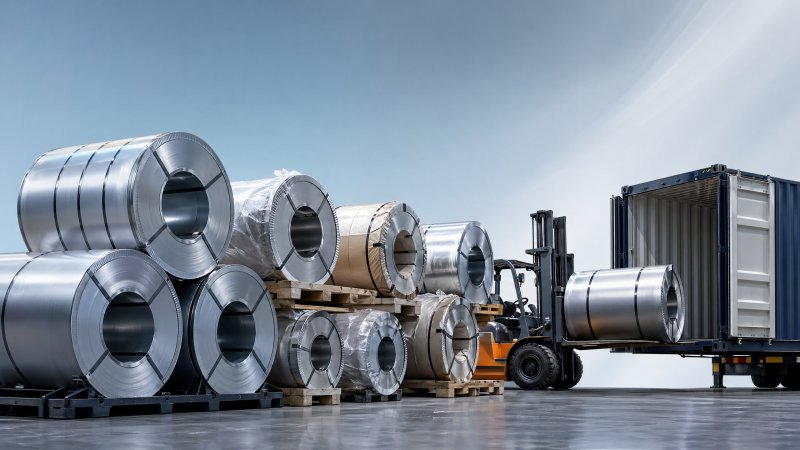
Many buyers assume that steel coil price per ton should be easy to compare: same product category, same country of origin, and similar dimensions should mean similar pricing. In practice, that assumption often leads to poor decisions. A quote that looks 5%–12% lower at first glance may exclude stricter tolerances, export-grade packing, third-party inspection, or even the exact steel grade required for the project.
In the steel industry, price is tied to both visible specifications and hidden execution details. Thickness tolerance, width accuracy, coil inner diameter, surface cleanliness, and edge condition can all affect production cost. For project managers, procurement teams, and technical reviewers, this means that two offers with the same product name may not represent the same supply risk or downstream usability.
Market timing also matters. Steel pricing can move over short cycles of 7–15 days depending on raw material fluctuations, mill schedules, and freight conditions. For import buyers in North America, Europe, the Middle East, or Southeast Asia, lead time and Incoterms such as EXW, FOB, CFR, and CIF can create a significant landed-cost difference even when the base mill price is close.
For this reason, smart buyers do not ask only, “What is your steel coil price per ton?” They ask a broader question: “What exactly is included, what standard is being followed, and what risk am I accepting if I choose the lower offer?” That mindset is especially important when the steel will enter structural, fabrication, or industrial production lines where rework and delays can cost more than the price gap itself.
The 5 most common reasons two offers differ
- Different material grades or equivalent-but-not-identical standards, such as local grade substitution versus ASTM, EN, JIS, or GB compliance.
- Different tolerance control, especially on thickness, flatness, and width, which directly affect processing performance.
- Different commercial terms, including tax treatment, export packing, insurance, and freight responsibility.
- Different order quantities, where trial orders, mixed sizes, and low-volume production usually carry a higher per-ton cost.
- Different quality assurance scope, such as mill test certificates, third-party inspection, and traceability requirements.
What exactly should buyers compare beyond the quoted price?
A proper comparison starts with specification alignment. Buyers should confirm steel grade, rolling route, thickness range, width range, surface quality, and intended application. If one supplier quotes commercial-grade material and another quotes tighter structural or fabrication-oriented material, the per-ton difference is expected. Without this alignment, quote comparison becomes misleading.
The second point is commercial scope. A low unit price may not include edge trimming, rust-prevention packaging, export marking, document handling, or destination-port charges. Finance approvers and business evaluation teams should review not only mill price, but total landed cost across 4 key layers: product cost, quality cost, logistics cost, and risk cost.
The table below helps procurement and technical teams compare offers more accurately. It is especially useful when reviewing 2–4 shortlisted suppliers for the same steel coil requirement and trying to understand whether the lower offer is truly competitive or simply narrower in scope.
The main lesson is simple: a meaningful steel coil price per ton comparison requires a line-by-line review, not just a single number. For distributors, project buyers, and OEM users, this table can prevent under-spec purchasing that later causes welding issues, forming problems, coating rejection, or end-customer complaints.
Another practical method is to ask each supplier to reconfirm 6 items in one sheet: grade, size, tolerance, standard, packing, and Incoterm. When all six are aligned, the price gap becomes much easier to explain and negotiate.
A simple 4-step quote review process
- Lock technical requirements first, including grade, thickness, width, and application environment.
- Align commercial terms, especially FOB versus CFR/CIF and packaging responsibility.
- Review quality documents, certificates, and inspection options before PO release.
- Calculate total cost after freight, finance, customs, and possible rework exposure.
How do grade, process, and specification affect steel coil price per ton?
Material grade has a direct impact on cost because it affects alloy composition, rolling control, and final performance. Higher-strength or application-specific grades usually require tighter process control and may involve lower production flexibility. If a buyer requests grades such as Q355, Q390, Q460, or pressure-vessel-related materials, the pricing logic differs from general-purpose low-carbon commercial stock.
Process route matters as well. Hot rolled and cold rolled products serve different manufacturing needs, and cold rolled material generally carries extra processing cost due to additional rolling, better surface finish, and more controlled dimensional accuracy. For fabrication lines where appearance, stamping, or bending consistency is critical, paying a higher price per ton may reduce scrap rates over the next 2–6 months of production.
In the middle of many sourcing projects, buyers compare standard stock with more specialized products. For example, Cold Rolled Steel Coil may be selected when the application needs a clean surface, balanced mechanical properties, and tighter dimensional control for construction and steel structure processing. Depending on grade and thickness range, this can be a better fit than a lower-priced alternative that creates downstream forming inconsistency.
Product specifications also influence yield and waste. Wider coils, very thin gauges, or mixed-size orders often increase setup complexity and reduce mill efficiency. A project requiring thickness from 0.1 mm to 300 mm, width from 0.6 m to 3 m, or custom cut lengths from 4 m to 12 m should expect pricing differences based on availability, rolling route, and customization level.
Why cold rolled options are sometimes priced higher
Cold rolled steel is often chosen for users who need cleaner appearance, improved thickness consistency, and better suitability for further processing. In structural supply chains, it may support factory steel frameworks, curtain wall support components, load-bearing members in light-to-medium applications, or customized fabricated parts where precision matters more than simple tonnage cost.
When evaluating whether that higher price is justified, buyers should focus on 3 areas: processing stability, material utilization, and defect risk. If a coil with tighter control reduces edge cracking, improves forming yield, or cuts rework hours, the true cost per usable ton can be lower than a cheaper but less stable alternative.
Typical specification variables that change pricing
- Strength level and grade family, from general structural grades to higher-strength options like Q620 or Q690.
- Thickness and width combination, because uncommon dimensions often reduce production efficiency.
- Surface condition, such as clean finish or blasting and painting according to customer requirements.
- Required standards and documentation, including ASTM, EN, JIS, GB, DIN, or AISI-aligned supply expectations.
What purchasing, logistics, and compliance factors change the final landed cost?
For global buyers, the final cost is rarely the same as the quoted mill price. Order volume is one of the biggest drivers. Small trial orders, urgent replacement demand, and mixed-grade loads typically carry higher processing and handling cost per ton. By contrast, stable repeat orders or larger monthly call-offs often improve both price and scheduling predictability over a 1–3 month planning cycle.
Lead time is another major variable. A standard production and export schedule may range from 2–4 weeks depending on product type, rolling arrangement, and documentation requirements. If a buyer requests special testing, custom packaging, or consolidated loading with other structural steel items such as angles, channels, or beams, planning is required early to avoid premium costs caused by rush production.
Compliance can also separate a strong offer from a risky one. For construction, industrial, and manufacturing projects, teams often need mill test certificates, traceability, and alignment with ASTM, EN, JIS, or GB standards. Quality control managers and safety personnel should verify whether the supplier’s process supports consistent documentation, not just product shipment.
The following table summarizes common cost drivers that influence landed steel coil price per ton. It can help finance approvers and purchasing teams understand why two near-identical quotations may produce very different total project costs after freight, delays, and quality control requirements are included.
This comparison shows why project teams should review steel sourcing through a full-chain lens. A quote that is lower by a narrow amount can become more expensive if it causes one rejected batch, one missed installation slot, or one week of project delay. In many B2B environments, the cost of uncertainty is higher than the cost of a well-scoped order.
What experienced import buyers usually confirm
- Whether the supplier can align production with repeated standards across multiple shipments, not just one order.
- Whether lead time is realistic for the requested quantity, usually 2–4 weeks for standard arrangements and longer for custom combinations.
- Whether packing, documents, and loading methods suit sea export, inland transfer, and destination unloading conditions.
- Whether claim response and technical communication are fast enough to support live projects and production schedules.
How can buyers reduce sourcing risk and choose the right supplier?
The best way to reduce sourcing risk is to treat quotation review as a cross-functional task. Procurement may focus on cost, but technical evaluation teams review fit-for-use, project managers review delivery timing, and finance teams review total exposure. When these 4 perspectives are aligned before order release, the chance of later disputes falls sharply.
A strong supplier should be able to support both standard specifications and customized solutions. In structural steel supply, that means understanding how steel coils connect to downstream fabrication, whether for steel frameworks, beams, trusses, support members, or OEM components. It also means communicating clearly about standards, process limits, and delivery plans instead of only offering a fast quote.
Hongteng Fengda serves global buyers with structural steel manufacturing and export experience across construction, industrial, and manufacturing projects. The value is not only in supplying steel products, but in helping customers align grade selection, specification control, production planning, and export execution. For many buyers, this reduces the hidden cost of inconsistent quality, delayed shipment, and incomplete documentation.
Because international sourcing often involves multiple decision-makers, supplier transparency matters. Buyers typically need support in 5 areas: parameter confirmation, standard matching, production feasibility, delivery cycle, and documentation readiness. A supplier that can respond clearly on all five is often a safer long-term choice than one that competes only on nominal steel coil price per ton.
A practical supplier selection checklist
- Confirm whether the supplier regularly handles your required grades, standards, and export markets.
- Review whether production capacity supports stable lead times for repeat orders, not only one-off projects.
- Check how quality control is managed from raw material selection to final shipment documentation.
- Ask how custom sizes, OEM requests, or combined structural steel orders are scheduled and packed.
- Evaluate communication speed for technical questions, sample requests, and quote revisions within 24–72 hours.
FAQ: common questions behind steel coil price per ton
How do I know whether a lower steel coil price per ton is actually competitive?
Ask for a fully aligned quote basis. Compare grade, standard, tolerance, inspection, packing, and Incoterm in one document. If any of those 6 items differ, the lower price may not reflect the same product or commercial scope. Competitive pricing only matters when the technical and delivery conditions are equal.
What lead time should I expect for export steel coil orders?
For common export arrangements, buyers often see production windows of 2–4 weeks, but this varies with grade, quantity, customization, and inspection needs. Mixed orders, special standards, or added surface treatment can extend the schedule. The best approach is to confirm both mill completion time and export-document readiness before finalizing shipment plans.
Is cold rolled material always the better choice?
Not always. It depends on processing and end use. If your application values cleaner surface, tighter thickness control, or better forming consistency, cold rolled material may justify the premium. If the project is less sensitive to appearance and precision, another route may be more economical. Selection should follow application needs, not assumptions.
Which standards should international buyers pay attention to?
That depends on the target market and project documents. Common references include ASTM, EN, JIS, and GB. Buyers should confirm not only the standard family, but also the exact grade and mechanical requirement. For technical evaluation and quality control teams, document consistency is as important as the product itself.
Why choose us for structural steel and export sourcing support?
If your team is comparing steel coil price per ton offers and needs more than a simple number, Hongteng Fengda can help you evaluate the full picture. We support global buyers with structural steel manufacturing and export services from China, covering standard products and customized solutions for construction, industrial, and manufacturing applications.
Our scope includes angle steel, channel steel, steel beams, cold formed steel profiles, and custom structural steel components. We work with international standard expectations such as ASTM, EN, JIS, and GB, while helping buyers clarify specification details, production feasibility, and export execution. This is especially useful when procurement, engineering, and quality teams need one aligned answer instead of fragmented supplier communication.
You can contact us to discuss 6 practical items before placing an order: grade confirmation, thickness and width range, application suitability, delivery cycle, certificate requirements, and packing method. If needed, we can also support quote comparison, OEM request review, and combined structural steel sourcing plans for projects that require multiple product categories in one procurement cycle.
If you are reviewing supplier options, planning a new project, or trying to reduce sourcing risk on repeat steel purchases, send your required specifications and delivery terms. We can help you evaluate whether the quoted steel coil price per ton is truly comparable, recommend an appropriate solution, and discuss sample support, customization details, and shipment planning based on your project schedule.
Please give us a message


Please enter what you want to find