Choosing the right steel beam h for a warehouse structure directly affects load performance, installation efficiency, and long-term project cost. For project managers and engineering leaders, understanding key selection factors helps reduce procurement risk and keep construction on schedule. This guide outlines practical tips for evaluating specifications, standards, and supplier capabilities for reliable warehouse steel solutions.
In warehouse projects, the steel frame often represents one of the largest structural cost items, and beam selection influences not only the primary load path but also fabrication lead time, erection speed, and future maintenance needs. A practical selection process should balance structural design requirements, local code compliance, material grade, section tolerance, corrosion protection, and supplier execution capability.
For project leaders managing schedules across 8 to 24 weeks of fabrication and installation, small specification mistakes can create costly redesigns, delayed shipments, or site welding changes. That is why evaluating steel beam h options early, with clear technical and commercial checkpoints, is essential for warehouse construction success.
Why Steel Beam H Selection Matters in Warehouse Structures
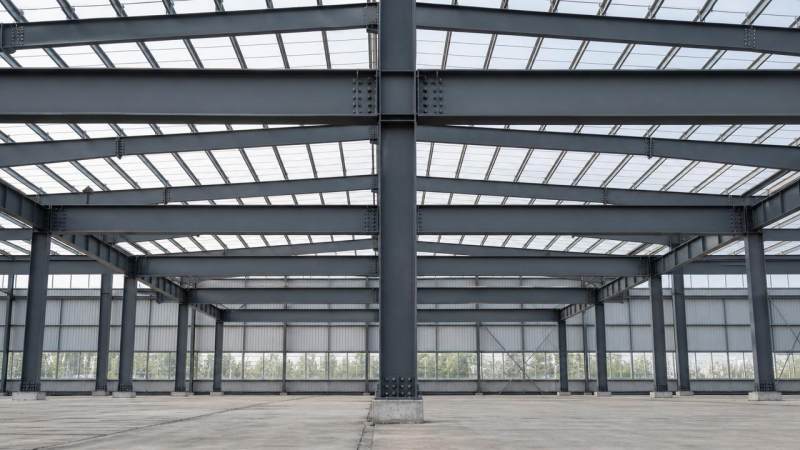
Warehouse buildings usually demand long spans, repetitive framing, and efficient material use. In many projects, span ranges of 12m to 36m are common, while eave heights may reach 6m to 15m depending on storage systems, loading equipment, and process lines. Under these conditions, the wrong beam size or grade can increase deflection, reduce usable internal clearance, or drive up steel consumption.
A steel beam h section is often chosen because its flange and web geometry delivers strong bending resistance and stable performance under vertical loads. For warehouses, this matters when the structure must carry roof dead load, live load, suspended services, crane-related loads in some layouts, wind effects, and sometimes solar panel support systems. Selection is therefore not just about section size; it is about fit for the full operating environment.
Key performance impacts
- Load capacity affects structural safety and reserve strength.
- Section depth influences clear height and equipment routing.
- Weight per meter directly changes transport and erection planning.
- Fabrication tolerances affect bolt alignment and on-site assembly speed.
- Surface treatment selection impacts service life in humid or coastal zones.
Typical project risks when selection is rushed
A rushed procurement decision may result in 3 common issues: under-designed sections, over-specified steel weight, or mismatched standards between design and supply. Each problem can trigger a chain reaction, including drawing revision, delayed approval, and re-fabrication. For international buyers, the risk is higher when procurement teams compare quotations without checking whether the offered sections match ASTM, EN, JIS, or GB equivalents.
The table below shows how beam selection decisions influence warehouse delivery, budget, and site performance.
The main takeaway is simple: the cheapest tonnage rate is rarely the best warehouse decision. A better approach is to compare total installed value, including fabrication quality, dimensional consistency, coating scope, and delivery reliability.
Core Technical Criteria for Choosing the Right Steel Beam H
Project managers do not need to replace structural engineers, but they should understand the 5 to 7 technical checkpoints that determine whether a steel beam h offer is suitable. This helps procurement teams validate supplier quotations before approval and avoid technical-commercial mismatches.
1. Confirm design loads and span requirements
Begin with the design basis. Confirm dead load, live load, wind load, seismic conditions where applicable, roof equipment loads, and any suspended utilities. A warehouse with a 24m clear span and light roof sheeting may require a different beam strategy from a 24m span facility carrying heavy MEP systems or partial mezzanine loading.
Deflection limits should also be checked early. In many industrial projects, serviceability can be as important as strength. Excessive deflection may affect cladding alignment, door performance, drainage slope, or equipment installation. A lower-cost section can become expensive if it creates rework during finishing.
2. Match material grade to performance and budget
Material grade selection should support both strength and supply practicality. Common grades in global structural steel sourcing include Q235B, Q345B, Q420C, SS400, S275, S355, A36, and A572. Higher-strength grades can reduce section weight in some designs, but availability, welding procedure requirements, and price spread must be reviewed before finalizing specifications.
For many warehouse frames, Q345B or S355-level material is often considered when balancing structural efficiency and commercial accessibility. However, standard equivalence should never be assumed automatically. Mechanical properties, chemistry ranges, and project code requirements must be cross-checked line by line.
3. Check dimensional tolerance and fabrication readiness
Tolerance is a schedule issue as much as a quality issue. If beam length, flange squareness, hole position, or straightness are outside acceptable limits, site assembly slows down immediately. For project packages with hundreds of repeated members, even a tolerance drift of ±1% can create cumulative alignment challenges at the frame level.
Ask suppliers about cutting accuracy, drilling capability, fit-up inspection, marking system, and traceability documents. These details matter when beams are supplied as pre-fabricated components rather than loose rolled sections.
4 practical questions before approving a supplier quote
- Does the offered section fully match the design standard and section property table?
- Are mill certificates and inspection records available for each heat or batch?
- Is the quoted lead time based on rolling stock, new production, or outsourced processing?
- Does the supplier have export packing and loading experience for long structural members up to 12m?
4. Assess corrosion protection based on environment
Indoor dry warehouses have different protection needs from fertilizer storage, port logistics buildings, food processing support spaces, or coastal industrial sheds. In low-corrosion conditions, a paint system may be sufficient. In harsher environments, galvanized or combined coating systems can reduce maintenance intervals and improve service life.
Secondary framing also matters here. In roof and wall systems, cold formed members can work with primary steel beam h frames to reduce overall dead load. For example, Z-beam profiles are commonly used as purlins, wall beams, brackets, and lightweight roof support members. Available in thicknesses from 6mm to 25mm and lengths from 2m to 12m or customized, they can be supplied in perforated or galvanized coated options for warehouse envelope systems.
The comparison below helps project teams match technical criteria to sourcing decisions.
This review matrix is useful because it connects engineering data to procurement control points. It also helps non-design stakeholders identify where a low quotation may hide future site or lifecycle costs.
Standards, Compliance, and Documentation for International Projects
When sourcing structural steel internationally, standards alignment is one of the most overlooked areas. A warehouse project may be designed under ASTM-based assumptions, while the fabricator offers GB or EN material and section references. This can work, but only when equivalence is validated carefully through mechanical properties, tolerances, and documentation.
Common standards to review
- ASTM for material properties and testing references
- EN for European structural applications and steel grades
- JIS for Japanese industrial specifications
- GB for Chinese structural steel manufacturing and supply
Documentation package that project teams should request
A complete documentation package usually includes mill test certificates, inspection records, packing list, dimensional check reports, coating records if applicable, and shipment identification. For fabricated members, drawing approval status and piece-mark traceability should also be included. These records reduce disputes after delivery and support faster site acceptance.
For warehouse programs shipping to North America, Europe, the Middle East, or Southeast Asia, suppliers with multi-standard experience can simplify the review process. A manufacturer able to produce angle steel, channel steel, steel beams, cold formed profiles, and customized components under ASTM, EN, JIS, and GB references can often help buyers reduce coordination time across mixed material packages.
Supplier Evaluation: What Project Managers Should Verify Before Ordering
Selecting the right steel beam h is only half of the decision. The other half is choosing a supplier that can deliver consistent quality, stable production, and dependable export execution. For projects with fixed handover dates, a reliable manufacturer can protect weeks of schedule margin.
Production capacity and process control
Ask whether the supplier has modern manufacturing facilities, in-house quality inspection, and a clear sequence for raw material verification, cutting, forming, welding if required, coating, packing, and shipment release. For batch orders, consistency is often more valuable than isolated sample quality. Stable process control reduces variation across dozens or hundreds of members.
Lead time realism
A realistic lead time for structural steel may range from 2 to 6 weeks for standard stock-based items and longer for custom fabricated packages, depending on tonnage, coating, and export documentation. Project managers should ask what portion of the order is standard, what portion is customized, and whether surface treatment adds 5 to 10 additional days.
Export and packaging readiness
Long members, coated components, and mixed-section shipments require careful packing and container or break-bulk planning. Poor packing can damage edges, coatings, or identification marks, creating issues during site receiving. Piece labeling, bundle logic, and loading sequence should be discussed before shipment, not after production is complete.
The supplier checklist below can help project teams compare offers on more than price alone.
For global buyers, this broader evaluation method helps reduce sourcing risk and protects total project performance. It also supports better communication between engineering, procurement, and site management teams.
Common Mistakes in Steel Beam H Procurement for Warehouses
Even experienced teams can make preventable mistakes when deadlines are tight. Most issues come from incomplete specification review rather than poor intent. Recognizing these patterns early can save both cost and time.
Mistake 1: Comparing quotations only by unit price
A lower price per ton does not necessarily mean lower installed cost. Differences in steel grade, section weight, coating scope, tolerance control, testing, and packing can change the final project outcome significantly.
Mistake 2: Ignoring secondary framing compatibility
Primary beams must work with purlins, girts, wall members, and roof support systems. If connection spacing or profile compatibility is missed, site drilling or rework may follow. In lightweight roof or wall applications, secondary members should be reviewed as part of the full steel package, not as an afterthought.
Mistake 3: Underestimating documentation lead time
Inspection reports, test certificates, and export paperwork can take several days after production is complete. If the project schedule is tight, document release should be included in the delivery plan from day 1.
A simple 5-step buying workflow
- Confirm design standard, span, load, and corrosion environment.
- Shortlist suppliers with compatible manufacturing scope and export experience.
- Compare offers by grade, section property, tolerance, coating, and lead time.
- Review quality documents and approval drawings before production release.
- Monitor packing, shipment schedule, and arrival inspection plan.
Practical Sourcing Support for Global Warehouse Projects
For project managers looking to source from China, supplier consistency is often the deciding factor. Hongteng Fengda operates as a structural steel manufacturer and exporter serving global construction, industrial, and manufacturing projects. Its supply scope covers angle steel, channel steel, steel beams, cold formed steel profiles, and customized structural steel components for both standard and OEM needs.
With modern manufacturing facilities and strict quality control, international buyers can align procurement with major standards such as ASTM, EN, JIS, and GB. This is especially useful for warehouse projects where the steel beam h package must integrate smoothly with secondary framing, cladding support, and fabricated connection details.
For buyers managing projects across North America, Europe, the Middle East, and Southeast Asia, dependable lead time and clear communication are as important as price. A supplier that can support stable production capacity, consistent quality, and custom processing helps reduce procurement uncertainty and improve project execution.
A successful warehouse structure depends on selecting the right steel beam h based on load demands, span, grade, standards compliance, tolerance control, coating strategy, and supplier capability. Project managers who review both technical and commercial factors early are better positioned to avoid redesign, reduce site delays, and control lifecycle cost.
If you are planning a warehouse steel package, need support comparing beam specifications, or want a coordinated solution that includes primary and secondary structural members, now is a good time to discuss your requirements in detail. Contact us to get a customized solution, review product details, and explore reliable structural steel options for your next project.
Please give us a message


Please enter what you want to find