Why Steel Angle Iron Weight Matters in Construction
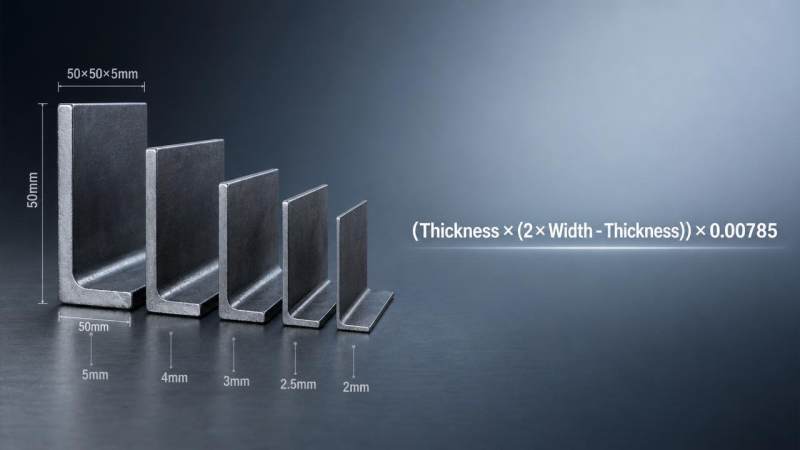
Precise steel angle iron weight calculation ensures accurate material budgeting and logistics planning.
Errors in estimation can lead to project delays or unnecessary costs for structural steel procurement.
Standard Formulas for Steel Angle Iron Weight Calculation
The universal formula for equal angle iron weight per meter is:
- (Thickness × (2 × Width - Thickness)) × 0.00785 (kg/m)
For unequal angle iron, adjust the width parameters accordingly.
Practical Calculation Example
Calculate weight for 50×50×5mm steel angle iron:
- Multiply thickness by combined widths: 5 × (2×50 - 5) = 475
- Multiply by steel density factor: 475 × 0.00785 = 3.729 kg/m
Key Factors Affecting Steel Angle Iron Weight
Material density varies by steel grade and composition.
- Carbon content differences
- Alloying elements percentage
- Manufacturing tolerances (±1-3%)
Comparison of Common Steel Grades
Structural Steel Solutions for Diverse Applications
Beyond angle iron, specialized steel profiles serve unique functions.
Rail products demonstrate precision engineering for transportation infrastructure.
Rail sections maintain strict dimensional tolerances for consistent performance.
Common Mistakes in Steel Weight Estimation
Neglecting manufacturing tolerances causes 2-5% calculation errors.
Using outdated density values for modern alloy steels reduces accuracy.
Verification Methods
- Cross-check with manufacturer specifications
- Sample weighing for critical projects
- Digital calculation tools validation
FAQ: Steel Angle Iron Weight Calculation
How does thickness affect angle iron weight?
Thickness has quadratic impact - doubling thickness nearly quadruples weight.
Are online calculators reliable?
Quality varies - verify against manual calculations for critical applications.
Does galvanizing significantly increase weight?
Standard galvanizing adds 3-5% weight - factor this for precise estimates.
Optimizing Procurement with Accurate Calculations
Precise weight data enables better freight planning and cost control.
Partnering with certified manufacturers ensures material consistency.
Implementation Checklist
- Verify steel grade specifications
- Confirm manufacturing tolerances
- Calculate both theoretical and practical weights
Please give us a message


Please enter what you want to find