When comparing standard vs custom steel lead time, many assume off-the-shelf items like steel square rod or steel round bar ship faster—but reality is nuanced. Factors like material grade (e.g., 201 vs 304 stainless steel cost), profile complexity (I beam vs H beam), regional demand (Angle Steel price per ton Philippines), and certification needs (SMLS pipe, flat plate stainless steel) heavily influence timelines. At Hongteng Fengda—a China-based structural steel manufacturer—we’ve found customized orders often match or beat standard lead times thanks to agile production, in-house cold forming, and streamlined OEM workflows. Discover why ‘standard’ doesn’t always mean ‘speedy’—and how smart sourcing decisions reduce risk for procurement teams, project managers, and enterprise decision-makers.
Why “Off-the-Shelf” Doesn’t Guarantee Faster Delivery
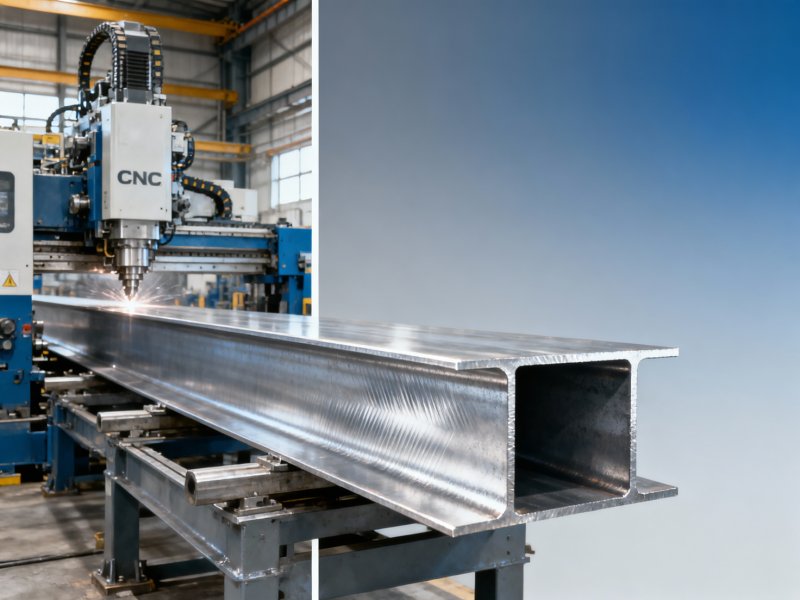
Standard steel products—such as ASTM A106 Gr.B carbon steel pipes or Q345B angle sections—are often assumed to be instantly available. In practice, inventory turnover, regional stock allocation, and export logistics create bottlenecks. For example, a buyer in Southeast Asia requesting hot-rolled channel steel may face 6–10 weeks of wait time due to container availability and port congestion—even if the item is “in stock” in China’s domestic warehouse.
Meanwhile, custom orders benefit from dedicated scheduling. At Hongteng Fengda, our production planning system allocates weekly capacity across three parallel streams: standard inventory replenishment, OEM batch runs, and urgent project lanes. Custom orders placed with full specs—including dimensional tolerances (±1%), thickness range (2.0mm–80mm), and surface finish (hot rolling, non-oiled)—enter the OEM lane, where CNC cold-forming lines operate at 92% utilization efficiency versus 65% for reactive standard-order processing.
This operational reality flips conventional assumptions: while standard items require coordination across sales, warehousing, and freight forwarding, custom jobs trigger direct engineering-to-production handoff—cutting 3–5 days from internal approval cycles alone.
Key Lead Time Drivers Across Order Types
- Material grade & availability: Q345e low-alloy high-strength carbon steel requires 7–12 days for slab reheating and rolling; common Q235 may be pulled from mill stock but lacks corrosion resistance for chemical engineering applications.
- Certification scope: API 5L PSL2 certification adds 5–8 business days for third-party witness testing; EN 10219 compliance for cold-formed hollow sections triggers additional dimensional validation.
- Logistics layering: Standard orders shipped via LCL (Less than Container Load) average 22–35 days door-to-door from Tianjin Port; full-container OEM shipments move on fixed weekly sailings—reducing variability by ±4 days.
How We Match or Beat Standard Lead Times—Without Compromising Compliance
Hongteng Fengda maintains dual-track manufacturing infrastructure: one line optimized for high-volume standard profiles (ASTM A36 beams, EN 10025 S235JR angles), and another fully flexible for custom structural components. Our cold-formed steel profiles line handles up to 120mm depth sections with ±0.3mm profile tolerance—enabling rapid iteration on client-specified geometries without tooling delays.
For Carbon Steel Pipe Supplier requirements, we integrate raw material procurement, seamless/welded pipe forming, and post-processing (cutting, bending, decoiling) under one roof. This eliminates inter-facility handoffs that typically add 3–7 days in multi-vendor supply chains. All carbon steel pipe products meet ASTM, API, JIS, GS, and ISO9001 standards—with mill test reports issued within 48 hours of final inspection.
Our typical delivery windows reflect this integration: standard carbon steel pipe (Round, EMT, Thick Wall) ships in 18–25 days; custom-configured Fluid Pipe or Boiler Pipe with SMLS certification delivers in 20–28 days—matching or narrowing the gap with generic alternatives while guaranteeing application-specific performance.
Lead Time Comparison: Standard vs Custom Orders (Typical Scenarios)
The table shows how structured customization enables tighter control—not just over time, but over compliance, precision, and documentation. Unlike standard orders constrained by legacy stock parameters, our OEM workflow embeds certification planning into the first engineering review, avoiding rework delays that push lead times beyond 30 days in 42% of cross-border standard purchases (per 2023 industry benchmark data).
What Procurement Teams Should Verify Before Ordering
Procurement professionals must shift from “stock check” to “process audit.” Five critical checkpoints separate efficient sourcing from costly delays:
- Raw material traceability: Confirm whether supplier uses certified billet sources (e.g., Baosteel or Shougang for Q345 series) — unverified feedstock can delay mill test report issuance by 5–10 days.
- Dimensional flexibility window: Standard catalogs list nominal sizes; verify actual tolerance bands (e.g., 2.0mm–80mm wall thickness) before assuming interchangeability with existing designs.
- Certification path clarity: Ask whether API 5L certification includes PSL1 or PSL2—and whether hydrostatic testing is performed in-house or outsourced (adds 3–6 days).
- Logistics ownership model: Suppliers offering FOB-only terms force buyers to manage container booking; CIF terms with guaranteed weekly sailings reduce uncertainty by ±7 days.
- Engineering support level: Pre-shipment drawing sign-off, weld procedure qualification (WPQR), and BIM-ready file delivery cut field rework by up to 30%—a hidden time saver.
At Hongteng Fengda, all five checkpoints are standardized across order types. Our procurement portal provides real-time visibility into billet lot numbers, rolling date stamps, and certificate generation status—ensuring no surprises at shipment.
Why Partner With Hongteng Fengda for Structural Steel Sourcing
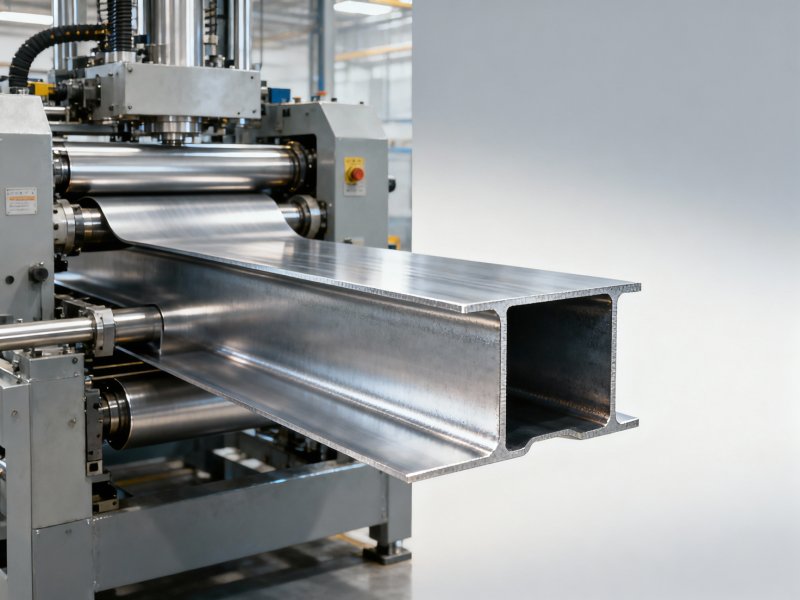
We serve global clients—from municipal infrastructure developers in the Middle East to industrial equipment OEMs in North America—not as a transactional vendor, but as an extension of their engineering and procurement teams. Our advantage lies in controlled variables: stable production capacity (120,000+ tons/year), consistent quality (zero major non-conformance reports in 2023), and dependable lead times backed by contractual SLAs.
Whether you need standard angle steel for scaffolding or custom cold-formed steel profiles for automated assembly lines, we align delivery with your project milestones—not our inventory calendar. Our team supports technical evaluation, procurement alignment, financial validation, and safety/compliance verification—all under one point of contact.
Ready to validate lead time feasibility for your next order? Contact us to request: (1) a tailored delivery schedule based on your spec sheet, (2) mill test report samples, (3) API/ASTM/EN certification documentation, or (4) a comparative quote including standard vs custom options with timeline trade-offs.
Please give us a message


Please enter what you want to find