Stainless steel supplier certificates—while essential—are not enough to ensure batch-to-batch consistency in critical applications like structural steel beams, stainless steel pipe, or galvanized steel sheet. For procurement teams, quality controllers, and project managers, traceability starts with the heat number: a unique identifier linking material chemistry, mechanical properties, and ASTM standards compliance to each production lot. Whether you're sourcing seamless pipe for industrial systems or hot dip galvanized steel for roofing, demanding heat numbers from your stainless steel supplier mitigates risk, supports structural steel fabrication integrity, and safeguards long-term project performance.
Why Supplier Certificates Alone Can’t Replace Heat Traceability
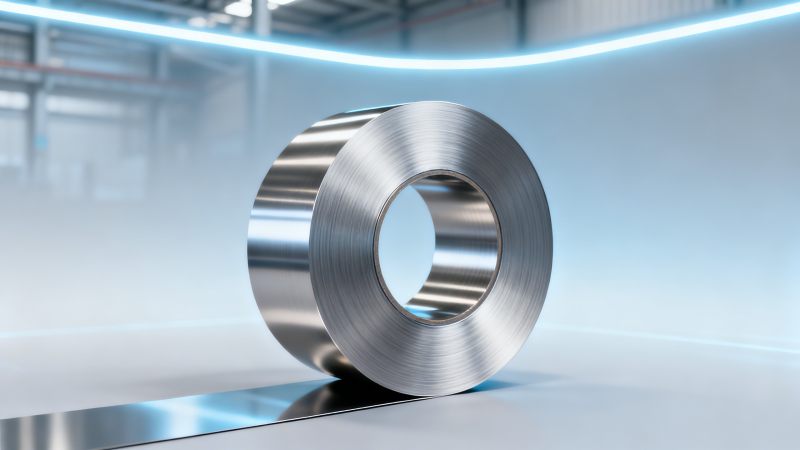
A mill test report (MTR) or ISO-certified quality certificate confirms that a given shipment meets nominal chemical composition and mechanical property requirements—but it does not guarantee repeatability across batches. In structural steel manufacturing, even minor variations in carbon, chromium, or nickel content—within allowable tolerances—can affect weldability, corrosion resistance, and cold-forming behavior. That’s why leading fabricators and engineering contractors now require heat numbers on every delivery note, invoice, and inspection record.
At Hongteng Fengda, every coil of 316 Stainless Steel Coil is assigned a unique heat number at furnace discharge. This number ties directly to our internal process logs—including melt temperature, argon purge duration, cooling rate, and final annealing cycle—ensuring full alignment between documentation and physical product. Unlike generic certifications issued per order, heat-specific records enable root-cause analysis if deviations occur during fabrication or service life.
For global buyers, this means fewer field rejections, reduced QA overhead, and faster NDT approval cycles. Projects across North America and the Middle East routinely specify heat traceability for stainless components exposed to chloride environments—especially where failure consequences include safety hazards or multi-million-dollar downtime.
How Heat Numbers Support Real-World Structural Applications
In structural steel projects, consistency isn’t theoretical—it’s measured in weld penetration depth, bolt torque retention, and fatigue life under cyclic loading. Consider these high-stakes use cases:
- Offshore platform handrails: Must resist pitting in salt-laden atmospheres—heat numbers allow verification of Mo content ≥2.5% and ferrite control within 5–12% range.
- Hospital HVAC ducting: Requires strict surface finish (NO.4 or BA) and low nickel migration—traceable heats confirm passivation parameters and Ra ≤0.5μm post-finishing.
- Automotive crash rails: Demand precise yield strength (≥275 MPa) and elongation (≥55%)—heat data validates cold-working history and tensile test repeatability across 3+ consecutive coils.
Our production system archives heat records for 10 years, enabling rapid retrieval during third-party audits or incident investigations. For clients sourcing 316 Stainless Steel Coil, we provide digital heat logs alongside standard MTRs—delivered via secure portal or encrypted email within 24 hours of shipment.
Key Parameters Verified Per Heat Number
This table reflects actual verification thresholds applied to every heat of 316 stainless steel produced at our facility. Unlike broad-spec certifications, these values are measured per heat—not estimated or averaged—and cross-referenced against EN 10088-2 and ASTM A240 requirements.
Procurement Checklist: What to Request Before Placing Your Next Order
To avoid costly delays and non-conformance reports, integrate these 5 non-negotiable items into your stainless steel procurement workflow:
- Heat number assignment policy: Confirm whether the supplier assigns one number per heat (not per coil or shipment).
- Record retention period: Require minimum 10-year archival—critical for infrastructure projects with 30+ year design life.
- Digital accessibility: Verify heat logs are provided in searchable PDF or CSV format—not just printed MTRs.
- Batch sampling frequency: Ensure tensile and intergranular corrosion tests (ASTM A262 Practice E) are conducted per heat—not per lot.
- Traceability mapping: Request proof that heat numbers correlate to specific coil IDs, packaging labels, and shipping documents.
Hongteng Fengda meets all five criteria as standard practice—not as add-on services. Our ERP system auto-generates heat-linked documentation at order release, reducing manual errors by 92% versus paper-based workflows (based on internal Q3 2023 audit data).
Why Partner With Hongteng Fengda for Traceable Stainless Solutions
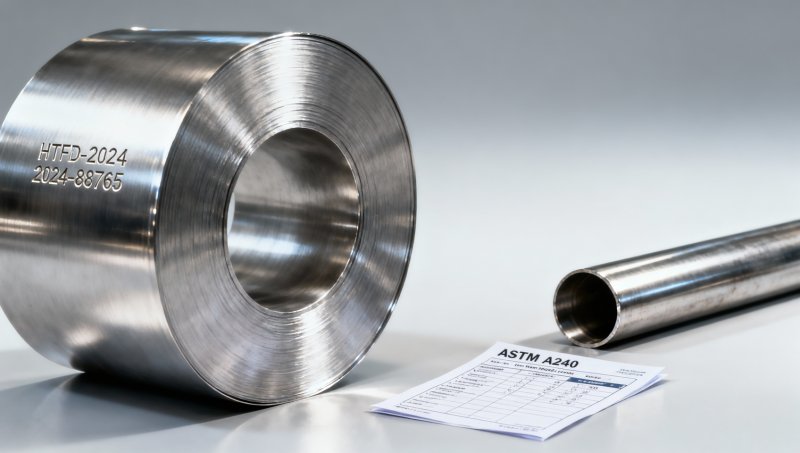
As a certified structural steel manufacturer serving 32 countries, we bridge the gap between international compliance and operational reality. Our customers consistently cite three advantages when sourcing stainless steel products like 316 Stainless Steel Coil:
- End-to-end heat tracking: From electric arc furnace melt to final packaging—no gaps in chain-of-custody.
- Multi-standard validation: Each heat complies with ASTM A240, EN 10088-2, GB/T 4237, and JIS G4304 simultaneously—verified by SGS and BV.
- Project-aligned delivery: Standard lead time of 15–25 days for standard widths (610–2000mm), with rush options down to 7 days for urgent structural components.
Whether you’re specifying stainless for food-grade conveyor belts, medical instrument frames, or architectural cladding, our team provides direct technical support—from heat number interpretation to ASTM compliance mapping. Contact us today to request sample heat logs, review dimensional tolerance charts, or discuss OEM certification pathways for your next project.
Please give us a message


Please enter what you want to find