When comparing stainless steel sheet price for architectural cladding versus industrial use, the divergence isn’t just about cost—it’s driven by critical differences in surface finish, corrosion resistance, dimensional tolerances, and compliance standards (e.g., ASTM A240 vs. EN 10088). For structural steel design teams, procurement professionals, and project managers, understanding these spec-driven pricing variables is essential to avoid over-specifying—or under-delivering. At Hongteng Fengda, a trusted structural steel manufacturer & exporter from China, we supply premium stainless steel sheets alongside corten steel plate, steel beam price options, and galvanized steel conduit—backed by ISO-certified quality and global standard compliance (ASTM, EN, JIS, GB).
Why Surface Finish Dictates Stainless Steel Sheet Price Divergence
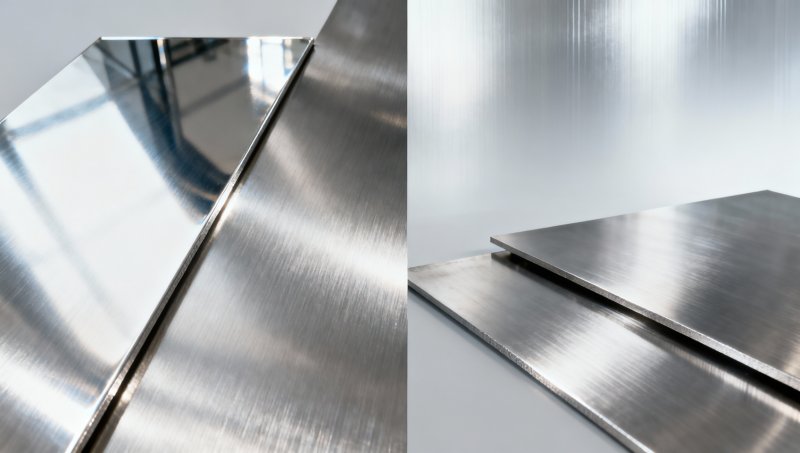
Architectural cladding demands mirror-like or hairline-finished surfaces (e.g., No. 4, HL, or BA finishes) to ensure visual consistency across façades. These finishes require additional polishing, passivation, and strict contamination control—adding 18–35% to base material cost. Industrial applications, by contrast, commonly accept 2B or pickled-and-oiled (2D) surfaces, where functional integrity outweighs aesthetics.
A key differentiator lies in surface roughness tolerance: architectural-grade sheets typically specify Ra ≤ 0.2 μm with ≤ 3 visible scratches per m², while industrial-grade permits Ra up to 0.8 μm and accepts minor roll marks. This directly impacts production yield—architectural batches undergo 100% visual inspection, whereas industrial lots follow AQL Level II sampling (ISO 2859-1), reducing QA labor by ~40%.
Hongteng Fengda applies automated surface grading systems calibrated to ASTM E2341 and EN 10088-2, enabling real-time classification of finish grade before packaging. This ensures traceability and eliminates post-shipment disputes—especially critical when sourcing for LEED-certified buildings or pharmaceutical cleanrooms.
The table above underscores how surface requirements cascade into process complexity—and ultimately, unit cost. For procurement teams evaluating total landed cost, overlooking finish-driven QA overhead can inflate budget forecasts by 12–15%. At Hongteng Fengda, we provide finish verification reports with every architectural shipment, including micrograph samples and Ra measurement logs aligned to ISO 4287.
Corrosion Resistance & Alloy Selection: Beyond 304 and 316
While both sectors often specify AISI 304 or 316 stainless, their actual alloy composition differs significantly. Architectural cladding in coastal or urban environments requires enhanced pitting resistance equivalent to ASTM A240 UNS S32205 (duplex) or S31803—especially for curtain wall anchors exposed to chloride-laden air. Industrial tanks or conveyors may use standard 304L with only 18% Cr / 8% Ni, accepting lower PREN (Pitting Resistance Equivalent Number) values of 18–20.
PREN thresholds diverge sharply: architectural projects targeting 50+ year service life mandate PREN ≥ 34 (e.g., 2205 duplex), whereas general industrial use operates comfortably at PREN 22–26. This translates to raw material cost premiums of 2.3×–3.1× for duplex grades versus standard 304—yet skipping this spec risks premature failure in high-humidity manufacturing plants or marine infrastructure.
Our metallurgical lab performs accelerated salt-spray testing (ASTM B117, 1,000+ hours) on all architectural-grade coils. We also offer optional electropolishing for cladding sheets—an electrochemical process that removes 5–10 μm of surface iron, boosting passive layer thickness by 300% and extending service life in aggressive atmospheres.
Dimensional Tolerances: When ±0.1 mm Matters More Than Price
Architectural cladding requires tight flatness control: EN 10088-2 mandates ≤ 1.5 mm deviation per meter for sheets >1.5 m wide. Industrial applications follow EN 10142 or ASTM A480, permitting up to 4.0 mm/m—reducing leveling costs by ~22%. Similarly, thickness tolerance for façade panels is ±0.05 mm (vs. ±0.15 mm for industrial plates), demanding precision cold rolling and laser-thickness monitoring.
These tolerances impact downstream fabrication: out-of-flatness exceeding 2.0 mm/m causes weld distortion in modular façade frames, increasing rework rates by 17–23%. For structural integration, our Z-beam profiles—available in Q345B and S355 grades with thicknesses from 6–25 mm—are routinely paired with architectural stainless cladding to maintain alignment within ±0.3 mm across 12-m spans.
We maintain certified flatness gauges traceable to NIST standards and issue mill test reports (MTRs) with each coil, listing actual measured deviations—not just compliance statements. This transparency helps project engineers validate constructability during pre-fab coordination.
This precision enables seamless integration with other structural components—including cold-formed steel framing and custom Z-beam systems—ensuring façade panels align flush with load-bearing elements without field shimming or grinding.
Certification & Traceability: From Mill to Installation
Architectural projects demand full traceability: EN 10204 3.1/3.2 MTRs, heat number mapping, and third-party witnessed testing (e.g., SGS or BV). Industrial buyers often accept EN 10204 2.1 declarations unless specified otherwise—cutting certification costs by up to 30%. Our ERP system links every stainless coil to its original heat log, chemical analysis, mechanical test data, and finishing parameters—accessible via secure client portal.
For global projects, we pre-certify shipments against regional requirements: ASTM A240 for North America, EN 10088-2 for EU, JIS G4304 for Japan, and GB/T 4237 for domestic Chinese compliance. Lead times remain stable at 25–35 days for standard grades, with rush processing available for urgent façade deliveries.
Strategic Procurement Guidance
Avoid over-specification: If your façade system uses concealed fasteners and secondary framing, 304 with No. 4 finish may suffice—even in moderate coastal zones. Conversely, never downgrade to industrial-grade for exposed roofing membranes: chloride-induced stress corrosion cracking has caused failures within 3 years on improperly specified sheets.
Procurement checklist:
- Verify finish grade matches installation visibility (e.g., No. 4 for vertical façades, BA for interior ceilings)
- Confirm PREN meets local environmental severity index (e.g., PREN ≥ 30 for Mediterranean climates)
- Require MTRs with actual test values—not “conforms to” statements
- Specify flatness tolerance aligned to panel size and support spacing
- Validate supplier’s ability to batch-match color/texture across multi-container orders
At Hongteng Fengda, we help clients define optimal specs—not minimum ones. Whether you’re specifying stainless for a landmark museum façade or reinforcing a food-processing plant’s conveyor frame, our technical sales team provides free material selection support, including corrosion modeling and cost-benefit analysis of upgrade paths. Contact us today to request a customized stainless steel sheet quotation or schedule a virtual mill tour.
Please give us a message


Please enter what you want to find