Choosing a stainless steel pipe manufacturer or trader can directly affect quality, price, delivery, and project risk. Whether you are sourcing ASTM A106 Gr B pipe, checking ASTM A106 Gr.B specification, or comparing a stainless steel pipe supplier with a stainless steel pipe exporter, understanding these key differences helps buyers, engineers, and distributors make smarter decisions.
In practice, there is no universal “better” option. A manufacturer usually offers stronger control over production, technical consistency, customization, and traceability. A trader often offers more flexibility, faster multi-source matching, and lower barriers for mixed or small-volume orders. The right choice depends on what matters most in your purchase: lowest unit cost, shortest lead time, strict compliance, easier communication, or reduced supply risk.
For procurement teams, project managers, technical evaluators, and business decision-makers, the key is not simply asking whether a company makes pipe or resells it. The better question is: which supply model best fits your specification, delivery timeline, budget, and quality risk profile? This article breaks down the real differences and gives you a practical framework for evaluation.
What is the real difference between a stainless steel pipe manufacturer and a trader?
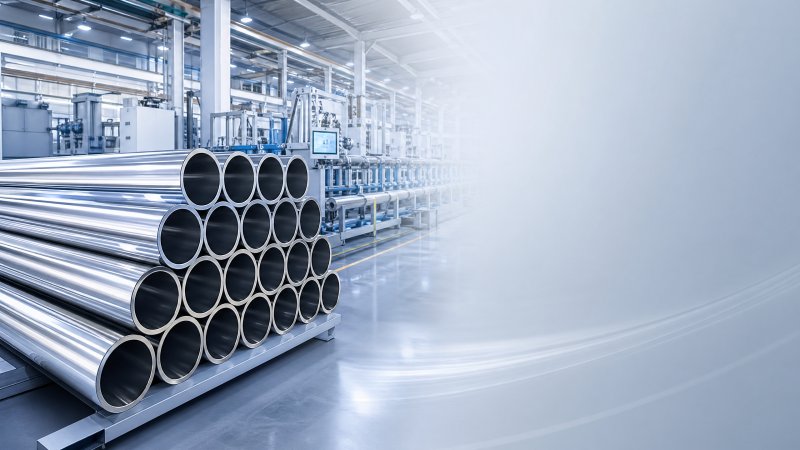
A stainless steel pipe manufacturer owns or directly controls production resources such as rolling lines, forming equipment, welding facilities, surface treatment processes, inspection systems, and quality documentation. That means the company can usually provide deeper technical support, production scheduling visibility, and more direct answers on materials, tolerances, and test requirements.
A trader, by contrast, may not produce pipe itself. Instead, it sources from one or more mills or factories and sells to end users, distributors, contractors, or OEM buyers. A capable trader adds value by consolidating supply, comparing mills, arranging export logistics, and helping customers access products they may not easily source from a single plant.
For many buyers, confusion starts when both types of companies use similar terms online, such as stainless steel pipe supplier, stainless steel pipe exporter, or stockist. These labels do not clearly reveal whether the business controls production. That is why buyers should go beyond website wording and verify actual manufacturing capability, stock position, and documentation responsibility.
When is a manufacturer the better choice?
If your project requires stable quality over repeated orders, a manufacturer is often the safer long-term option. This is especially true for infrastructure, industrial fabrication, mechanical systems, and projects where dimensional consistency, welding performance, and chemical composition need to remain stable from batch to batch.
Manufacturers are also more suitable when customization is important. If you need non-standard lengths, wall thickness adjustments, special end finishing, marking requirements, bundled packaging, or test reports tied to heat numbers, a production-based supplier is better equipped to control those details. That direct control can reduce downstream processing costs and site-level problems.
Another major advantage is traceability. A reliable manufacturer can usually provide mill test certificates, raw material source records, inspection data, and compliance references to ASTM, EN, JIS, or GB standards. For quality control teams and safety managers, this transparency helps reduce the risk of non-conforming material entering a critical project.
Cost can also be favorable with a manufacturer, especially for medium to large volume orders. While not always the cheapest on a very small purchase, manufacturers often provide more competitive factory-based pricing once quantities justify production efficiency. Buyers also avoid some of the markups that may come from multiple trading layers.
When is a trader the better choice?
A trader can be the more practical option when your order is small, urgent, mixed, or difficult to standardize. If you need several grades, sizes, or product categories in one shipment, a trader may solve the sourcing challenge faster than a single mill. This is valuable for maintenance buyers, regional distributors, and contractors handling varied project needs.
Traders are also useful when market access matters more than production control. In some cases, they maintain stock from several mills, understand price movement across suppliers, and can quickly recommend alternatives if one source is delayed. That flexibility can protect delivery schedules when projects are time-sensitive or when one specification has temporary supply constraints.
For overseas buyers unfamiliar with a manufacturing region, a capable trader may simplify communication, documentation, and logistics. Good traders often coordinate export packaging, inspections, consolidation, freight booking, and customs paperwork. This can reduce internal procurement workload, particularly for companies without a large sourcing team in Asia.
However, the trader model only works well when the company is transparent. Buyers need to know whether the trader is a stockholder, a sourcing agent, or a reseller that places orders only after receiving customer deposits. These differences affect delivery reliability, pricing, and who is accountable if quality claims arise.
How do quality control and technical risk differ?
Quality risk is one of the biggest differences between manufacturers and traders. With a manufacturer, process control is more direct. The same company that quotes the product usually controls production parameters, testing methods, and final inspection. This shortens the path between technical requirement and shop-floor execution.
With a trader, quality consistency depends heavily on supplier selection and oversight. A strong trader can still deliver excellent material if it works with audited mills, verifies certificates, and arranges third-party inspection when needed. A weak trader, however, may switch sources based on price, which can lead to inconsistency in surface finish, tolerances, or mechanical performance.
This issue becomes more important when buyers are comparing technical specifications that sound familiar but have different use contexts. For example, some searchers look up ASTM A106 Gr B pipe or ASTM A106 Gr.B specification while also searching stainless steel products. In reality, ASTM A106 covers seamless carbon steel pipe for high-temperature service, not stainless steel pipe. A qualified supplier should catch such mismatches early and prevent costly procurement errors.
That technical guidance is where supplier quality becomes highly visible. Whether you work with a manufacturer or trader, ask how they review specifications before quotation. Do they confirm grade, standard, process route, pressure or corrosion environment, and end use? Good suppliers do not just quote quickly; they help buyers avoid ordering the wrong material.
What should buyers check before making a decision?
Start with production identity. Ask direct questions: Are you the actual manufacturer? Which processes are completed in-house? Which steps are outsourced? Can you share factory photos, equipment lists, production videos, or recent third-party audit records? Serious suppliers should answer clearly rather than relying on vague marketing language.
Next, check quality evidence. Ask for sample mill test certificates, standard compliance references, and inspection capabilities. If the project is sensitive, request third-party testing options, PMI support, dimensional inspection reports, and material traceability procedures. Technical buyers should also verify whether the quoted grade and standard actually match the application.
Then evaluate delivery capability. A manufacturer may have better production control but longer scheduling during peak periods. A trader may have stock or faster substitution options. Ask for realistic lead times, not ideal ones. Clarify what is in stock, what needs new production, and what depends on external mills.
Commercial terms also matter. Compare not only unit price, but also payment terms, packaging standard, claim handling, Incoterms, and after-sales response. A lower quote may not be better if it comes with weak packaging, unclear document support, or slow claim resolution. For financial approvers, the true landed cost includes risk exposure, not just invoice value.
How can you compare suppliers more effectively?
A useful method is to score suppliers across five dimensions: technical fit, quality assurance, delivery reliability, commercial competitiveness, and communication efficiency. This helps teams avoid overvaluing price alone. In many failed procurements, the root cause is not high base price but hidden cost from rework, delays, and mismatched specifications.
For example, if your project needs repeated supply of the same item over several months, technical fit and consistency should carry more weight than a small initial price difference. If your order is highly mixed and urgent, logistics flexibility and stock access may matter more. The weighting should reflect your real operating risk.
It is also wise to test a new supplier with a trial order. Start with a manageable volume and evaluate responsiveness, document accuracy, packaging quality, dimensional compliance, and shipment punctuality. One successful sample order gives more practical insight than many sales promises.
Some buyers also benefit from working with companies that understand broader steel product categories, not only one item. For projects involving architectural, industrial, or fabricated metal applications, a supplier with wider steel processing knowledge may help streamline sourcing. For instance, products such as 201 Stainless Steel Plate are often selected for architectural decoration, kitchen equipment, industrial hardware, and transport-related fabrication because of their cost efficiency, strong mechanical properties, and formability. A supplier that can advise across plate, profile, and fabrication needs may reduce sourcing fragmentation.
What red flags suggest higher sourcing risk?
One red flag is inconsistent technical language. If a supplier mixes stainless standards with carbon steel pipe standards without clarification, that signals weak technical review. Another warning sign is reluctance to provide mill certificates, factory details, or inspection references. Transparent suppliers generally understand why professional buyers ask these questions.
Another risk indicator is pricing that is unrealistically low without a clear explanation. It may reflect downgraded raw material, reduced wall tolerance, mixed-origin sourcing, or incomplete inclusion of packaging and export handling. If a quote looks far below market, ask exactly what is and is not included.
Unclear lead times are also dangerous. Some companies quote short delivery windows before confirming stock or production slots. If they depend on another upstream mill but present the quote as direct availability, delays are more likely. Ask whether the lead time is based on current inventory, rolling production, or external procurement.
Finally, weak claim handling can turn a manageable issue into a major loss. Before ordering, ask how non-conforming material is handled, who bears inspection and replacement costs, and how quickly corrective action is issued. A supplier’s response to this question often reveals its operational maturity.
Which model fits different buyer types?
For engineers and technical evaluators, manufacturers are often preferred for specification-sensitive applications because they offer clearer process visibility and more stable technical data. For quality teams, traceability and compliance control are usually easier to verify when the producer is directly involved.
For procurement managers balancing multiple urgent items, traders may be more efficient, especially when one order includes mixed products, varied dimensions, or several delivery destinations. For distributors, traders can also be useful when testing demand across multiple product categories before committing to long-term mill contracts.
For business decision-makers and finance approvers, the best choice often depends on total risk-adjusted value. A manufacturer may support lower long-term cost and stronger consistency. A trader may lower transaction friction and improve short-term agility. The smarter decision is the one that best protects project outcome, cash flow, and customer satisfaction.
In many cases, companies end up using both models. They buy core, repeat-volume items from manufacturers and use traders for urgent fills, mixed loads, or regional stock support. This hybrid strategy can improve resilience while maintaining cost discipline.
Final decision: manufacturer or trader?
If your purchase involves strict specifications, repeat orders, quality traceability, or customization, a stainless steel pipe manufacturer is usually the stronger choice. If your requirement is small-volume, urgent, mixed, or logistics-heavy, a professional trader may create more value. The real issue is not labels, but capability, transparency, and fit for purpose.
Before placing an order, confirm what the supplier actually controls, how it manages quality, and how it supports your timeline and documentation needs. Ask specific questions, compare total cost rather than headline price, and verify the technical standard carefully. These steps help avoid one of the most common sourcing mistakes: choosing the easiest quote instead of the most reliable supply solution.
For global steel buyers, the best partners are those that combine product knowledge, quality discipline, realistic delivery planning, and responsive service. Whether you buy from a manufacturer or trader, informed evaluation is what turns sourcing into a competitive advantage rather than a project risk.
Please give us a message


Please enter what you want to find