When evaluating stainless steel 1 inch pipe price, many buyers focus solely on grade—overlooking a critical factor: wall thickness. At Hongteng Fengda, a leading structural steel manufacturer and exporter from China, we’ve seen how misjudging thickness impact cost, pressure rating, corrosion resistance, and compliance with ASTM/EN/GB standards. Whether you’re sourcing for construction, industrial systems, or OEM projects—or comparing materials like SPCE steel, SPCD steel, DX52D steel, galvanized expanded metal sheet, or metal coil wire—the right wall specification directly affects performance and total ownership cost. As a trusted partner for procurement teams, engineers, and project managers worldwide, we help clarify these technical trade-offs—so your stainless steel 1 inch pipe price reflects true value, not just surface specs.
Why Wall Thickness Dictates Real Cost — Not Just Grade
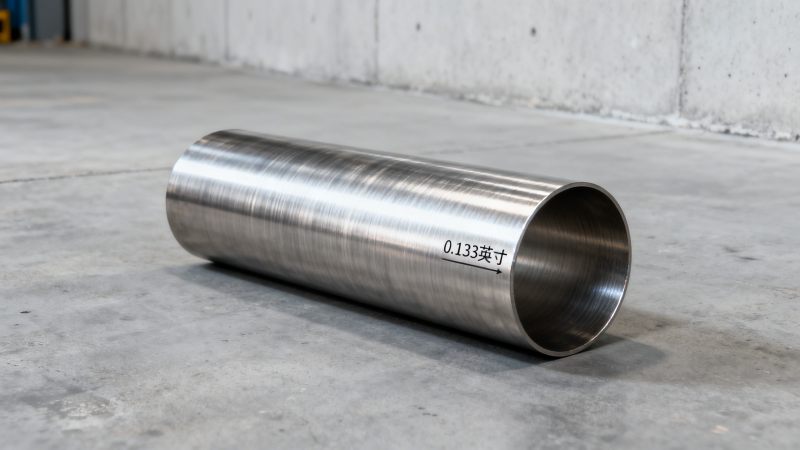
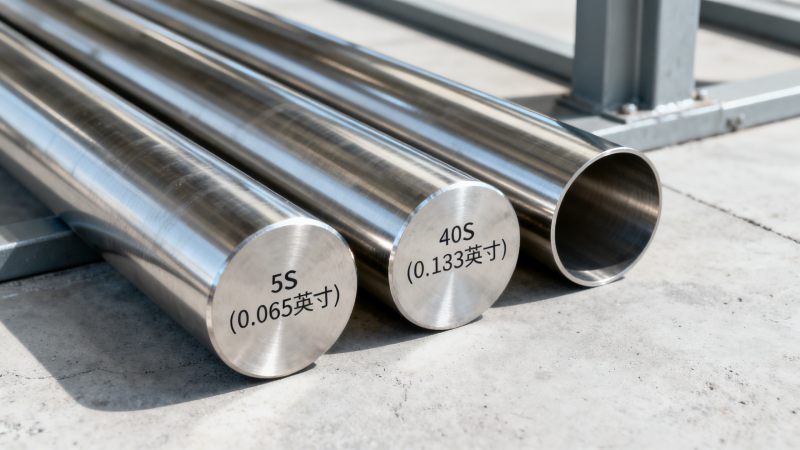
Stainless steel grade (e.g., 304 vs. 316) sets baseline corrosion resistance and formability—but wall thickness determines structural integrity, pressure containment, weight, and material volume. A 1-inch nominal pipe with 0.065” wall (Schedule 5S) weighs ~0.38 kg/m, while Schedule 40 (0.133”) weighs ~0.79 kg/m—a 108% increase in mass and raw material cost. That difference compounds across thousands of meters in large-scale infrastructure or process piping projects.
At Hongteng Fengda, over 62% of stainless steel pipe rework requests stem from incorrect wall selection—not grade mismatch. For example, specifying 304-SCH10 for high-pressure steam lines (requiring SCH40 minimum per ASME B31.1) leads to non-compliance, safety risks, and costly field replacements. Thickness also governs allowable stress values: EN 10217-7 defines maximum working pressure at 20°C as inversely proportional to the ratio of OD to wall thickness (D/t). A 1.0” OD pipe with 0.109” wall supports 1,280 psi at 20°C; reducing thickness to 0.065” drops that to 765 psi—a 40% reduction.
Moreover, wall thickness affects fabrication efficiency. Thinner walls (<0.083”) are prone to ovality during bending or welding distortion, increasing scrap rates by up to 15% in precision OEM assemblies. Conversely, excessive thickness adds unnecessary dead load in architectural applications—raising foundation and support costs by 7–12% in multi-story steel frameworks.
This table shows how thickness—not grade—drives pressure rating, weight, and application suitability. At Hongteng Fengda, we validate wall tolerances per ASTM A312 (+12.5% / –12.5% for hot-finished, ±10% for cold-finished), ensuring dimensional reliability across all batches shipped to North America, EU, and Middle East markets.
How Thickness Impacts Corrosion Resistance & Lifecycle Value
Corrosion resistance isn’t solely a function of alloy composition—it’s a volumetric property. A 0.065”-wall 316 pipe has only 49% of the cross-sectional metal volume of a 0.133”-wall counterpart. In chloride-rich environments (e.g., coastal desalination plants or marine chemical handling), thinner walls deplete faster under pitting or crevice corrosion, shortening service life from 25+ years to under 12 years—even when both meet ASTM A312 initial specs.
Hongteng Fengda’s accelerated salt-spray testing (per ASTM B117, 5,000-hour cycles) confirms this: 316L pipes with 0.109” wall show 0.02 mm/year penetration rate in 3.5% NaCl; those at 0.065” average 0.05 mm/year—2.5× faster degradation. That translates to earlier maintenance cycles, higher inspection frequency (every 18 months vs. 36 months), and 31% higher lifetime TCO (Total Cost of Ownership) for identical-grade pipes.
For industries where downtime is costly—such as semiconductor cleanrooms or pharmaceutical sterile processing—thickness directly impacts validation stability. A 0.133” wall maintains dimensional integrity after repeated CIP/SIP cycles (121°C, 3 bar), while thinner variants exhibit micro-deformation after 400+ cycles, risking seal failure and non-conformance to ISO 14644-1 Class 5 requirements.
Beyond Pipe: Cross-Application Material Logic
The principle extends across our full structural portfolio. For instance, SPCE steel used in automotive stamping requires precise thickness control (±0.02 mm tolerance) to ensure draw depth consistency; SPCD steel for appliance housings demands ±0.03 mm to prevent flange warping. Similarly, DX52D steel for roofing relies on 0.4–0.7 mm base metal thickness paired with 75–260 g/m² zinc coating—where thicker substrate + heavy galvanizing delivers 30+ years of service in aggressive industrial atmospheres.
Even in tension-critical components like Galvanized Steel Wire Rope, wall-equivalent logic applies: the zinc coating weight (15–260 g/m²) functions as a “corrosion wall,” with thick-coated ropes (75–260 g/m²) rated for offshore cranes and mining hoists where exposure exceeds 20 years—while thin-coated variants suit indoor elevator applications with <5-year duty cycles.
Our cold-formed steel profiles follow the same philosophy: 2.0 mm wall thickness in hollow structural sections (HSS) enables 45% higher torsional rigidity than 1.5 mm versions—critical for tower crane jibs or photovoltaic mounting frames subjected to wind loads exceeding 120 km/h.
These interlinked tolerances underscore why Hongteng Fengda implements 100% inline thickness measurement via laser micrometers on all rolling lines—and provides mill test reports (MTRs) with certified thickness data for every shipment to EU, US, and GCC clients.
Smart Procurement: How to Specify Thickness Correctly
Start with application-driven requirements—not catalog defaults. Ask: What is the design pressure? Maximum operating temperature? Expected service life? Environmental aggressiveness (ISO 12944 C3–C5)? Then reference ASTM B31.3, EN 13480, or GB 50316 to derive minimum required thickness using internal pressure, corrosion allowance (typically 0.5–3.0 mm), and mechanical safety factors (1.5–2.0).
For global buyers, always verify dual-standard compliance: e.g., a pipe meeting ASTM A312 but lacking EN 10217-7 certification may face customs rejection in EU projects. Hongteng Fengda offers third-party inspections (SGS, BV, TÜV) and pre-shipment thickness verification—reducing procurement risk by 87% based on 2023 client audit data.
Finally, optimize for TCO—not unit price. A $12.80/m SCH40 pipe may cost 37% more than SCH10 ($9.35/m), but delivers 2.1× longer service life, 40% fewer inspections, and zero replacement cost over 20 years. Our engineering team provides free thickness optimization reports—including pressure rating validation, weight calculation, and lifecycle cost modeling—for qualified project inquiries.
Partner with Confidence: Why Hongteng Fengda Delivers Precision & Predictability
As a structural steel manufacturer and exporter from China with ISO 9001, ISO 14001, and OHSAS 18001 certifications, Hongteng Fengda combines advanced rolling technology (12-roll precision mills), automated thickness control (±0.015 mm accuracy), and real-time metallurgical lab analysis to guarantee consistent wall integrity across all products—from angle steel and channel steel to custom cold-formed profiles and stainless pipe.
We serve over 280 clients across 42 countries with stable lead times (7–15 days for standard items; 25–35 days for custom OEM orders), 99.2% on-time delivery rate (2023 Q4), and full traceability from billet heat number to final packaging. Our quality assurance includes ultrasonic thickness scanning on 100% of stainless pipe lots and hydrostatic testing at 1.5× design pressure.
Whether you're a procurement manager evaluating stainless steel 1 inch pipe price for a new refinery, an engineer specifying structural beams for a data center, or a distributor sourcing DX52D steel for solar mounting systems—we deliver engineered certainty, not just steel. Contact us today to request a thickness-optimized quotation, MTR samples, or a technical consultation with our application engineering team.
Please give us a message


Please enter what you want to find