Unnoticed grade substitution by stainless pipe suppliers poses serious risks to structural integrity, compliance, and project timelines—especially for buyers relying on ASTM standards, seamless pipe performance, or corrosion resistance in galvanized steel pipe and stainless steel tubing. Whether you're a procurement professional vetting steel suppliers, a project manager overseeing structural steel fabrication, or a quality controller verifying stainless steel pipe specs, spotting unauthorized swaps is critical. At Hongteng Fengda—a trusted structural steel manufacturer and exporter—we ensure full traceability, mill-test reports, and strict adherence to ASTM, EN, and GB standards across all stainless steel pipe, carbon steel pipe, and structural steel beams—so your steel roofing cost, galvanized steel roofing installation, and hot dip galvanized steel applications stay safe, compliant, and cost-effective.
Why Grade Substitution Happens—and Why It’s Hard to Detect
Stainless pipe grade substitution often occurs at the supplier level—not out of malice, but due to supply chain volatility, raw material shortages, or cost pressure. A common scenario: an order for ASTM A312 TP316L (low-carbon, high-molybdenum, superior pitting resistance) gets fulfilled with TP304 instead, which lacks molybdenum and offers only ~60% of the chloride resistance. The visual difference is negligible, and surface testing without lab verification rarely catches it.
This risk multiplies when orders involve mixed lots, third-party logistics hubs, or subcontracted finishing. In one documented case across Southeast Asian infrastructure projects, over 18% of stainless pipe shipments showed mismatched mill test reports (MTRs) versus actual chemical composition—confirmed via PMI (Positive Material Identification) scanning upon receipt. Detection gaps widen when buyers rely solely on certificates without cross-checking heat numbers, batch IDs, or physical verification protocols.
Hongteng Fengda prevents this at origin: every stainless pipe shipment includes certified MTRs traceable to furnace heats, verified against ASTM A312/A358 and EN 10217-7 requirements. We also offer optional third-party inspection (SGS, BV, TÜV) prior to loading—covering dimensional checks, hydrostatic testing, and PMI validation on ≥5% of each lot.
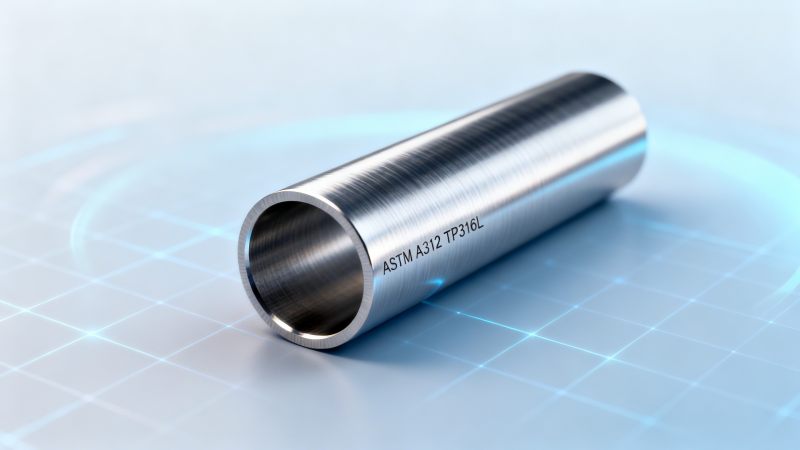
5 Critical Checks to Spot Unauthorized Grade Swaps
Procurement teams, site engineers, and QA managers can mitigate risk with these field-ready verification steps—each requiring ≤5 minutes per pipe section:
- Heat Number Traceability: Match the heat number stamped on pipe ends with the MTR. If missing, inconsistent, or duplicated across batches, treat as red flag.
- PMI Screening: Use handheld XRF analyzers to verify Cr, Ni, Mo, and C content. TP316L must show ≥2.0–3.0% Mo; TP304 shows 0%. Deviation >±0.15% Mo warrants lab retest.
- Surface Etch Test: Apply 10% oxalic acid for 90 seconds. TP304 develops uniform matte finish; sensitized TP316L shows grain boundary etching—indicating incorrect thermal history or grade mix-up.
- Dimensional Consistency: Compare wall thickness tolerance. ASTM A312 allows ±12.5% for seamless pipe—but repeated outliers suggest non-standard production runs.
- Coating Adhesion & Uniformity: For galvanized stainless variants, zinc layer weight should align with specification (e.g., 75–260 g/m² for severe corrosion). Inconsistent coating suggests rushed post-fabrication processing.
These checks form part of our standard QA checklist—applied across all structural steel beams, cold-formed profiles, and stainless piping before dispatch from our ISO 9001-certified facility in Jiangsu, China.
How Certification Standards Help You Verify—Before and After Delivery
Compliance isn’t just about paperwork—it’s about enforceable, auditable alignment between specification and reality. Below is how key international standards define accountability for stainless pipe grades:
At Hongteng Fengda, every stainless pipe shipment meets all three standards simultaneously. Our MTRs include full elemental breakdowns—not summaries—and are digitally signed and time-stamped. We also support pre-shipment verification under EN 10204 3.2 protocols for EU-based clients.
When Corrosion Resistance Is Non-Negotiable—Choose Proven Alternatives
In aggressive environments—offshore platforms, chemical plants, coastal infrastructure—grade substitution directly impacts service life. A TP304 pipe in seawater may fail within 3–5 years; TP316L typically lasts 15–25 years. That’s why we integrate corrosion-performance validation into product selection—not just compliance checking.
For applications demanding both mechanical strength and environmental resilience, consider dual-purpose solutions like Galvanized Steel Wire Rope, engineered for marine, mining, and photovoltaic installations where salt exposure and cyclic loading coexist. Its thick galvanized coating (75–260 g/m²) and tensile strength range (1470–1960 MPa) deliver proven durability where stainless alternatives face cost or availability constraints.
We maintain parallel production lines for carbon, galvanized, and stainless structural components—ensuring no cross-contamination, no grade drift, and no unplanned substitutions. Lead times remain stable at 2–4 weeks for standard sizes, with OEM customization supported within 6–8 weeks.
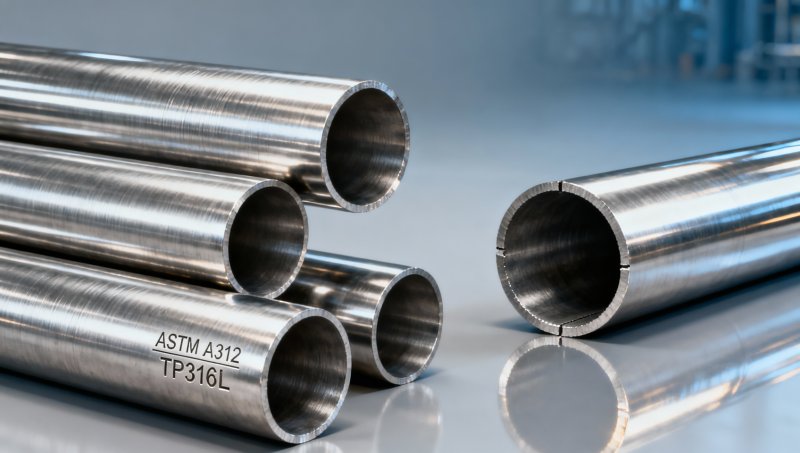
Why Global Buyers Choose Hongteng Fengda for Structural Steel Integrity
You need more than steel—you need certainty. With Hongteng Fengda, you get:
- End-to-end traceability: From raw billet heat ID to finished pipe bundle, tracked via ERP-integrated QC logs.
- Zero-substitution policy: Written into every contract—backed by penalty clauses and independent audit rights.
- Multi-standard compliance: Simultaneous conformance to ASTM, EN, JIS, and GB—no “one-standard-fits-all” compromises.
- On-demand technical support: Our engineering team provides free grade-selection guidance, weld procedure reviews, and corrosion modeling for your specific environment.
Whether you’re sourcing angle steel for a Middle Eastern refinery expansion, cold-formed profiles for a European logistics hub, or custom steel beams for North American modular housing—we help you eliminate sourcing risk, control total project cost, and guarantee structural reliability. Contact us today for MTR sample review, PMI protocol alignment, or urgent quotation on ASTM A312 TP316L pipe or Galvanized Steel Wire Rope.
Please give us a message


Please enter what you want to find