Stainless Steel Tube Manufacturer Selection Criteria: From Mill Certifications to Traceability Systems
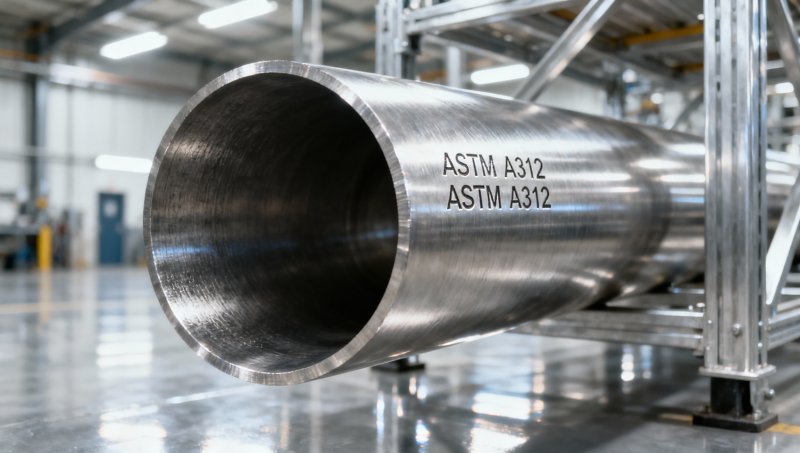
Selecting the right stainless steel tube manufacturer isn’t about comparing catalogues or chasing the lowest unit price. For procurement professionals managing large-scale construction, energy, or industrial projects—especially those with cross-border supply chains—the real cost lies in material failure, project delay, or compliance rejection. A tube that meets nominal chemical composition but lacks traceable heat treatment records can trigger rework on site; a mill test report (MTR) stamped “conforms to ASTM A312” without batch-level linkage to actual production logs offers little assurance when weld integrity is mission-critical.
The distinction between *certified* and *traceable* is where procurement risk concentrates—and where most sourcing decisions go wrong.
Mill certifications alone don’t guarantee consistency across heats, shifts, or even coils within the same order. ASTM A312, EN 10217-7, or GB/T 12771 define mechanical and chemical requirements—but they say nothing about how rigorously those requirements were verified per heat, whether non-destructive testing (NDT) was performed on 100% of the lot, or whether dimensional tolerances were measured at three points along each tube—not just at one end. Without granular, auditable evidence tied to physical material, certification becomes administrative theatre.
Procurement teams often treat MTRs as static documents: received, filed, and assumed valid. In practice, their value depends entirely on two variables—origin and linkage. An MTR from a mill-certified facility loses weight if it’s issued by a trading company acting as intermediary, not the producer. And even a genuine mill-issued MTR is functionally useless if it doesn’t map to the specific heat number, coil ID, and finishing date marked on the tube itself—or if that marking is laser-etched versus hand-stamped (the latter being prone to transcription error or omission during repackaging).
Traceability systems bridge this gap—but not all systems are equal. Basic QR-code labels linking to PDF MTRs satisfy minimal compliance for low-risk applications. But for pressure-containing components, offshore platforms, or pharmaceutical process piping, procurement must verify whether the system captures *process history*: annealing temperature profiles logged in real time, pickling bath chemistry records, ultrasonic testing parameters per section, and operator sign-offs at each quality gate. Systems that only store final test results—without timestamps, equipment IDs, or calibration status of measuring tools—cannot support root-cause analysis when a tube fails hydrotesting.
Certification scope matters more than certificate count. A manufacturer holding ISO 9001, ISO 14001, and CE FPC may still lack EN 10217-7 Annex ZA compliance for structural applications—or fail to maintain ASTM A312’s supplementary requirement S5 (for ferritic grades requiring intergranular corrosion testing). Procurement should audit not just *which* standards are listed on a certificate, but *how* conformance is demonstrated: Are third-party inspections conducted per heat? Is NDT performed by Level II personnel certified to ISO 9712—and are their credentials validated annually, not just upon hiring?
Material origin introduces another layer of cost sensitivity. Tubes sourced via Chinese mills often carry lower landed costs—but only if the procurement team has verified upstream control. Does the mill own its billet production, or rely on external suppliers with inconsistent chromium/nickel ratios? Are raw material certificates retained for ≥10 years, aligned with ASME BPVC Section II requirements? Unverified billet sourcing explains why some batches pass tensile tests but fail bend tests: microstructural inconsistencies invisible in standard MTRs become apparent only after cold forming.
Supply chain transparency directly affects total cost of ownership. A supplier offering “full traceability” but requiring 72-hour lead time to generate batch-specific documentation adds hidden project scheduling risk. Conversely, manufacturers with integrated ERP-MES systems can auto-generate MTRs, heat maps, and dimensional reports within minutes of final inspection—reducing engineering review cycles and enabling just-in-time quality audits before shipment. This capability isn’t reflected in quotes—but it eliminates weeks of document chasing and third-party verification delays.
OEM flexibility also carries procurement implications beyond customization. When tubes require special end finishes (bevel angles, threading per API RP 5B), or dual-certification (e.g., ASTM A312 + PED 2014/68), the ability to adjust production parameters mid-run—without requalifying entire lots—reduces minimum order quantities and avoids costly overstocking. But that flexibility demands robust internal change control: documented procedure revisions, recalibrated tooling logs, and updated MTR templates. Procurement should request evidence of recent OEM job files—not just capability statements.
Quality control depth—not just breadth—determines long-term cost. A factory performing visual inspection, dimensional checks, and hydrotesting on 100% of tubes may still miss subsurface defects if ultrasonic testing is limited to sample-based frequency (e.g., 1 in 20). For critical applications, full-length UT with automated scanning and stored A-scan data allows retrospective analysis if field issues arise. That level of inspection requires calibrated equipment, trained operators, and archived raw data—not just pass/fail stamps.
Logistics reliability intersects with technical assurance. Tubes shipped loose in open containers risk surface damage affecting passive layer formation; improper bundling induces residual stress impacting weldability. A manufacturer’s packaging protocol—validated through salt-spray testing of post-shipping samples—should be part of the technical evaluation, not just the commercial terms. Similarly, export documentation accuracy (HS codes, origin declarations, REACH/ROHS compliance statements) prevents customs delays that inflate landed cost more than any factory price differential.
 For procurement teams evaluating suppliers across Asia, particularly China-based producers, the question isn’t whether certifications exist—but whether they’re embedded in daily operations. Hongteng Fengda, for example, maintains direct mill relationships with stainless steel producers compliant to ASTM, EN, and GB standards—and applies its own layer of quality gates: incoming billet verification, in-process UT scanning, and final batch-level documentation aligned to customer-specified reporting formats. Its traceability system links heat numbers to furnace logs, cooling rates, and finished tube markings—enabling full reconstruction of processing history within 4 hours of request. This isn’t theoretical capability; it’s operationalized in repeat orders for North American water infrastructure and European district heating networks where replacement timelines carry contractual penalties.
That same operational discipline extends to structural products where dimensional fidelity and metallurgical consistency impact load-bearing performance. Steel Sheet Piles, for instance, require uniform yield strength across 80-meter lengths to ensure predictable soil penetration—yet many suppliers treat them as commodity items, applying batch-level MTRs without verifying longitudinal property variation. Procurement teams specifying S355 or ASTM A690 grades must confirm whether tensile testing was conducted at multiple positions along the pile length—not just at mid-span.
Ultimately, stainless steel tube selection comes down to how much uncertainty the project can absorb. If a delayed commissioning date triggers liquidated damages, or field welding failures require cutting out and replacing hundreds of meters, then the “premium” for verifiable traceability and process-integrated certification isn’t cost—it’s insurance. The most expensive tube isn’t the one with the highest quoted price. It’s the one that forces rework, delays, or safety review—because its documentation couldn’t answer the question: *What exactly happened to this piece of metal, and when?*
For procurement teams evaluating suppliers across Asia, particularly China-based producers, the question isn’t whether certifications exist—but whether they’re embedded in daily operations. Hongteng Fengda, for example, maintains direct mill relationships with stainless steel producers compliant to ASTM, EN, and GB standards—and applies its own layer of quality gates: incoming billet verification, in-process UT scanning, and final batch-level documentation aligned to customer-specified reporting formats. Its traceability system links heat numbers to furnace logs, cooling rates, and finished tube markings—enabling full reconstruction of processing history within 4 hours of request. This isn’t theoretical capability; it’s operationalized in repeat orders for North American water infrastructure and European district heating networks where replacement timelines carry contractual penalties.
That same operational discipline extends to structural products where dimensional fidelity and metallurgical consistency impact load-bearing performance. Steel Sheet Piles, for instance, require uniform yield strength across 80-meter lengths to ensure predictable soil penetration—yet many suppliers treat them as commodity items, applying batch-level MTRs without verifying longitudinal property variation. Procurement teams specifying S355 or ASTM A690 grades must confirm whether tensile testing was conducted at multiple positions along the pile length—not just at mid-span.
Ultimately, stainless steel tube selection comes down to how much uncertainty the project can absorb. If a delayed commissioning date triggers liquidated damages, or field welding failures require cutting out and replacing hundreds of meters, then the “premium” for verifiable traceability and process-integrated certification isn’t cost—it’s insurance. The most expensive tube isn’t the one with the highest quoted price. It’s the one that forces rework, delays, or safety review—because its documentation couldn’t answer the question: *What exactly happened to this piece of metal, and when?*
Previous page: Already the first one
Next page: Already the last one
Please give us a message


Please enter what you want to find