Stainless steel square tube prices can vary widely, and understanding quote gaps is essential for better cost control and lower sourcing risk. Material grade, wall thickness, finish, tolerances, order volume, packaging, and supplier capability all affect the final number. When buyers compare offers only by unit price, hidden differences often lead to higher total cost. This article explains how to review stainless steel square tube prices with a practical, structured approach.
Why stainless steel square tube prices differ so much
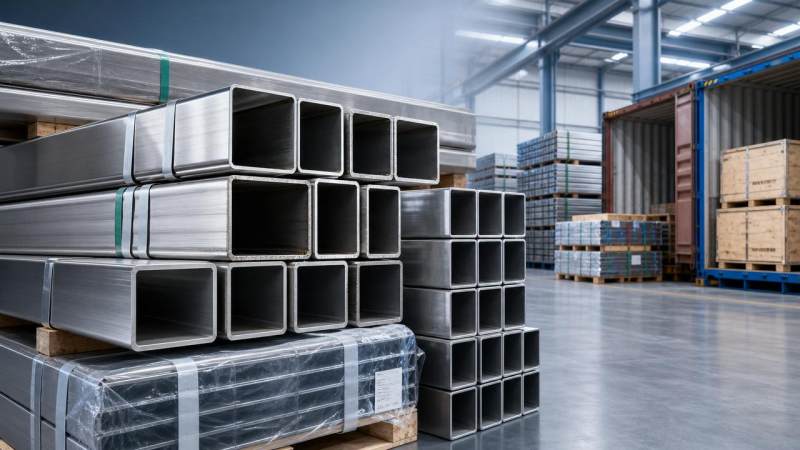
Not every quotation covers the same product scope. Two suppliers may both offer stainless steel square tube prices, yet one includes tighter tolerances, better finish, and export packaging, while the other does not.
In steel sourcing, small specification changes create visible price differences. A change in grade, polishing level, weld quality, testing, or delivery term can quickly move the quote up or down.
A checklist-based review helps separate real value from misleadingly low offers. It also improves communication, reduces re-quoting time, and supports more accurate supplier comparison.
Key points to check before comparing stainless steel square tube prices
Use the following points to compare quotations fairly. Each item affects stainless steel square tube prices directly or indirectly.
- Confirm the exact stainless steel grade, such as 201, 304, 316, or duplex, because corrosion resistance, nickel content, and raw material cost strongly affect quoted tube prices.
- Check outer size, wall thickness, and length carefully, since even a small thickness increase changes weight per meter and raises stainless steel square tube prices noticeably.
- Review manufacturing method, including welded or seamless options, because process complexity, forming quality, and application requirements influence both price level and lead time.
- Verify surface finish requirements such as mill finish, brushed, polished, or decorative treatment, because extra polishing steps add labor, inspection time, and packaging cost.
- Ask about tolerance standards for straightness, thickness, squareness, and length, since tighter tolerances mean stricter production control and usually higher stainless steel square tube prices.
- Confirm whether the quote includes testing, material certificates, and compliance with ASTM, EN, JIS, or GB standards, because documentation and inspection carry real cost.
- Compare delivery terms such as EXW, FOB, CFR, or DDP, since freight responsibility, local charges, and customs handling can create a large gap between quotations.
- Review minimum order quantity and batch size, because small orders often have higher conversion cost, lower mill efficiency, and less favorable freight allocation.
- Check packaging details, including plastic protection, bundles, wooden cases, and seaworthy packing, because better export protection can reduce damage but increase the quote.
- Evaluate supplier production capacity and stability, since consistent quality, reliable lead times, and lower claim risk often justify a higher but safer quotation.
How raw materials shape stainless steel square tube prices
Raw material cost is usually the biggest pricing driver. Nickel, chromium, molybdenum, and scrap market movements directly influence stainless steel square tube prices.
For example, 316 square tube normally costs more than 304 because molybdenum improves corrosion resistance. Likewise, 304 generally costs more than 201 due to higher nickel content and broader application value.
Price timing matters too. A quote based on one week’s raw material level may differ from another issued after a sharp alloy surcharge change.
Quick material review
- 201: lower cost, limited corrosion performance in demanding environments.
- 304: common balance of performance, availability, and cost.
- 316: better marine and chemical resistance, higher price.
Different application needs change quote logic
Application use should guide quote evaluation. The best stainless steel square tube prices are not always the lowest. They should match the technical and environmental requirement.
Construction and architectural use
Visible installations often require good surface quality, consistent color, and accurate straightness. Decorative polishing and better packaging may raise the quotation.
For structural or support frames, thickness tolerance and weld integrity matter more than mirror finish. The quote should reflect the true performance priority.
Industrial equipment and fabrication
Machining, welding, and assembly projects often need dimensional consistency and reliable material certificates. Slightly higher stainless steel square tube prices may reduce downstream rework.
If the tube enters automated fabrication, stable length and low distortion become more important than a low initial unit cost.
Marine or corrosive environments
Coastal, chemical, or humid exposure usually requires stronger corrosion resistance. In these cases, 316 or higher-performance material may offer better lifecycle value.
Lower stainless steel square tube prices can become expensive later if corrosion causes replacement, shutdown, or warranty problems.
Commonly missed items that distort stainless steel square tube prices
Some quote differences come from missing details rather than real savings. These are often discovered too late.
Actual thickness versus nominal thickness
A lower quote may use thinner actual wall thickness within a broad tolerance. Weight, strength, and total delivered metal content can be lower than expected.
Certification and traceability
Material test reports, heat number traceability, and third-party inspection may not be included. Adding them later changes stainless steel square tube prices and delivery time.
Weld seam quality
For welded tube, seam treatment quality matters. Better weld control improves consistency but increases production cost.
Packaging and transit protection
Low-priced offers sometimes exclude protective film, end caps, or seaworthy packing. Damage risk during export can erase any apparent savings.
Practical steps to compare quotes accurately
- Prepare one unified specification sheet for all suppliers.
- List grade, size, thickness, finish, standard, quantity, tolerance, and destination port.
- Request price validity period and raw material basis date.
- Ask for included and excluded items in writing.
- Convert all offers to the same trade term before comparison.
- Compare by total landed cost, not only price per ton.
- Review quality risk, lead time risk, and claim handling support.
If possible, create a simple comparison table covering price, grade, actual thickness, finish, certification, lead time, packaging, and payment term. This makes quote gaps easier to explain internally.
What a reliable steel supplier should clarify
A dependable structural steel supplier should explain quote assumptions clearly, not only send a number. Transparent details reduce sourcing errors and shorten decision cycles.
Hongteng Fengda, a structural steel manufacturer and exporter from China, supports global construction, industrial, and manufacturing projects with stable production, strict quality control, and customized solutions aligned with ASTM, EN, JIS, and GB standards.
Beyond stainless products, project sourcing often includes carbon or galvanized steel items for towers, highways, building components, or industrial fabrication. In such mixed procurement, clear specification control across all materials is equally important.
For example, Galvanized Round Steel can be used in electric power towers, communication towers, railway works, highway protection, street light poles, marine components, and steel structure parts.
Available in DC01 with diameter 16-250mm or customized sizes, it offers hot galvanizing anti-corrosion protection, tensile strength of 570-820 MPa, multiple heat treatment options, and compliance with AiSi, ASTM, BS, GB, JIS, EN, and AS standards.
Final takeaways on stainless steel square tube prices
Stainless steel square tube prices vary because quotations rarely represent identical products, services, and risks. The lowest figure may reflect thinner walls, looser tolerances, missing certification, or weaker delivery support.
The best way to evaluate stainless steel square tube prices is to standardize requirements, compare equivalent trade terms, and review total cost together with quality assurance.
Start with a detailed specification sheet, request transparent inclusions, and confirm material, finish, testing, and packaging before approving any order. That process leads to more accurate quotes and more reliable project outcomes.
Please give us a message


Please enter what you want to find