Choosing the right stainless steel square bar supplier is critical before placing bulk orders, especially for projects that also involve stainless steel pipe wholesale, angle stainless steel supplier sourcing, and steel angle for construction. This guide explains the essential checks buyers, engineers, and project managers should make to reduce quality risks, control costs, and ensure every order meets international standards and project requirements.
Why supplier checks matter before bulk stainless steel square bar orders
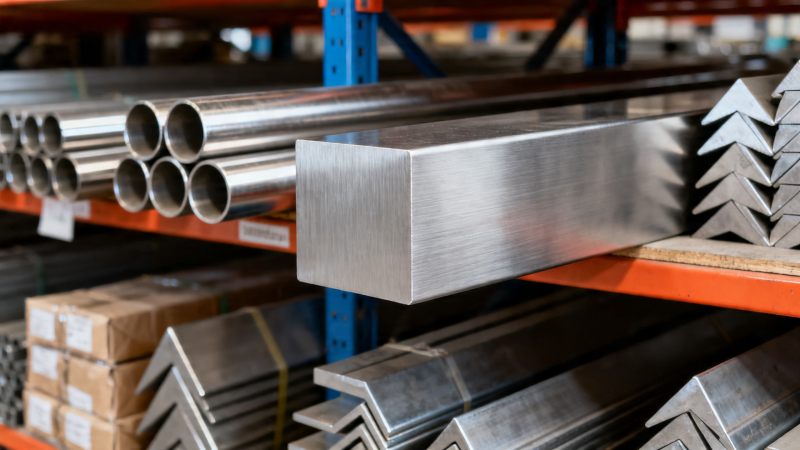
In steel procurement, a bulk order is never just about unit price. For stainless steel square bar, one weak point in material traceability, dimensional control, packing, or delivery coordination can create site delays, rework, and hidden cost escalation. This is even more important when the same project also includes stainless steel pipe wholesale packages, angle stainless steel supplier comparisons, and steel angle for construction under one purchasing plan.
Different stakeholders also judge risk differently. Engineers focus on grade consistency, tolerances, and standards. Procurement teams compare lead time, MOQ, and payment terms. Quality control and safety personnel want inspection records and batch traceability. Finance teams care about total landed cost over a 2–4 week procurement cycle rather than only the ex-works price. Project managers need reliable shipment timing to match fabrication and installation windows.
A capable supplier should therefore support at least 5 key checkpoints: specification review, manufacturing capability, quality assurance, export execution, and after-sales response. In structural and industrial steel projects, missing any one of these checks can affect cutting accuracy, welding performance, corrosion resistance expectations, and final assembly efficiency. Good supplier screening reduces sourcing risk long before material reaches the warehouse or jobsite.
For global buyers, supplier capability is also linked to standards familiarity. A supplier serving North America, Europe, the Middle East, and Southeast Asia should understand common references such as ASTM, EN, JIS, and GB, and be able to map them against project requirements. This does not mean every grade is interchangeable, but it does mean communication becomes faster, clearer, and less error-prone during technical review.
Who benefits most from a structured supplier review?
- Technical evaluators who need to confirm material grade, tolerance range, surface condition, and application fit before approval.
- Purchasing and commercial teams comparing 3–5 quotations with different delivery promises, inspection scope, and logistics terms.
- Project managers coordinating mixed steel packages where square bar, beams, channels, and angle products must arrive in sequence.
- Distributors and resellers that require stable supply, repeatable quality, and fewer customer complaints after resale.
What should buyers verify first: specifications, tolerances, and production fit?
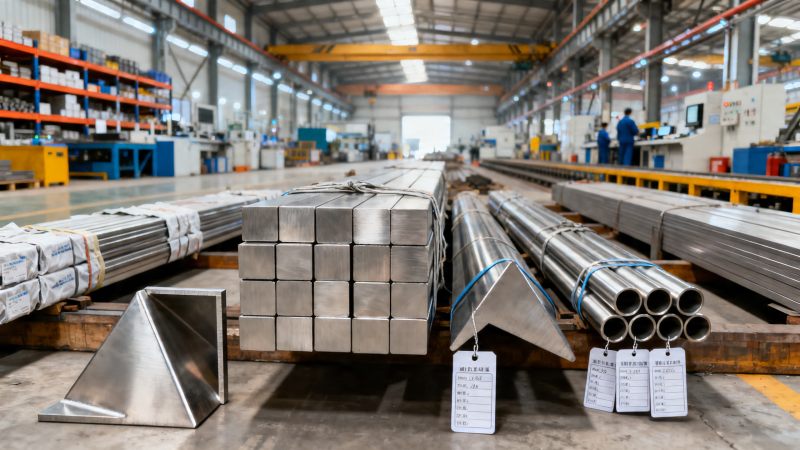
The first check is not the quotation sheet. It is specification clarity. Many bulk order problems start when the buyer requests “stainless steel square bar” without locking the exact grade, size range, length, surface finish, straightness expectations, testing scope, and end use. A supplier can only quote accurately when the technical package is complete. For repeat orders, even a small difference such as cut length tolerance or edge condition may change processing time and reject rate.
As a practical rule, buyers should confirm at least 6 technical items before comparing offers: material grade, section size, length range, standard reference, inspection method, and packaging requirement. If the bars will be machined, welded, or polished after delivery, the supplier should know this early. It affects whether tighter dimensional control, surface protection, or special bundling is needed. In project supply, these details often matter more than a small price difference per ton.
Production fit is the second issue. Not every supplier that trades stainless steel square bar actually manufactures it or controls process quality directly. Buyers should ask whether the supplier is a factory, a processor, or a trading company coordinating multiple mills. Each model can work, but the risk profile changes. For example, direct production control usually helps when the order involves OEM dimensions, mixed structural steel packages, or tight shipment windows of 7–15 days for standard sizes.
Hongteng Fengda supports global structural steel sourcing with modern manufacturing facilities, strict quality control, and customized supply options for standard and OEM requirements. That matters for buyers who do not want separate vendors for angle steel, channel steel, steel beams, cold formed profiles, and related fabricated steel components. A more integrated supplier base often means clearer communication and better schedule control across multi-item orders.
Core technical checks before RFQ approval
The table below shows the most useful pre-order checks when evaluating a stainless steel square bar supplier for bulk procurement, especially when the purchase is linked with stainless steel pipe wholesale or steel angle for construction in the same project package.
This check structure helps both experienced buyers and new sourcing teams. It also creates a common review language between engineering, procurement, and quality departments. In practice, buyers who define these four areas before RFQ usually get cleaner quotations, faster approval, and fewer revision rounds during the first 3–7 working days of supplier engagement.
How to assess quality control, compliance, and related stainless steel products
The third supplier check is quality assurance discipline. A quotation may look competitive, but bulk orders require documented consistency. Buyers should ask how raw materials are identified, how dimensions are checked during production, and how finished goods are released. At minimum, there should be a traceable link between batch number, inspection record, and packing list. For international projects, this is especially important when multiple steel items are shipped together in one container or one contract lot.
It is also useful to evaluate whether the supplier can support adjacent stainless and structural steel needs. For example, a project may mainly require square bar, but procurement may also need sheet or coil for fabricated parts, guards, housings, or finishing components. In such cases, inserting one compatible stainless item into the same supplier discussion can reduce vendor management effort and improve schedule coordination.
For buyers needing austenitic stainless material in auxiliary applications, 202 Stainless Steel Coil can be relevant where good ductility, corrosion resistance, and toughness are needed in high and low temperature environments. Typical thickness is 2.5mm–10.0mm, width ranges from 610mm–2000mm, and common lengths include 2000mm, 2440mm, 3000mm, 5800mm, and 6000mm. Surface options such as BA, 2B, NO.1, NO.4, HL, and 8K can also support different fabrication and appearance requirements.
From a technical view, this coil grade offers tensile strength of at least 520 MPa, yield strength of at least 275 MPa, elongation around 55–60%, hardness up to 183HB or 100HRB, and density of 7.8 g/cm³. It is commonly used in medical equipment construction, chemical applications, food industry environments, kitchen supplies, transport components, bolts, nuts, springs, and screens. For procurement teams, the lesson is simple: a supplier that understands both structural steel and stainless product matching can often respond better when the bill of materials becomes more complex.
Compliance and inspection questions worth asking
- Can the supplier provide inspection documents aligned with the required standard and batch traceability for each shipment?
- Are dimensional checks performed during production, at final packing, or at both stages?
- What is the process for handling non-conforming material, replacement, or claim review after arrival?
- Can mixed orders covering square bar, steel angle for construction, and stainless accessories be packed with clear item segregation?
A practical supplier comparison view
The next table compares common supplier evaluation dimensions. It is helpful when your team is shortlisting 2–3 vendors for a large order and needs a more balanced view than price alone.
This comparison does not mean every project needs the highest service level. However, for bulk orders, complex specifications, or export deliveries across several regions, stronger process visibility often saves more money than a lower upfront quote. It reduces uncertainty in lead time, document preparation, customs coordination, and post-delivery claims.
How to control total cost, lead time, and delivery risk in bulk steel sourcing
Cost control in stainless steel square bar purchasing should be based on total acquisition cost, not only price per ton. Buyers should review at least 4 cost layers: material price, processing or cutting cost, packing and inland transport, and delivery risk cost. A low quotation can become expensive if bars arrive with poor dimensional consistency, unsuitable packing, or missing documents that delay customs clearance or site acceptance.
Lead time evaluation should also be realistic. Standard size production may move faster, while special lengths, tight tolerances, or mixed steel orders can extend the schedule. In many export situations, a practical planning range is 7–15 days for available or routine items and 2–4 weeks for more customized production, depending on specification complexity, quantity, and shipping arrangement. Buyers should ask suppliers to separate production time from shipping time instead of giving only one broad estimate.
Delivery risk often increases when procurement teams place urgent orders without confirming packing method, mark identification, or loading plan. Stainless products need appropriate protection to reduce transit scratches, moisture exposure, and item confusion during unloading. This is especially relevant when stainless steel square bar is loaded together with carbon structural steel components, steel angle for construction, or fabricated profiles in one shipment.
Hongteng Fengda supports buyers with stable production capacity and dependable lead times across structural steel categories. For project teams trying to reduce vendor fragmentation, that can simplify schedule management. Instead of coordinating several small suppliers with different communication speeds, buyers can consolidate more items under one technically responsive partner and reduce approval delays across procurement, QA, and logistics teams.
A 4-step bulk order control process
- Lock the specification sheet, including grade, dimensions, tolerance, finish, quantity range, and inspection requirements.
- Confirm production capability and delivery node visibility, including expected dates for manufacturing, packing, and shipment release.
- Review documents before dispatch, such as packing list, batch identification, test records, and any agreed export paperwork.
- Prepare arrival inspection criteria with 5 common checks: quantity, dimensions, surface condition, markings, and document consistency.
Common cost mistakes to avoid
The most common mistake is comparing unlike offers. If Supplier A includes tighter tolerance, better packing, and clearer documents while Supplier B does not, the two quotations are not truly comparable. Another mistake is ignoring the downstream processing effect. A square bar that is slightly cheaper but harder to machine or fit can increase labor cost, scrap, and installation delay. In B2B steel buying, cost control works best when finance and engineering evaluate the same data set.
FAQ: what do buyers, engineers, and distributors usually ask?
Frequently asked questions often reveal where procurement risk actually sits. In stainless steel square bar projects, the recurring issues are not only grade selection but also documentation, mixed-order coordination, and whether a supplier can respond quickly when field conditions change. The answers below address common concerns from technical evaluators, purchasing teams, project managers, distributors, and end users.
How do I choose between suppliers that offer similar prices?
Use 5 comparison points: standards understanding, dimensional control, batch traceability, delivery visibility, and claim response. If prices are close, the supplier with better process transparency usually creates fewer hidden costs. Ask for a sample document pack or previous inspection format. That will tell you more than a simple sales promise.
What lead time should I expect for a bulk order?
For standard items, buyers often plan around 7–15 days for preparation before shipment, while customized orders can require 2–4 weeks or longer depending on size range, quantity, and processing complexity. Always ask for separate confirmation of production time, packing time, and shipping arrangement so the schedule can be tracked in stages.
What documents matter most for quality approval?
The most useful documents are those that connect the delivered goods to the tested batch. In practical terms, buyers should verify heat or batch identification, relevant chemical and mechanical records, dimensional inspection data where agreed, and packing information that matches the shipment. These records support both pre-dispatch review and arrival inspection.
Can one supplier handle square bar together with angle steel and other structural products?
Yes, and this is often beneficial for project efficiency. When one supplier can support angle steel, channel steel, steel beams, cold formed profiles, and customized structural components, communication becomes simpler and coordination improves. This matters for distributors and project teams that want fewer purchase interfaces and more predictable delivery sequencing.
Why work with a China structural steel manufacturer and exporter for your next order?
For many international buyers, the best supplier is not simply the one with the lowest quote, but the one that can combine product understanding, production stability, and export execution. Hongteng Fengda operates as a professional structural steel manufacturer and exporter from China, serving construction, industrial, and manufacturing projects with reliable steel products and customized solutions. That is valuable when procurement decisions involve technical review, budget control, and schedule pressure at the same time.
The company’s strengths are especially relevant for buyers sourcing across multiple categories such as angle steel, channel steel, steel beams, cold formed steel profiles, and customized structural components. With compliance awareness covering ASTM, EN, JIS, and GB references, global buyers can discuss specification alignment more efficiently. Stable production capacity and consistent quality also help reduce sourcing uncertainty for repeat orders, dealer supply, and project-based purchasing.
If you are preparing a stainless steel square bar bulk order, the next step should be a structured technical and commercial review. You can consult on grade confirmation, size and tolerance matching, mixed product sourcing, expected lead time, packaging method, certification expectations, sample support, and quotation comparison. This makes the buying process faster for procurement teams and safer for technical and quality reviewers.
Contact us to discuss your project requirements in detail. We can help you check specifications, compare suitable steel products, plan delivery timing, review OEM or customized solutions, and align documentation with your project or market needs. Whether you are a contractor, distributor, manufacturer, or project owner, a clearer supplier review process can improve cost control and reduce procurement risk before the order is placed.
Please give us a message


Please enter what you want to find