When evaluating stainless steel pipe wholesale, the lowest quote rarely reflects the real total cost. For most buyers, the key question is not “Who is cheapest today?” but “Which supplier helps us control the full project cost with the least risk?” In practice, total cost is driven by far more than unit price: material grade accuracy, specification verification, processing tolerances, inspection standards, packaging, freight efficiency, delivery reliability, and the cost of defects or delays. For procurement teams, engineers, distributors, and project managers, understanding these cost drivers is the difference between a successful purchase and an expensive sourcing mistake.
What buyers really need to know before comparing stainless steel pipe wholesale quotes
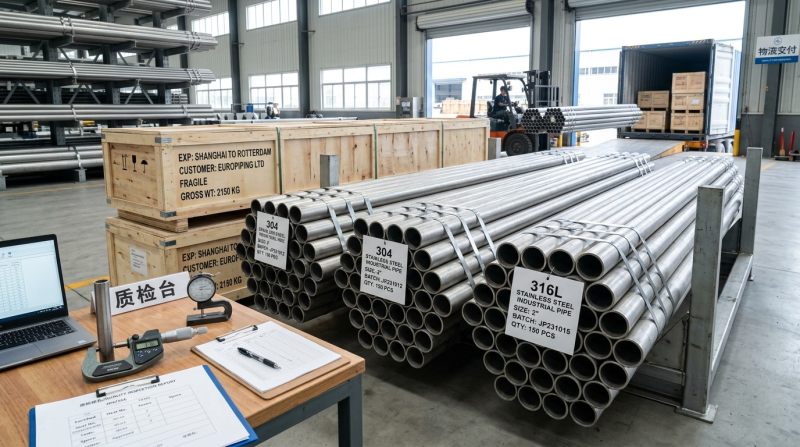
The core search intent behind “stainless steel pipe wholesale: what really drives the total cost” is practical decision support. Readers usually want to compare suppliers, understand why prices vary, and avoid hidden costs that appear after the order is placed. They are not just looking for a general introduction to stainless steel pipe. They want to know how to evaluate offers, where risks usually hide, and how to make a better purchasing decision.
For most target readers, the biggest concerns are:
- Why one stainless steel pipe wholesale offer is much lower than another
- How material grade and specification compliance affect budget and safety
- Whether logistics, packaging, and lead time can add major hidden cost
- How quality consistency impacts downstream fabrication and installation
- How to assess supplier reliability before committing to a bulk order
That means the most valuable content is not broad theory. It is a cost breakdown, risk analysis, and a clear buying framework that helps readers balance price, compliance, and long-term value.
The total cost of stainless steel pipe wholesale starts with material truth, not list price
The first and most important cost driver is whether the material delivered is exactly what was quoted. In wholesale stainless steel pipe purchasing, even a small mismatch in grade, chemistry, or wall thickness can create major downstream losses.
Buyers often focus on stainless steel pipe price per ton or per meter, but true material cost should be evaluated through these factors:
- Grade selection: 201, 304, 316, and other grades differ significantly in corrosion resistance, nickel content, and long-term suitability.
- Wall thickness and dimensional accuracy: Lower actual thickness may reduce supplier cost, but it can increase failure risk and non-compliance.
- Surface finish requirements: Annealed, pickled, polished, or industrial finish can change both production cost and usability.
- Standard compliance: ASTM, EN, JIS, and GB requirements must match the project or market need.
- Heat number and traceability: Missing traceability can create approval, warranty, and quality control problems.
If the supplier’s low quote depends on looser tolerances, lower-grade substitution, or incomplete test documentation, the savings are usually false savings. Rework, rejection, and field failure cost much more than the original price difference.
Specification checks and testing costs are often overlooked until problems appear
Many wholesale buyers assume that a pipe meeting the nominal size automatically meets project requirements. In reality, specification verification is one of the biggest hidden cost factors in steel sourcing.
Even when project teams mention standards such as ASTM A106 Gr.B in procurement conversations, the deeper issue is not the label itself but whether the ordered product truly matches the required mechanical properties, dimensions, and intended service conditions. Misapplied standards, incomplete MTCs, or vague technical communication can cause disputes, failed inspections, and replacement costs.
Important verification points include:
- Chemical composition reports
- Mechanical property test results
- Hydrostatic or nondestructive test records where applicable
- Outer diameter, wall thickness, and length tolerance checks
- Surface defect inspection
- Third-party inspection requirements
These checks may add an upfront cost, but they often reduce the much larger financial risk of non-conforming material entering production or installation.
Processing, fabrication, and installation efficiency can outweigh the initial purchase price
For fabricators, contractors, and end users, the delivered pipe is not the final cost. The ease or difficulty of downstream use matters just as much. Stainless steel pipe that arrives with poor straightness, unstable dimensions, inconsistent weldability, or damaged surfaces can slow production and increase labor cost.
This is where procurement and operations need to align. A slightly higher-priced pipe from a reliable stainless steel pipe exporter may reduce:
- Cutting waste
- Welding defects
- Fit-up issues during assembly
- Surface repair and polishing labor
- Installation delays on site
- Final inspection failures
For project-based buyers, these operational savings are often more important than a small difference in unit price. This is especially true in construction, industrial systems, and OEM manufacturing where schedule pressure is high.
Freight, packaging, and delivery terms can change the landed cost dramatically
In international stainless steel pipe wholesale, logistics is one of the biggest reasons that two similar quotations produce very different final costs. Buyers should calculate landed cost, not just ex-works or FOB price.
Key logistics cost drivers include:
- Incoterms: EXW, FOB, CFR, and CIF shift responsibility and total cost in different ways.
- Packaging method: Export-worthy bundling, end caps, waterproof wrapping, wooden cases, and container optimization affect both freight and damage rate.
- Loading efficiency: Poor container planning increases shipping cost per ton.
- Port location and inland transport: Distance from factory to port can materially affect price.
- Customs and compliance paperwork: Missing or incorrect documents can trigger delay charges and clearance problems.
- Lead time reliability: Delayed shipment can disrupt projects and generate indirect loss far beyond freight cost.
For distributors and project buyers, packaging quality also matters because transit damage creates replacement cost, customer complaints, and cash flow pressure.
Supplier reliability is a direct cost factor, not just a soft consideration
One of the most underestimated cost drivers in stainless steel pipe wholesale is supplier reliability. Many buyers treat it as a secondary issue after price, but in reality it directly affects total financial outcome.
A dependable supplier helps reduce sourcing risk through:
- Stable production capacity
- Consistent quality across batches
- Clear technical communication
- Accurate documentation
- Reliable lead times
- Fast issue resolution when problems occur
A low-cost supplier that cannot maintain consistency often creates expensive consequences: urgent replacement purchases, customer penalties, idle labor, project postponement, and reputation damage.
This is why many global buyers prefer working with manufacturers and exporters that have disciplined quality systems and familiarity with international standards such as ASTM, EN, JIS, and GB. The goal is not only to receive steel, but to receive steel that can be used with confidence.
How professional buyers compare quotes beyond price
If you are reviewing multiple stainless steel pipe wholesale offers, a structured comparison method is the best way to identify real value. Instead of selecting the cheapest quote immediately, compare suppliers across the following categories:
- Material compliance: grade, thickness, tolerances, standards, MTC completeness
- Manufacturing capability: equipment, process control, batch consistency
- Inspection system: in-house QC, third-party inspection support, traceability
- Commercial clarity: price basis, payment terms, quantity tolerance, claim terms
- Logistics readiness: packaging, loading plan, shipping support, documentation
- Delivery reliability: realistic production schedule, historical export performance
- After-sales response: problem handling speed and accountability
This approach helps technical evaluators, procurement staff, finance approvers, and business decision-makers align around measurable criteria rather than headline price alone.
A useful benchmark: apply the same total-cost thinking across steel categories
This total-cost logic is not limited to stainless steel pipe. In other steel products, the same pattern appears: technical fit, quality stability, delivery dependability, and export readiness often matter more than the lowest initial quote.
For example, buyers sourcing Rail products for railway systems, bridge railings, or deck handrail applications also need to evaluate dimensions, tolerances, material selection, coating condition, and delivery reliability. Available specifications may range from 4kg/m to 50kg/m and heavier profiles such as QU70, QU80, QU100, and QU120, with lengths from 12m to 30m and tolerances around ±1%. In these categories as well, reasonable price only creates value when matched with dependable quality, prompt delivery, and proper export execution.
How to reduce total stainless steel pipe sourcing cost without increasing risk
The best way to control total cost is not to force the lowest unit price. It is to reduce avoidable waste across the entire sourcing cycle. Buyers can do this by:
- Defining exact technical requirements before RFQ
- Asking suppliers to confirm standards, tolerances, and inspection scope in writing
- Requesting sample documents such as MTCs and inspection reports before order placement
- Comparing landed cost instead of factory price only
- Checking packaging and loading plans for export orders
- Evaluating consistency and communication quality, not just quotation speed
- Using trial orders or staged purchasing for new suppliers
For repeat buyers and distributors, long-term partnerships with reliable exporters often lower total cost more effectively than chasing the lowest market offer every cycle. Better forecasting, stable quality, and fewer disruptions usually produce stronger overall margins.
Final takeaway: the cheapest stainless steel pipe wholesale offer is rarely the lowest-cost choice
In stainless steel pipe wholesale, total cost is shaped by material accuracy, specification compliance, processing efficiency, logistics, supplier consistency, and risk exposure. The visible quote is only one layer of the real cost structure.
If your goal is better project control, fewer sourcing surprises, and stronger long-term value, evaluate suppliers through a total-cost lens. The right stainless steel pipe exporter should help you reduce defects, avoid delays, improve budget predictability, and support smoother project execution. In wholesale steel sourcing, that is where real savings are created.
Please give us a message


Please enter what you want to find