When sourcing stainless steel pipe wholesale, the final price depends on far more than size alone. Material grade, ASTM A106 Gr B mechanical properties, ASTM A106 Gr B chemical composition, production method, surface finish, order volume, and export logistics all influence total cost. For buyers comparing a stainless steel pipe manufacturer, stainless steel pipe supplier, or stainless steel pipe exporter, understanding these factors is essential to control budget, quality, and project risk.
What Really Changes Stainless Steel Pipe Wholesale Pricing?
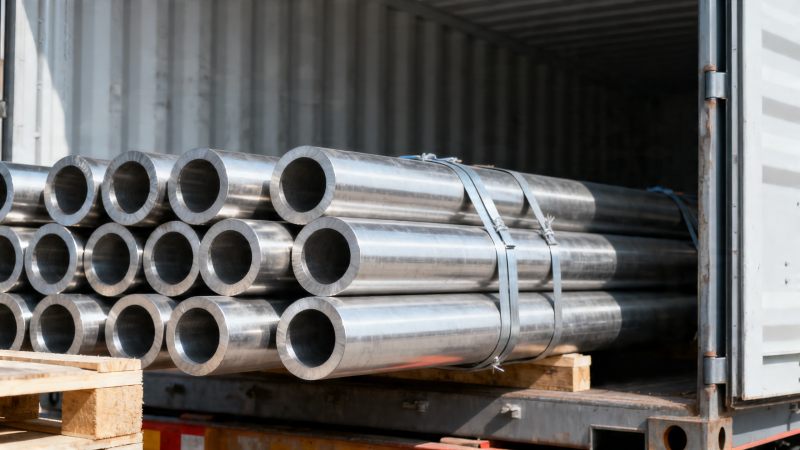
In steel procurement, the quoted price for stainless steel pipe wholesale is rarely a single-material issue. It is usually a combination of raw material cost, processing route, tolerance requirements, testing scope, packaging method, and shipping terms. A buyer comparing offers from three suppliers may see a gap of 5%–20%, even when the nominal size looks identical.
This matters to different stakeholders in different ways. Technical evaluators focus on grade suitability, corrosion behavior, and wall thickness consistency. Procurement teams focus on unit price, MOQ, and delivery schedule. Project managers care about whether the pipe arrives in 2–4 weeks or slips into 6–8 weeks. Finance teams look at total landed cost rather than the ex-works number alone.
For global buyers, export execution is another pricing driver. Freight volatility, port congestion, fumigation rules for wooden packaging, and destination inspection requirements can all add cost. A stainless steel pipe exporter with stable documentation, inspection coordination, and shipment planning may not always show the lowest line-item quote, but often reduces total procurement risk.
Hongteng Fengda operates in the broader steel supply chain as a structural steel manufacturer and exporter from China, serving construction, industrial, and manufacturing buyers across North America, Europe, the Middle East, and Southeast Asia. That export experience matters because many of the same pricing disciplines apply across steel categories: standard compliance, stable production, consistent quality control, and dependable lead times.
The 6 cost drivers buyers should verify first
- Material grade and alloy content, because nickel, chromium, and molybdenum levels can change the raw material baseline significantly.
- Production method, such as seamless versus welded, and whether the process requires tighter dimensional control.
- Surface finish and secondary processing, including pickling, polishing, beveling, threading, or custom cutting.
- Inspection and certification scope, from basic mill test reports to third-party verification and destination-specific documents.
- Order quantity and batch planning, because small lots usually carry higher conversion cost per ton or per piece.
- Trade terms and logistics, including FOB, CFR, or CIF, plus packaging, inland trucking, and port handling.
When a buyer understands these six variables, price comparison becomes more accurate. Instead of asking which quote is lower, the better question is whether the supplier is quoting the same scope, the same standard, and the same delivery responsibility.
How Do Grade, Process, and Specification Affect the Final Cost?
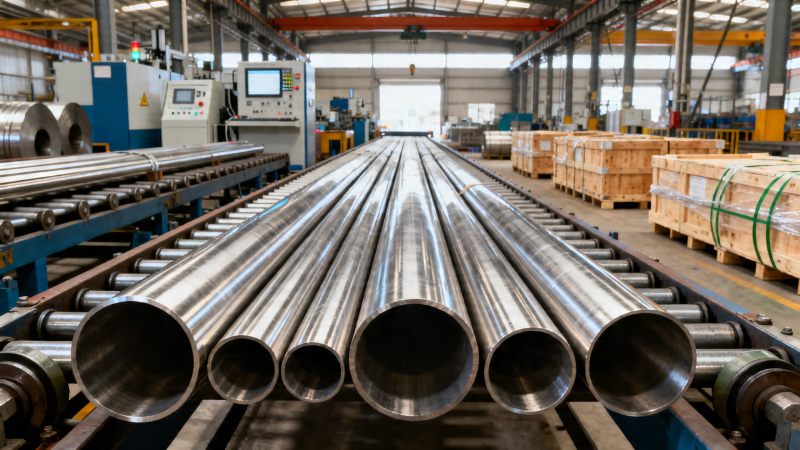
Material grade is usually the first major cost lever. In stainless steel pipe wholesale, the difference between a standard corrosion-resistant grade and a more demanding alloy for aggressive environments can be substantial. If the application only needs moderate atmospheric resistance, over-specifying the material may raise the budget without improving project value. If the environment includes chlorides, humidity, or chemical exposure, under-specifying can create replacement and shutdown costs later.
Production route is the second major factor. Seamless pipe often carries a premium because of the manufacturing process and typical end-use expectations. Welded pipe may be more cost-efficient for many structural, decorative, and low-to-medium pressure applications. However, the correct choice depends on service conditions, design code, and inspection requirement, not on price alone.
Specification detail also changes the quote. Outside diameter, wall thickness, length tolerance, straightness, and surface treatment can all affect yield and production planning. A standard commercial length may be easier to schedule than multiple custom cuts. Tight tolerances, mixed sizes in one order, or urgent production windows often increase conversion cost by another visible margin.
Buyers also need to review whether they are mixing standards in the inquiry. The introduction mentions ASTM A106 Gr B mechanical properties and ASTM A106 Gr B chemical composition, but ASTM A106 Gr B is generally known as a carbon steel pipe standard rather than a stainless steel grade reference. If a request combines stainless steel pipe language with carbon steel specifications, it can lead to quotation errors, technical mismatch, or delayed approval cycles.
Comparison table for common price-impact factors
Before approving a stainless steel pipe supplier, many purchasing teams use a side-by-side table to understand which technical choices usually increase, stabilize, or reduce cost pressure.
The practical takeaway is simple: a cheaper unit price can become more expensive after finishing, testing, and logistics are added. Good sourcing decisions compare total project cost, not only the base metal rate.
A useful middle-stage reference for buyers with mixed steel demand
Many distributors and project buyers do not source stainless pipe alone. They often purchase multiple steel categories together to improve freight efficiency and supplier coordination. In that situation, it helps to compare adjacent materials and forming grades used in appliances, automotive parts, panels, and fabricated components.
For example, Carbon Steel Plate can be relevant when a project includes fabricated covers, switchboards, rails, roof elements, refrigerator panels, or automobile-related formed parts. Available grades such as SPCC, SPCCT, SPCD, SPCE, SPCF, and SPCG support different forming needs, with thickness ranging from 0.1mm to 400mm, width from 100mm to 3000mm, and length from 1m to 12m or customized size.
Its technical profile is also procurement-friendly for evaluation teams. Typical references include chemical composition limits by grade and hardness conditions from annealed to full hard, while common standards may cover AISI, ASTM, ASME, DIN, BS, EN, ISO, JIS, GOST, and SAE. For buyers managing both pipe systems and formed plate components, combining sourcing review can reduce communication cycles and help control total project cost.
What Should Buyers Check Before Comparing Quotes?
A disciplined quotation review avoids many common purchasing mistakes. In practice, at least 5 key checks should be completed before a stainless steel pipe wholesale order moves to approval: material grade, dimensions and tolerances, standard reference, testing requirement, and delivery term. If any one of these is unclear, the supplier may quote a different basis than expected.
For technical teams, the first check is application fit. Is the pipe used for structure, fluid transport, fabrication, food-contact environments, or decorative use? The answer changes the material expectation. For quality teams, the second check is documentation: heat number traceability, mill test reports, dimensional inspection, and, where needed, third-party witness inspection. For commercial teams, the third check is whether the price covers packaging, marking, and export documents.
Timing is equally important. Standard specifications may ship in 2–4 weeks depending on stock and production load, while custom processing can extend the cycle to 4–8 weeks. If the project has phased delivery, buyers should ask whether the supplier can split production into two lots, for example an urgent first batch and a scheduled balance batch.
Experienced exporters also help reduce hidden cost. Hongteng Fengda supports global steel buyers with stable production capacity, international standard familiarity, and dependable lead times. That is valuable for enterprises that need both technical consistency and practical shipment execution, especially when multiple approval departments must sign off before payment release.
Quote review checklist for procurement and engineering teams
- Confirm whether the quoted standard matches the requested product family. Stainless pipe and carbon steel pipe standards should not be mixed without deliberate technical review.
- Check dimensional range, including OD, wall thickness, tolerance, and cut length. A deviation of even ±0.5mm can matter in some assemblies.
- Review the inspection package. Basic MTC may be enough for some uses, while projects may require PMI, hydrotest, or third-party witnessing.
- Verify packing method and export marking, especially for sea freight, long transit routes, and distributor inventory management.
- Clarify Incoterms and validity period of the offer, because freight and alloy markets can move during a 7–15 day quotation window.
Supplier evaluation table for decision makers
The following table is useful when procurement, project, quality, and finance teams need one common evaluation frame before choosing a stainless steel pipe manufacturer or exporter.
This kind of evaluation is especially useful for distributors, EPC teams, and international buyers. It aligns technical acceptance with commercial approval and prevents a low initial quote from turning into a costly exception later.
Where Do Hidden Costs Usually Appear in Steel Export Orders?
Hidden cost usually appears after the base quotation stage. Common examples include extra testing, revised packaging, destination document requests, or nonstandard marking. In stainless steel pipe wholesale, these items may look small individually, but together they can change the landed cost noticeably. A project that appears competitive on an FOB basis may lose its advantage once inland freight, insurance, and special handling are included.
Packaging is a typical example. Export bundles for long-distance sea freight may require protective wrapping, end caps, steel strapping, wooden cases, or pallet arrangements depending on product type and destination practice. Each addition helps reduce transit damage, but also changes packing cost and gross weight. For some distributors, better packaging is worth the extra charge because it lowers warehouse sorting loss and customer complaint risk.
Another hidden area is compliance mismatch. If the inquiry is issued with incomplete standards, missing tolerance details, or conflicting material references, the supplier may need to revise the quote two or three times. That delays internal approval and may expose the order to raw material fluctuations. The longer the decision window, the more likely the price validity period expires.
For project managers, the most expensive hidden cost is delay. If the pipe arrives late and installation crews are already scheduled, the result is not just a freight issue. It can create site disruption, idle labor, storage pressure, and cascading subcontractor changes. That is why dependable lead time is not merely a service promise; it is a cost-control factor.
4 practical ways to control total landed cost
- Lock the technical specification before requesting final quotation, including grade, size, tolerance, finish, and standard reference.
- Ask for a full cost breakdown covering product, testing, packing, inland transport, and trade term differences.
- Plan order quantity in medium or consolidated batches where possible, because fragmented urgent orders often increase unit cost.
- Choose a supplier with proven export coordination so documents, loading, and shipment timing are managed in one workflow.
These steps do not guarantee the lowest nominal price, but they usually improve budget predictability. For most B2B buyers, that is more valuable than a low quote that later accumulates exceptions and change requests.
FAQ: Common Questions About Stainless Steel Pipe Wholesale Pricing
Buyers often ask similar questions during technical review, supplier comparison, and internal approval. The answers below help clarify practical issues that affect both quotation accuracy and project execution.
Why do two stainless steel pipe suppliers quote very different prices for the same size?
Because size alone does not define the product. The grade, weld or seamless route, tolerance, finish, test package, packing method, and Incoterm all change the quote. A meaningful comparison requires at least 5 aligned points: standard, material, dimensions, testing, and delivery term.
How important is order quantity in stainless steel pipe wholesale?
It is usually very important. Small trial orders or mixed specifications can carry higher processing cost per unit. Medium and large batches often improve production efficiency and packing utilization. If your annual demand is continuous, discussing a 2-stage or 3-stage delivery plan may create better price stability than repeated small urgent orders.
What should technical evaluators do if the inquiry mixes stainless steel and ASTM A106 Gr B references?
They should stop the quote review and clarify the intended material family. ASTM A106 Gr B is commonly associated with carbon steel pipe. If the project truly needs stainless steel pipe, the grade and standard should be corrected before pricing. This prevents specification mismatch, supplier confusion, and approval delays.
How long is the normal export lead time?
It depends on stock, production load, and processing scope. Standard items may move in roughly 2–4 weeks, while custom dimensions, special finishing, or third-party inspection can extend total preparation to 4–8 weeks. Sea transit time is separate and should be checked by destination region.
Why Work With a Steel Export Partner That Understands the Full Procurement Chain?
A strong supplier relationship is not only about selling steel. It is about helping buyers make the right specification, compare the right cost basis, and receive products that match both technical and commercial expectations. For companies handling construction, industrial, and manufacturing projects, this reduces sourcing risk across the full cycle from inquiry to site use.
Hongteng Fengda supports global buyers with structural steel manufacturing and export experience, modern production capability, and strict quality control aligned with major international standards such as ASTM, EN, JIS, and GB. That background is useful for customers who need coordinated supply across multiple steel categories, stable lead times, and practical export service rather than a quote-only transaction.
If you are comparing a stainless steel pipe manufacturer, stainless steel pipe supplier, or stainless steel pipe exporter, you can contact us to discuss the points that matter before purchase: parameter confirmation, standard alignment, delivery schedule, mixed-product sourcing, OEM or customized solutions, sample support, and quotation communication under your required trade terms.
Share your grade requirement, size list, estimated quantity, destination port, and document expectations. We can help you review specification clarity, identify cost drivers, and build a sourcing plan that balances quality, lead time, and budget with fewer surprises during execution.
Please give us a message


Please enter what you want to find