Before placing a first order with a stainless steel pipe exporter, buyers need a clear checklist covering ASTM A106 Gr.B specification, ASTM A106 Gr B chemical composition, quality control, lead time, and supplier credibility. Whether you source ASTM A106 Gr B pipe, stainless steel pipe wholesale, or related structural steel products, this guide helps procurement teams reduce risks, compare suppliers, and make confident import decisions.
What should you verify before sending the first inquiry?
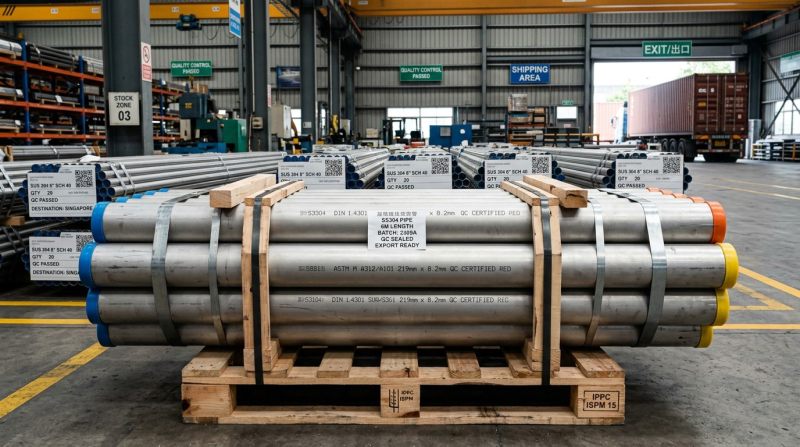
The first order is usually where buyers face the highest uncertainty. Technical teams worry about grade mismatch, procurement managers worry about late shipment, and finance teams want to avoid hidden import costs. In the steel industry, a supplier may look competitive on price but still create risk through incomplete mill documentation, unstable dimensions, or weak export coordination.
A practical starting point is to separate your evaluation into 4 layers: product specification, manufacturing capability, compliance documents, and delivery execution. This structure helps different stakeholders review the same supplier from their own angle. For example, quality control staff focus on inspection records, while project managers usually care more about 2–4 week production windows and shipping reliability.
For stainless steel pipe orders, buyers should confirm whether the exporter understands not only pipe grades and tolerances, but also how the product will be used in petroleum, foodstuff, chemical industry, construction, electric power, or shipbuilding projects. A supplier that asks about pressure, corrosion exposure, welding method, and required standard is usually more reliable than one that only quotes by tonnage.
Hongteng Fengda supports global buyers as a structural steel manufacturer and exporter from China, with experience serving North America, Europe, the Middle East, and Southeast Asia. That matters because first orders rarely involve product only. They involve drawings, packing method, standard matching, document preparation, and shipment coordination across several checkpoints before the cargo is released.
A first-order checklist that aligns technical and commercial review
Before asking for a final quote, buyers should prepare a short internal checklist. This reduces back-and-forth communication and helps suppliers provide a more accurate offer within 24–72 hours, depending on complexity.
- Confirm grade, standard, size range, wall thickness, length, and end finish. For pipe orders, even a small difference between SCH40 and SCH80 can affect cost, weight, and installation.
- State the intended application and service environment, such as chloride exposure, elevated temperature, or sanitary use. This helps determine whether 304, 316, or another grade is more appropriate.
- Ask what inspection documents will be supplied, such as heat number traceability, dimensional reports, material test certificates, and packing lists for customs clearance.
- Clarify delivery terms, destination port, packing requirements, and whether the order is standard stock, made-to-order, or OEM fabrication.
This type of checklist is also useful when buyers compare pipe exporters with broader steel suppliers. A company with a stable production base and strict quality control can often support both stainless steel pipe orders and related structural steel requirements in one sourcing plan, which may reduce coordination time and inspection duplication.
How do you check specification accuracy and material suitability?
One of the most common first-order mistakes is mixing different material families or relying on a keyword without checking the actual standard. Buyers often search for ASTM A106 Gr.B because it is widely used for carbon steel pipe applications, but they may also be comparing it with stainless steel pipe alternatives for corrosion resistance or process requirements. These are not interchangeable by default, and the exporter should explain the difference clearly.
ASTM A106 Gr B pipe is generally referenced for seamless carbon steel pipe in high-temperature service, while stainless steel pipe selection depends more heavily on corrosion conditions, hygiene standards, and long-term maintenance strategy. If your project requires resistance to chlorides, chemicals, or frequent washdown, technical teams often evaluate 300 series stainless steel more closely than carbon steel options.
In these cases, buyers may review options such as 316 Stainless steel pipe, which is commonly considered for petroleum, foodstuff, chemical industry, biotechnology, boiler fields, and marine-related environments. Typical size coverage can include outer diameter from 6mm to 2500mm, wall thickness from 1mm to 150mm, and common lengths such as 4000mm, 5800mm, 6000mm, or 12000mm, depending on the production route and order requirement.
A professional exporter should also help you judge whether the pipe is supplied in polishing, annealing, pickling, or bright finish, because surface condition affects both appearance and downstream processing. For end users and operators, this is not a cosmetic issue only. It can influence weld preparation, cleaning procedures, and acceptance during installation.
What technical points should be compared line by line?
When the first quotation arrives, do not compare total price only. Check the technical basis of the quote line by line, especially if multiple suppliers respond with similar wording but different manufacturing assumptions.
The table below helps procurement teams compare a carbon steel reference like ASTM A106 Gr.B with stainless steel pipe sourcing considerations in a more structured way.
The main takeaway is simple: the right pipe is determined by service condition, not by the search keyword alone. A credible exporter should be able to map your application to the proper material family, explain tradeoffs, and document the selected standard without ambiguity.
Standards and dimensions are not small details
For stainless steel pipe, buyers should also verify which standards apply to the order. Common references may include ASTM A213, ASTM A312, ASTM A269, ASTM A778, ASTM A789, DIN 17456, DIN 17457, DIN 17459, JIS G3459, JIS G3463, GOST 9941, EN 10216, BS 3605, and GB 13296. The relevant standard depends on whether the pipe is seamless or welded, pressure-related or sanitary, heat exchanger-related or general service.
Even when two suppliers quote the same grade, price and lead time can change if one is offering stock length and the other is offering cut-to-length material with additional processing. This is why size confirmation, tolerance range, and finish requirement should be frozen before order approval.
How can procurement teams evaluate exporter reliability and quality control?
A supplier’s real strength is not proven by a brochure. It is proven by whether they can control raw material traceability, production consistency, dimensional inspection, and export documentation under schedule pressure. For first orders, buyers should ask how many inspection stages are used and who signs off each stage before packing.
In steel export projects, a practical quality review often follows 3 stages: incoming material verification, in-process production control, and final inspection before shipment. Each stage should produce records that can be checked by procurement, QA, or third-party inspection personnel if needed. This is especially important for distributors, project owners, and EPC teams managing multiple packages at the same time.
Hongteng Fengda emphasizes modern manufacturing facilities, strict quality control, and compliance with major international standards such as ASTM, EN, JIS, and GB. For buyers, that combination is useful because it connects production capability with standard-based export execution rather than treating quality as a generic promise.
Another important sign of reliability is whether the supplier can support broader steel procurement beyond one pipe order. Many global buyers need channel steel, angle steel, steel beams, cold formed steel profiles, or customized structural steel components in the same project cycle. A supplier with integrated steel export experience can reduce vendor fragmentation, communication delay, and document inconsistency.
Key checks for quality, packing, and shipment readiness
Before you confirm the PO, align the following 6 checkpoints with the exporter. This is one of the most effective ways to reduce first-order disputes.
- Heat number and material traceability must match the test certificate and packing list.
- Dimensions should be checked against the approved specification, including OD, wall thickness, and length tolerance.
- Surface condition must be confirmed before packing, especially for bright, polished, pickled, or annealed supply.
- Export packing should match transit risk, such as seaworthy bundles, end caps, wrapping, or crate requirements.
- Document package should be reviewed 3–5 days before shipment to avoid customs or banking delay.
- If third-party inspection is required, the inspection window should be locked before cargo transfer to port.
These points matter to different stakeholders in different ways. QC teams focus on measurable conformity. Project managers focus on avoiding rework. Finance teams focus on preventing demurrage, claim cost, or replacement shipment. Good exporters understand all three viewpoints and respond with documented process control.
The table below can be used as a supplier evaluation sheet during the first-order review process.
This type of table helps commercial and technical teams make the same decision using shared criteria. It also exposes weak suppliers early, before the order turns into a project risk.
What affects price, lead time, and total import cost?
First-order buyers often focus on unit price, but total sourcing cost depends on at least 5 variables: grade, size range, processing requirement, order volume, and delivery method. For stainless steel pipe wholesale, a lower quoted price may exclude extra packaging, testing, surface treatment, or document handling that another supplier already included.
Lead time also varies by order type. Standard sizes from available production schedules may move faster, while customized lengths, nonstandard wall thickness, or mixed-size bundles can add 7–15 days or more. When the order includes both pipe and structural steel products, integrated planning may reduce shipment fragmentation and improve container utilization.
For budget-sensitive buyers, the real question is not simply whether stainless steel costs more than carbon steel. The better question is whether the selected material reduces maintenance, replacement frequency, coating cost, or corrosion-related downtime over the service period. In many industrial environments, a cheaper first purchase can become a more expensive lifecycle choice.
This is where a technically informed exporter adds value. Instead of only sending a price sheet, the supplier should explain which dimensions are economical, which finishes require extra process time, and whether partial customization is enough to meet project needs without over-specifying the order.
Cost review points before final approval
Use the following checkpoints before finance approval or management sign-off. They are especially useful for distributors, contractors, and engineering buyers handling margin-sensitive projects.
- Separate ex-works or FOB price from total landed cost. Inland transport, export packing, ocean freight, duties, and local clearance can significantly change final cost per ton.
- Check whether testing, third-party inspection, or special marking is included. These items may add cost but reduce dispute risk later.
- Confirm MOQ or production batch effect. Small mixed orders may have a higher cost per unit even when the product itself is standard.
- Review schedule risk. A lower price is not attractive if missing a project milestone creates penalty cost or shutdown delay.
For many buyers, the best supplier is the one who balances cost transparency with delivery predictability. That is particularly relevant when steel procurement is tied to project sequencing, installation crews, or downstream fabrication schedules.
What questions do buyers ask most before the first order?
The first order usually triggers repeated questions from procurement, QA, engineering, and management. Addressing them early shortens the approval cycle and lowers sourcing uncertainty.
How do I know whether the supplier understands my application?
A qualified exporter will ask about service medium, temperature range, corrosion exposure, standard requirement, dimensions, and whether the pipe will be welded, bent, polished, or pressure tested after delivery. If the supplier only asks for quantity and destination port, the technical review may be too shallow for a reliable first order.
What is a reasonable first-order lead time?
There is no single answer, but many steel export orders fall into a practical planning range of 2–6 weeks for production plus booking and transit time. Standard dimensions may move faster, while OEM, mixed specifications, or extra inspection requirements may extend the schedule. Ask for a milestone breakdown rather than one date only.
Should I ask for samples or pre-shipment records?
For first orders, yes, when practical. Samples help verify finish and workmanship, while pre-shipment photos, dimensional records, heat traceability, and MTC review help technical and quality teams sign off before cargo dispatch. This is especially useful for customized or appearance-sensitive orders.
Is it better to buy pipe from a broader steel exporter or a narrow trader?
It depends on your project, but many B2B buyers prefer a manufacturer-exporter that can support both standard steel products and customized structural components. This can simplify vendor management, reduce communication layers, and improve consistency in quality control, document handling, and lead time coordination across multiple steel items.
Why work with a Chinese structural steel manufacturer for first-order sourcing?
For many global buyers, China remains a practical sourcing base because it combines manufacturing scale, broad specification coverage, and export experience across multiple steel product categories. The key is not to choose any supplier, but to choose one that can connect technical understanding with production discipline and shipment execution.
Hongteng Fengda supplies angle steel, channel steel, steel beams, cold formed steel profiles, and customized structural steel components, while supporting standard specifications and OEM solutions. For buyers managing industrial, construction, or manufacturing projects, this broader capability can reduce the need to split sourcing across too many vendors.
Equally important, the company serves customers across North America, Europe, the Middle East, and Southeast Asia. That export orientation matters because first-order success depends on more than factory output. It also depends on standard matching, document readiness, stable production capacity, and dependable lead times under real project conditions.
If you are evaluating stainless steel pipe wholesale, ASTM A106 Gr B pipe alternatives, or a combined package of pipe and structural steel products, a structured conversation can save substantial time. It helps confirm parameters, compare options, identify compliance needs, and avoid specification drift before the PO is issued.
What you can discuss before placing the order
- Parameter confirmation, including grade, standard, dimensions, finish, and required documentation.
- Product selection between stainless steel pipe, carbon steel reference options, and related structural steel supply.
- Delivery planning, including production cycle, packing method, shipment terms, and inspection timing.
- Customized solutions for OEM fabrication, mixed steel procurement, or project-specific compliance requirements.
- Sample support, quotation review, and document preparation for technical, procurement, and approval teams.
If your team is preparing a first import order, the most effective next step is to send your size list, application details, standard requirements, target quantity, and delivery destination for review. That allows a more accurate discussion on product suitability, lead time, inspection scope, and commercial quotation before commitment.
Please give us a message


Please enter what you want to find