Looking for stainless steel coil for sale but unsure which specifications really affect performance and price first? For end users, the right choice depends on grade, thickness, width, surface finish, and application needs. Understanding these key factors can help you avoid costly mistakes, improve project results, and source more confidently from a reliable steel manufacturing partner.
When buying stainless steel coil for sale, which specs should you check first?
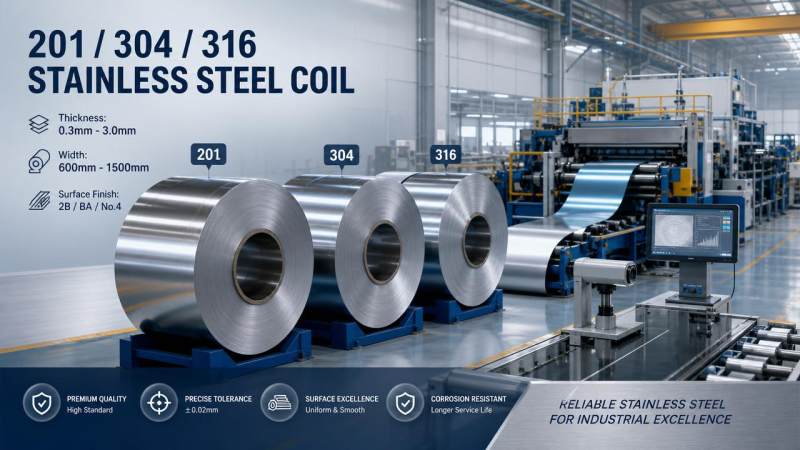
For most end users, the first mistake is focusing on price before specifications. In practice, a lower quote can quickly become expensive if the coil grade is wrong, the thickness tolerance is unstable, or the finish does not match the final use.
When evaluating stainless steel coil for sale, five specifications usually matter first: grade, thickness, width, surface finish, and standard compliance. These factors directly affect corrosion resistance, forming performance, welding behavior, appearance, and total project cost.
- Grade determines resistance to corrosion, heat, and chemicals.
- Thickness affects strength, weight, and fabrication difficulty.
- Width influences material utilization and cutting waste.
- Surface finish matters for appearance, cleaning, and downstream coating.
- Standards such as ASTM, EN, JIS, or GB help confirm predictable quality.
If your application involves kitchen equipment, decorative panels, tanks, ducting, or industrial fabrication, these specifications should be confirmed before discussing shipment and payment terms. That order reduces sourcing risk.
Why grade is usually the first buying decision
Among all options for stainless steel coil for sale, grade is the most important starting point because it decides whether the steel can survive your service environment. Many buyers compare 201, 304, and 316 first because these grades serve very different cost and performance targets.
Grade selection should not be based on popularity alone. It should be based on moisture exposure, chloride content, temperature, hygiene requirements, and expected service life. A decorative indoor application may accept a lower-cost option, while coastal or chemical environments often require stronger corrosion resistance.
The table below gives a practical comparison for end users reviewing stainless steel coil for sale across common grades.
This comparison shows why the cheapest grade is not always the lowest-cost solution. If replacement, maintenance, staining, or corrosion risk is high, upgrading the grade at the purchase stage often saves more over time.
Simple grade selection logic for end users
- Choose 201 mainly for dry indoor applications with tight budgets.
- Choose 304 for general-purpose durability, hygiene, and good processing balance.
- Choose 316 when salt, chemicals, or higher corrosion pressure are present.
How thickness, width, and finish change performance and price
After grade, the next step in selecting stainless steel coil for sale is dimensional and surface specification. Many sourcing problems happen not because the steel is poor, but because the coil dimensions do not match the production method or end-product design.
Thickness affects structural integrity, bending behavior, and material weight. A thicker coil usually costs more per sheet or component, but too thin a coil may deform during fabrication or service. Width affects nesting efficiency and scrap rate. Surface finish affects aesthetics, cleanability, and whether extra polishing is needed later.
Use the table below to connect specification choices with practical buying impact when comparing stainless steel coil for sale offers.
For decorative or consumer-facing products, finish may become almost as important as grade. For concealed industrial parts, thickness accuracy and flatness may matter more than mirror appearance. Good suppliers help buyers rank these priorities by use case rather than guesswork.
What end users should confirm on dimensions
- Nominal thickness and acceptable tolerance range for your process.
- Required coil width based on final cutting patterns.
- Inner diameter, outer diameter, and coil weight if your equipment has limits.
- Protective film or packaging requirements for polished surfaces.
Which standards and certificates matter in stainless steel coil sourcing?
Not every buyer needs the same documentation, but standard compliance matters whenever you want stable quality across batches. When reviewing stainless steel coil for sale, ask which production standards the material follows and what inspection documents can be supplied.
For global projects, common references include ASTM, EN, JIS, and GB. These standards help buyers communicate requirements clearly across countries. They are especially useful when multiple parties are involved, such as fabricators, project owners, and inspectors.
Key compliance points to request
- Material grade confirmation matching your purchase specification.
- Chemical composition and mechanical property records if required.
- Surface and dimensional inspection details for visible or precision applications.
- Clear packing and marking to reduce receiving errors at destination.
Hongteng Fengda supports global buyers with products aligned to major international standards, including ASTM, EN, JIS, and GB. That matters when end users want smoother communication, fewer interpretation gaps, and more reliable project execution.
How to compare offers beyond the price per ton
A quote for stainless steel coil for sale should never be judged by unit price alone. End users often overlook hidden cost drivers such as thickness tolerance, actual usable width, finish rework, packaging protection, and delivery consistency. These items may not look large in the quotation, but they strongly influence the final cost of use.
A structured comparison helps you decide faster and avoid sourcing surprises.
The following table can be used as a simple procurement checklist when comparing stainless steel coil for sale from different suppliers.
This evaluation method is especially useful for buyers with limited technical teams. It turns a complex steel purchasing task into a manageable decision process based on risk, use, and total value.
What applications need different stainless steel coil specifications?
The right stainless steel coil for sale depends heavily on the final application. End users should begin with service conditions, not general market trends. A good specification for food processing may be wasteful for indoor trim, while an economical decorative grade may fail in an outdoor industrial environment.
Common application-based selection logic
- For kitchenware or food contact equipment, buyers often prefer grades with reliable corrosion resistance and surfaces that are easy to clean.
- For architectural cladding or visible decorative parts, finish consistency, scratch protection, and color uniformity become major concerns.
- For ducts, tanks, and fabricated industrial parts, thickness tolerance, weldability, and forming performance matter more than mirror polish.
- For marine or chemical surroundings, buyers should prioritize corrosion resistance first and budget second.
If your project also includes structural steel elements, sourcing from a manufacturer with broader steel capability can simplify coordination. For example, some projects combine stainless coil components with beams or profiles such as H Shape Beam for steel structure, bridging, mechanical manufacture, or automobile chassis applications.
That integrated sourcing approach can be useful when one supplier is already familiar with international standards like ASTM A36, ASTM A572, ASTM A992, JIS G3101, or EN10025 and can align documentation, packing, and delivery schedules across product categories.
Common mistakes buyers make when choosing stainless steel coil for sale
Even experienced buyers can make avoidable errors when they are under deadline pressure. Most problems come from assumptions rather than material defects. The supplier and buyer may both use the term stainless steel, but still mean very different things in grade, finish, or tolerance.
Frequent sourcing mistakes
- Choosing a grade based only on budget without checking exposure conditions.
- Ignoring thickness tolerance and then facing forming or assembly problems.
- Selecting the wrong finish for a visible end product.
- Not confirming standard compliance before shipment.
- Comparing quotations without normalizing all specifications.
A reliable manufacturer reduces these risks by asking the right questions before production starts. That early technical communication is often more valuable than chasing the lowest initial offer.
FAQ: practical questions about stainless steel coil for sale
Is 304 always better than 201?
Not always. 304 is generally more versatile and corrosion resistant, but 201 may be acceptable for dry indoor uses with limited exposure. The correct answer depends on environment, appearance requirements, and expected service life.
What should I send when asking for a quote?
Send the grade, thickness, width, surface finish, quantity, intended application, destination country, and any standard requirement. If you have downstream processing needs, mention slitting, cutting, protective film, or special packaging as well.
How do I know if a lower quote is actually risky?
Check whether the cheaper offer uses the same grade, tolerance, finish, and inspection level. A lower quote may hide downgraded material, broader tolerances, less protective packaging, or longer lead time. Normalize the details before comparing price.
Can one supplier support both stainless coil and structural steel products?
Yes, and this can simplify procurement for mixed projects. A supplier with experience in structural products, profiles, beams, and customized steel components can often help align standards, export handling, and project scheduling more efficiently.
Why choose us for your next steel inquiry?
Hongteng Fengda is a professional structural steel manufacturer and exporter from China serving global construction, industrial, and manufacturing projects. We support buyers with stable production capacity, strict quality control, and practical communication around standards, specifications, and delivery expectations.
Our experience in angle steel, channel steel, steel beams, cold formed steel profiles, customized structural steel components, and related export supply helps end users reduce sourcing risk across broader project needs. Whether your concern is specification matching, lead time, OEM support, or compliance alignment, we aim to make the decision process clearer and more efficient.
- Ask us to confirm the right grade, thickness, width, and finish for your application.
- Request support on product selection, standard matching, and documentation needs.
- Discuss delivery schedule, packaging method, and export arrangement before ordering.
- Send drawings or usage details if you need a customized steel solution.
- Contact us for quotation communication, sample support, and project-based supply planning.
If you are currently comparing stainless steel coil for sale and want a more accurate recommendation, share your application, dimensions, target market, and expected quantity. A clear technical review at the start can save time, control cost, and improve final performance.
Please give us a message


Please enter what you want to find