Choosing the right stainless steel angle sizes is critical for frame support, load stability, and long-term corrosion resistance in demanding projects. For structural applications, the correct stainless steel angle specification affects strength, fabrication efficiency, maintenance cost, and service life. A clear size selection process helps reduce sourcing uncertainty and supports better construction performance.
Why stainless steel angle sizes matter in frame support scenarios
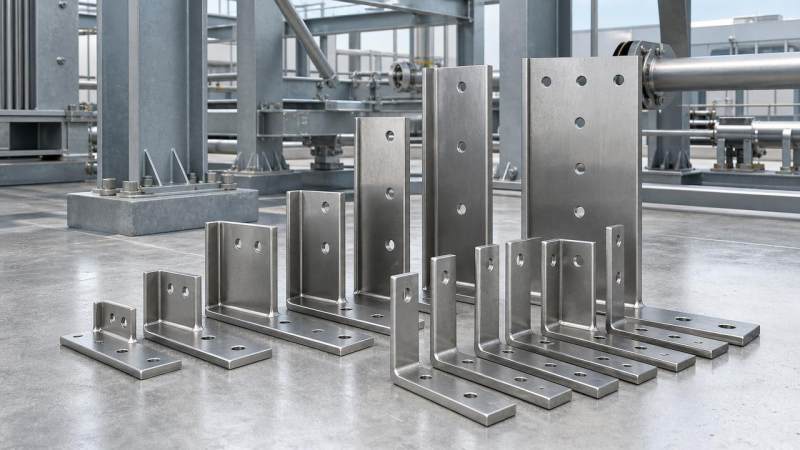
Frame support systems do not share the same demands. Light equipment frames, architectural trims, and outdoor utility supports require different stainless steel angle sizes.
The key issue is not only dimension. Leg length, thickness, alloy grade, welding method, and loading direction all influence frame reliability.
A small stainless steel angle may reduce weight and cost. However, it can also increase deflection, connection stress, and rework risk.
An oversized stainless steel angle can improve rigidity. Yet it may raise fabrication expense, add unnecessary mass, and complicate installation.
How project conditions change stainless steel angle size requirements
Different environments change how stainless steel angle performs in support frames. Indoor dry spaces often allow broader sizing flexibility.
Outdoor structures face rain, temperature change, and long-term exposure. These conditions make corrosion resistance and drainage design more important.
Industrial sites can expose a stainless steel angle to chemicals, vibration, and impact. In those cases, thickness and joint design deserve closer review.
Marine or coastal projects usually require more careful grade selection. Size alone cannot solve corrosion challenges if alloy choice is poor.
Common frame support factors to check first
- Static load and possible dynamic load
- Span length between supports
- Connection type, including bolting or welding
- Exposure to moisture, salt, or chemicals
- Required service life and maintenance target
- Fabrication limits, including drilling, cutting, and forming
Typical applications where stainless steel angle sizes should be judged differently
Light equipment frames and machine guards
These applications often use smaller stainless steel angle sections. Weight control, easy assembly, and clean appearance usually matter more.
Even in light-duty structures, repeated vibration may require thicker sections. Thin angles can loosen around fastener holes over time.
Building support frames and architectural structures
Architectural frames often combine structural support with visible finish. Here, stainless steel angle sizes must balance strength and visual proportion.
Larger leg dimensions can improve fastening flexibility. They also provide better alignment tolerance for cladding, brackets, and trim details.
Outdoor platforms, brackets, and utility supports
Outdoor support frames usually need a more conservative stainless steel angle choice. Wind load, water retention, and corrosion all influence sizing.
Thicker sections can improve long-term rigidity. Proper drainage and connection detailing remain necessary to avoid trapped moisture.
Chemical and process facility support systems
In processing environments, frame supports may work beside pipe systems, tanks, or equipment skids. Stainless steel angle selection should consider adjacent materials.
For integrated utility layouts, some projects also combine supports with piping components such as Carbon Seamless Pipe. This is common in petroleum, chemical, mechanical, and construction systems.
Where pipe racks or secondary frames are involved, dimensions should match load paths and connection standards. Moderate, balanced materials remain valuable in mixed-system engineering.
Practical size ranges for stainless steel angle in frame support work
Actual design must follow engineering calculation. Still, practical size grouping helps compare stainless steel angle options during early planning.
The table is only a planning reference. Final stainless steel angle sizes should always match design calculations and applicable standards.
How different frame support scenarios create different purchasing priorities
Not every project buys stainless steel angle for the same reason. Some focus on corrosion resistance, while others prioritize fabrication speed or dimensional consistency.
Key differences by scenario
- Indoor systems value economy and easier processing.
- Outdoor frames need stronger corrosion planning and drainage-friendly details.
- Visible structures require cleaner surfaces and tighter dimensional control.
- Industrial supports often need thicker stainless steel angle sections and stable supply consistency.
- Multi-material assemblies need compatibility review at joints and fasteners.
Reliable suppliers should also support standard and customized structural steel solutions. This helps when frame designs require non-stock dimensions or OEM processing.
Scenario-based recommendations for selecting stainless steel angle sizes
When lighter support frames are enough
Use smaller stainless steel angle sections when loads are low, spans are short, and vibration is limited. Confirm hole edge distance and local stiffness.
When medium sizes offer the best balance
Medium stainless steel angle sizes often suit general construction frames. They support easier installation without the excess mass of oversized members.
When heavier sections are the safer choice
Choose heavier stainless steel angle sections when loads are concentrated, support spacing is wide, or the environment includes impact and vibration.
- Define the real service environment first.
- Check load path, span, and connection method.
- Compare required stiffness with fabrication practicality.
- Review corrosion risk with alloy grade, not size alone.
- Confirm supply standard, tolerance, and lead time before approval.
Common mistakes when choosing stainless steel angle for frame support
One common mistake is selecting stainless steel angle sizes only by previous habit. Similar-looking frames can carry very different loads.
Another mistake is focusing only on corrosion resistance. A durable alloy cannot compensate for undersized legs or insufficient thickness.
Some projects also ignore fabrication effects. Welding heat, bolt hole location, and cut geometry can reduce effective performance.
Mixed-system projects may overlook adjacent components. For example, support structures near piping should align with installation space and maintenance access.
In those situations, supporting products like Carbon Seamless Pipe should be reviewed together with brackets and angle members, especially in integrated industrial layouts.
A practical next step for better stainless steel angle selection
A better result starts with a clear support scenario, not only a target price. Gather load data, environment details, span limits, and connection preferences first.
Then compare stainless steel angle sizes against fabrication needs, corrosion exposure, and long-term service expectations. This approach improves specification accuracy.
For projects requiring standard sections or custom structural steel supply, working with an experienced exporter can simplify compliance, lead time control, and quality consistency.
The right stainless steel angle supports safer frames, better lifecycle value, and more predictable execution across construction and industrial applications.
Please give us a message


Please enter what you want to find