Choosing between a seamless steel tube and a welded tube affects strength, cost, pressure performance, and long-term reliability. For buyers comparing API pipe, carbon pipe, fluid pipe, or corrosion-resistant pipe solutions, understanding the differences is essential. This guide explains key features, applications, and selection factors to help engineers, purchasers, and project teams make informed decisions.
For most buyers, the real question is not simply “which is better?” but “which tube is better for my pressure level, fabrication method, delivery timeline, compliance target, and budget?” In practice, seamless steel tube is often preferred for high-pressure, high-temperature, and critical service conditions, while welded tube is usually the more economical and efficient choice for general structural, low-to-medium pressure, and large-volume applications. The right decision depends on service conditions, standard requirements, quality expectations, and total procurement cost.
Seamless vs welded tube: what matters most in real projects
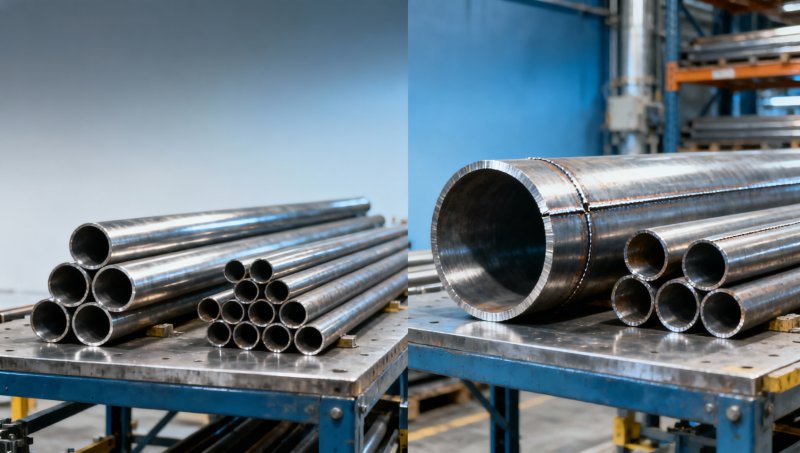
A seamless steel tube is manufactured without a welded seam. It is typically produced by piercing a solid billet and then hot rolling, cold drawing, or cold finishing it into the required dimensions. Because there is no longitudinal weld, many buyers associate seamless tube with higher reliability under demanding pressure and temperature conditions.
A welded tube is made by forming steel strip or plate into a cylindrical shape and then joining the edges by welding. Depending on the process, this may include ERW (Electric Resistance Welded), EFW (Electric Fusion Welded), or other methods. Modern welded tube production can achieve very stable dimensional consistency, good surface quality, and competitive mechanical performance when made under proper process control.
From a user intent perspective, the most important differences usually come down to:
- Pressure and temperature capability
- Risk tolerance in critical service
- Dimensional consistency and wall tolerance
- Project budget and total installed cost
- Availability, lead time, and sourcing flexibility
- Required compliance with ASTM, EN, JIS, GB, API, or project specifications
Which tube is stronger: seamless or welded?
This is one of the most common buyer questions, but the answer depends on what “stronger” means in the application.
Seamless steel tube advantages:
- No weld seam, which reduces concern about weld integrity in high-stress service
- Often selected for high-pressure pipelines, boilers, heat exchangers, oil and gas service, and mechanical parts under severe loading
- Good choice when project specifications explicitly prefer or require seamless construction
Welded tube advantages:
- Consistent outside diameter and wall thickness control in many production setups
- High production efficiency, which supports better cost competitiveness
- Suitable for many structural, fluid transport, architectural, and industrial uses
It is important to avoid an outdated assumption that welded tube is always lower quality. With modern manufacturing and non-destructive testing, high-quality welded tube can perform very well in many applications. However, where failure consequences are severe, pressure cycling is high, or operating conditions are extreme, many engineers and procurement teams still prefer seamless tube for added confidence.
How pressure, temperature, and service environment affect the choice
If your tube will operate in harsh conditions, selection should begin with service demands rather than unit price.
Choose seamless tube more often when:
- Working pressure is high
- Operating temperature is elevated or fluctuates significantly
- The system handles steam, oil, gas, or aggressive process fluids
- The project involves critical safety, shutdown risk, or strict inspection standards
Choose welded tube more often when:
- Pressure level is low to moderate
- The application is structural or general conveyance
- Large diameters or long production runs are needed cost-effectively
- The buyer wants shorter sourcing cycles and lower material cost
Corrosion is another key selection factor. Tube type alone does not solve corrosion problems; material grade, coating, lining, and environmental exposure matter just as much. For corrosive environments, buyers should evaluate carbon steel, alloy steel, galvanized options, or stainless solutions based on media, pH, chloride exposure, and maintenance expectations.
In some systems, supporting components also need corrosion resistance and filtration performance. For example, in process industries, screening or filtration assemblies may use stainless mesh materials such as 316 Stainless Steel Welded Mesh, especially where resistance to rust, corrosion, acid, alkali, heat, and chemicals is important. Available grades commonly include SS 201, 304, 304L, 316, 316L, and 430, with applications in filters, sieves, chemical industry, mining, architecture, and residences.
What buyers should compare beyond the basic price
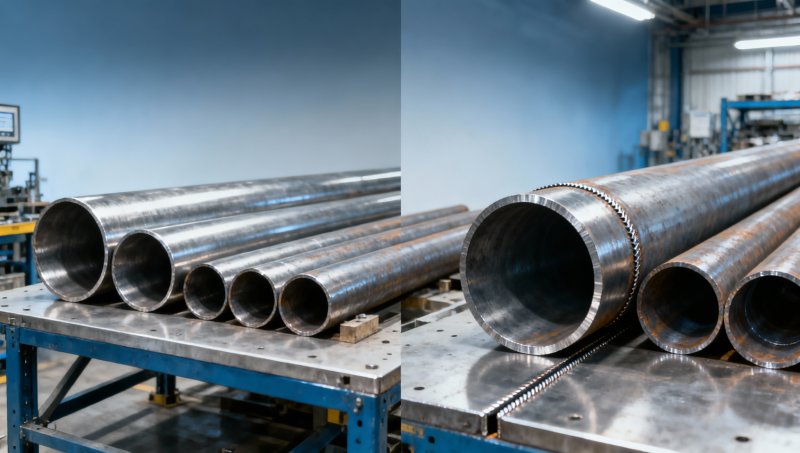
A lower quoted price does not always mean a lower total cost. Procurement teams, project managers, and financial approvers should compare the full purchasing picture.
Key cost factors include:
- Raw material and manufacturing cost
- Testing and certification requirements
- Machining, bending, welding, or installation difficulty
- Lead time and project schedule risk
- Expected service life and replacement frequency
- Inspection, maintenance, and shutdown costs
Seamless tube usually has a higher initial price because the manufacturing route is more material- and process-intensive. Welded tube often offers better economy, especially for large-quantity procurement. But if the application later suffers from leaks, downtime, or early replacement, the apparent savings can disappear quickly.
This is why many experienced buyers use a “fit-for-service” approach:
- Define the real operating condition
- Check code and client specification requirements
- Match the tube type to risk level
- Compare total lifecycle cost, not just ex-works price
How to evaluate quality and reduce sourcing risk
For technical evaluators, quality control and traceability are just as important as tube type. A well-made welded tube from a controlled supplier may outperform a poorly made seamless tube from a weak source.
Ask suppliers for the following:
- Applicable standards: ASTM, EN, JIS, GB, API, or project-specific norms
- Mill test certificates and material traceability
- Mechanical property data
- Hydrostatic test, eddy current test, ultrasonic test, or radiographic inspection as required
- Dimensional tolerance reports
- Surface condition, coating, or end-finish details
For welded products, buyers should pay special attention to weld quality, heat-affected zone control, seam inspection, and post-weld treatment where relevant. For seamless products, they should verify wall thickness consistency, eccentricity control, and any finishing process that affects performance.
Reliable sourcing partners should also provide stable production capacity, export documentation support, clear packaging standards, and dependable delivery schedules. This becomes especially important for distributors, EPC contractors, and international buyers managing multi-country supply chains.
Best application scenarios for seamless and welded steel tube
Typical uses for seamless steel tube:
- High-pressure piping systems
- Oil and gas transportation
- Boilers and heat exchangers
- Mechanical shafts and precision industrial parts
- Critical fluid service with strict safety requirements
Typical uses for welded tube:
- Structural steel frameworks
- Water, air, and general fluid transport
- Construction and fabrication projects
- Large-diameter piping with budget constraints
- Architectural and industrial applications needing cost efficiency
If the decision is still unclear, a practical rule is this: use seamless when operating severity and failure cost are high; use welded when service conditions are moderate and cost efficiency is a priority.
How to make the right purchasing decision
Before placing an order, decision-makers should align technical requirements with commercial realities. A useful checklist includes:
- What medium will flow through the tube?
- What are the pressure and temperature ranges?
- Is the environment corrosive or abrasive?
- Which standards and approvals are mandatory?
- Is the tube for structural use or pressure service?
- What is the target project life?
- How sensitive is the project to delays or failures?
For global buyers, working with an experienced structural steel manufacturer and exporter can simplify this process. Suppliers with modern facilities, strict quality control, and familiarity with international standards can help reduce sourcing risk, improve consistency, and support both standard and customized solutions.
Hongteng Fengda, as a structural steel manufacturer and exporter from China, supports international projects with stable production capacity, quality-focused manufacturing, and customized supply options across structural steel and related industrial steel requirements. For buyers managing cost, compliance, and delivery pressure at the same time, this kind of supplier capability can make a meaningful difference.
Conclusion: seamless or welded tube?
There is no universal winner between seamless steel tube and welded tube. Seamless is generally the better choice for high-pressure, high-temperature, and critical service where safety margin and reliability are top priorities. Welded tube is often the smarter option for general industrial, structural, and cost-sensitive applications where modern quality control can deliver dependable performance.
The best decision comes from matching the tube type to the real job: operating conditions, inspection requirements, budget, and lifecycle risk. If buyers focus on fit-for-service instead of assumptions, they will make better technical and commercial decisions—and avoid both over-specifying and under-specifying the product.
Please give us a message


Please enter what you want to find