SS304 Sheet Price Factors: How Thickness, Finish, and Volume Affect Your Quote
For procurement teams, understanding the factors behind SS304 sheet price is essential for building accurate budgets and securing reliable supply.
Thickness, surface finish, order volume, and market conditions can all influence your final quotation. This guide helps buyers compare offers and reduce sourcing risks.
For construction and industrial projects, the lowest quoted price is rarely the lowest total purchasing cost. Specification alignment, yield, documentation, and delivery reliability matter.
A useful quote comparison starts by separating metal value from processing, testing, packaging, freight, financing, and supplier risk. This makes commercial differences easier to explain internally.
What Does an SS304 Sheet Price Quote Actually Include?
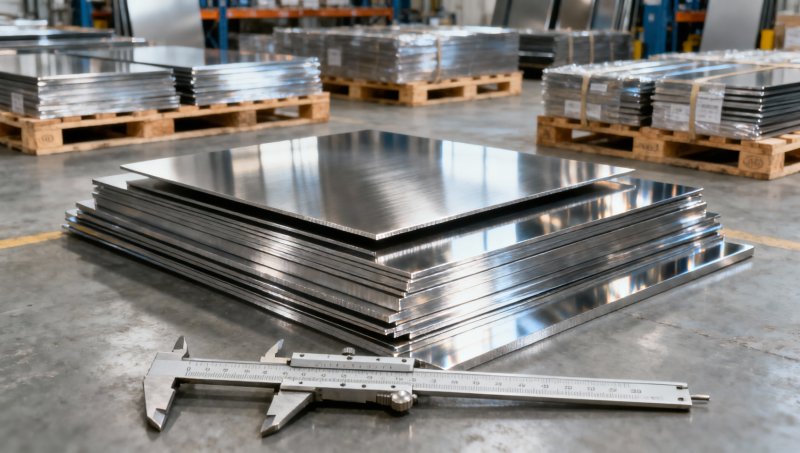
An SS304 sheet price normally begins with the cost of stainless steel coil or plate, converted into the requested sheet dimensions and ordered weight.
However, two quotations with identical prices per tonne may cover very different products. Buyers should confirm grade, thickness tolerance, finish, edge condition, and sheet flatness.
Stainless steel 304 commonly contains chromium and nickel, so alloy surcharges can materially change pricing. These movements may occur independently from ordinary carbon steel trends.
The base price may also include slitting, cutting, PVC film, inspection, export packing, and loading. Clarifying each item prevents unexpected additions after order confirmation.
Ask every supplier whether its quotation is based on actual weight, theoretical weight, or a fixed sheet count. Weight methodology affects final invoice value.
For imported material, an accurate landed-cost comparison also requires ocean freight, insurance, duties, customs clearance, inland transport, and currency conversion assumptions.
Why Thickness Has a Major Effect on Stainless Steel Cost
Thickness changes SS304 sheet price first because it directly changes the kilograms contained in each sheet. Weight remains the largest component of most stainless orders.
For a sheet with the same width and length, doubling thickness approximately doubles theoretical weight. Procurement teams should validate this calculation before comparing unit prices.
Thin-gauge sheets can carry a higher price per tonne than thicker material. Rolling control, surface protection, flatness requirements, and handling losses increase manufacturing complexity.
Very thin material is also more vulnerable to deformation during transport and fabrication. A lower metal price can disappear through scrap, rejected parts, or rework.
Thicker sheets may have a lower processing premium per tonne, but they require more working capital and freight capacity. Their total order value rises quickly.
Specify both nominal thickness and permitted tolerance. A quotation for 1.0 mm material is not comparable when one supplier permits a substantially wider negative tolerance.
How Thickness Tolerance Changes the Real Buying Cost
Thickness tolerance is important because stainless sheets are generally sold by weight, while many buyers consume material by area, pieces, or finished-part output.
A sheet consistently supplied near the lower tolerance limit contains less metal per square metre. This may be acceptable, but only if engineering requirements allow it.
When structural stiffness, corrosion allowance, or forming performance is critical, nominal thickness alone is insufficient. The purchasing specification should state the controlling standard.
Request mill test certificates showing heat number, chemical composition, mechanical properties, and measured thickness. Certificates help connect the delivered material with the approved quotation.
For recurring orders, define an incoming-inspection sampling plan. Measuring thickness at several locations protects production teams from receiving inconsistent material across lots.
Buyers should calculate price per square metre at the guaranteed minimum thickness when comparing competing offers. This exposes quotes that appear economical only on paper.
Which Surface Finish Matches Your Application and Budget?
Surface finish is the second major driver of SS304 sheet price because it affects rolling, annealing, pickling, polishing, protective film, and rejection control.
Common finishes include No. 1, 2B, BA, No. 4, HL, and mirror-polished surfaces. They serve different fabrication, appearance, cleaning, and corrosion-performance needs.
No. 1 material is generally hot rolled and suited to applications where appearance is secondary. It can be practical for industrial equipment and heavier fabrication.
2B is a widely used cold-rolled finish for general fabrication. It offers a smooth, matte surface that supports forming, welding, and further finishing.
BA, No. 4, hairline, and mirror finishes require additional processing and stricter surface inspection. Their price premiums reflect both labor and yield loss.
Do not pay for decorative finishes where parts will be painted, concealed, or heavily processed. Conversely, visible architectural surfaces need clearly defined acceptance standards.
Finish Specifications Prevent Disputes After Delivery
Descriptions such as “polished” or “brushed” are too vague for a purchase order. They leave suppliers and inspectors with different interpretations of acceptable appearance.
State the finish designation, film requirement, grain direction, surface side, coil or sheet origin, and permitted defects. Approved samples are valuable for visual applications.
Protective PVC film adds cost, but it can prevent scratches during cutting, bending, transport, and installation. Its value depends on handling conditions and downstream operations.
Film type also matters. Laser cutting, deep drawing, and manual fabrication may need different adhesion levels to avoid residue, peeling, or surface damage.
Specify whether minor roller marks, pits, edge scratches, or color variation are acceptable. Clear criteria reduce subjective claims and reduce inspection delays.
For parts requiring a different corrosion solution, buyers may also compare galvanized alternatives such as Gi Sheet Coil for building processing and construction uses.
How Order Volume Changes Your Quote
Order volume affects SS304 sheet price through production efficiency, inventory allocation, packaging, loading, and the supplier’s ability to purchase raw material economically.
Small orders often require suppliers to break coils, manage more remnants, and arrange less efficient packing. These activities can add measurable conversion costs.
Larger quantities may qualify for better pricing, but volume discounts are not automatic. Benefits depend on whether the requested dimensions match standard production programs.
A full-container order can improve freight efficiency considerably. Yet buyers should avoid ordering excessive stock merely to achieve a lower price per tonne.
Inventory carrying cost, warehouse space, insurance, corrosion protection, and changing project schedules can offset a modest factory-price reduction. Total cost should guide volume decisions.
For stable demand, a blanket agreement with scheduled releases can balance price certainty and stock exposure. It also gives suppliers better visibility for capacity planning.
Standard Sizes Usually Deliver Better Value
Standard sheet sizes and commonly stocked thicknesses usually produce more competitive quotations. Mills and service centers can process them with fewer setup changes.
Custom width, unusual length, narrow slitting, and tight squareness requirements can raise processing cost. They may also extend lead time significantly.
Before requesting custom dimensions, assess whether standard sheets can achieve acceptable nesting yield. A small trimming loss may cost less than custom processing.
Fabrication teams should provide nesting data when possible. Procurement can then compare material utilization against the premium for nonstandard dimensions using actual consumption patterns.
Edge condition matters as well. Mill edges may be adequate for some applications, while deburred or trimmed edges are necessary for exposed assemblies and precise fabrication.
Confirm whether the supplier quotes sheets cut from prime coil, surplus coil, secondary stock, or mixed-origin inventory. These sources have different quality and traceability profiles.
Market Variables That Move SS304 Sheet Prices
Nickel is an important cost driver for 304 stainless steel, so nickel market volatility can alter quotations quickly. Chromium, energy, and scrap prices also contribute.
Currency movement is particularly relevant for cross-border sourcing. A competitive export quote can become less favorable when the purchasing currency weakens before payment.
Freight conditions may change more rapidly than the metal market. Container availability, port congestion, fuel costs, and route disruptions should be considered in sourcing plans.
Regional trade measures can affect landed cost. Anti-dumping duties, safeguard measures, tariffs, and origin rules must be checked before committing to an import program.
Quotation validity should be explicit. Ask whether the price is fixed until order placement, shipment, bill of lading date, or a stated metal-index adjustment date.
For long projects, consider staged buying or a documented price-adjustment formula. This reduces exposure without forcing the supplier to add a large risk premium.
How to Compare Supplier Quotes Correctly
Build a comparison sheet that standardizes grade, standard, thickness, dimensions, finish, tolerances, quantity, unit basis, delivery term, and payment condition for every offer.
Confirm that all suppliers quote genuine SS304 rather than a substitute grade. Chemical composition and compliance documents should support the stated material designation.
Ask whether material is prime, whether it carries a mill certificate, and whether third-party inspection is available. Lower-cost alternatives may have limited traceability.
Evaluate lead time from deposit, drawing approval, material availability, production completion, and shipment separately. A single promised delivery date can conceal schedule risk.
Packaging should suit the transport route and destination climate. Stainless surfaces can still be damaged by moisture, chloride contamination, poor blocking, or inadequate protection.
Review claims procedures before placing the order. Clear rules for inspection timing, evidence, replacement, credit, and responsibility make disputes easier to manage.
Questions Procurement Teams Should Ask Before Ordering
Start by asking whether the quoted price includes all required processing. Cutting, film, edge finishing, testing, export packaging, and loading should be listed separately.
Ask for the applicable standard, such as ASTM, EN, JIS, or GB, together with the specific grade designation. Broad statements of compliance are insufficient.
Confirm thickness tolerance, width tolerance, length tolerance, diagonal tolerance, flatness, and surface acceptance criteria. These requirements should appear in the purchase order.
Request theoretical unit weights and total estimated shipment weight. This supports budget control, freight planning, receiving checks, and invoice reconciliation after delivery.
Ask whether substitute mills, partial shipments, or alternative origins require written approval. This avoids receiving material that was commercially acceptable but technically unsuitable.
Finally, identify the supplier’s response process for shortages or nonconformity. Reliable communication and documented corrective action are part of supply security.
Conclusion: Focus on Cost per Usable Part, Not Only Price per Tonne
The most useful SS304 sheet price comparison considers thickness, finish, volume, tolerances, processing, logistics, and supplier capability together. Price per tonne is only a starting point.
Procurement teams obtain stronger results when specifications are precise and quote comparisons use the same commercial assumptions. This reduces hidden costs and negotiation confusion.
Thickness and finish should match actual engineering and appearance requirements, while order volumes should reflect demand, freight efficiency, and inventory risk rather than discounts alone.
By evaluating delivered quality, traceability, yield, and lead-time reliability alongside quoted cost, buyers can select stainless steel supply that supports both budget discipline and project performance.
Please give us a message


Please enter what you want to find